


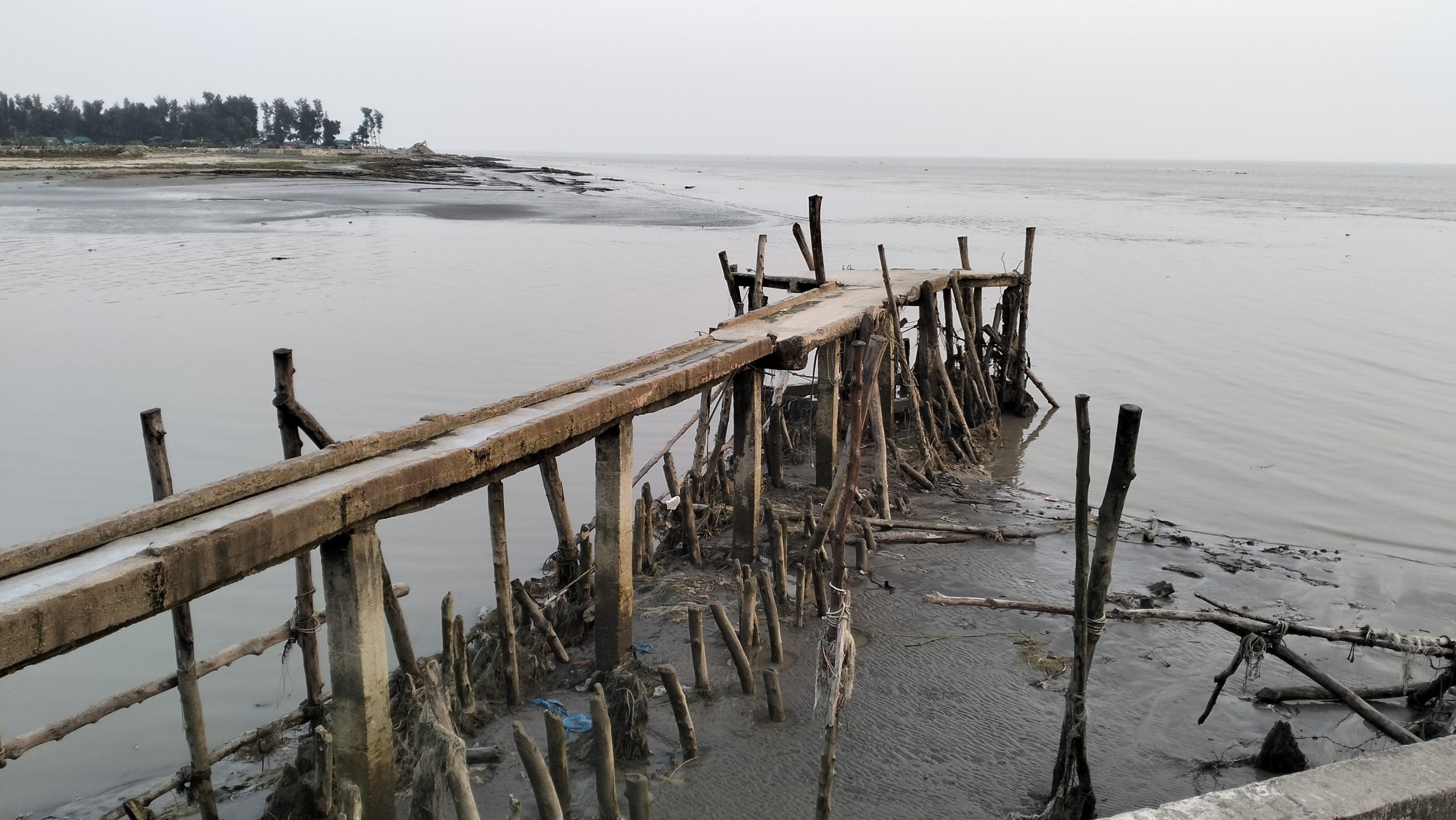
More than a decade later, Abu Taher can still vividly remember that March morning in 2014. Then 38 years old, he was fishing on the Meghna River when he heard that the river was approaching his parents’ graves.
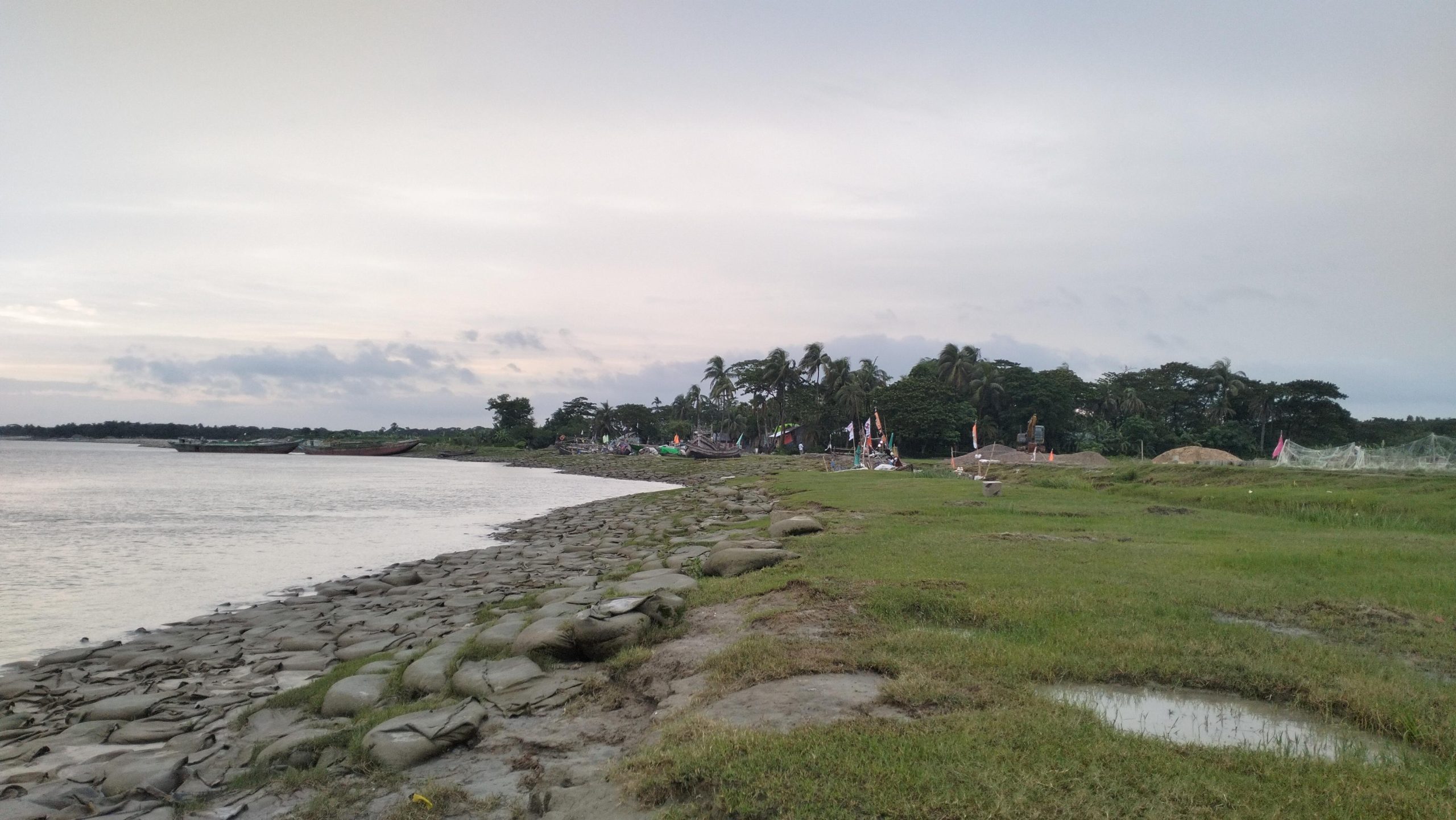
He hurried to his home in Kadir Ponditer Hat area under 2 No. Saheberhat Union in Lakshmipur’s Kamalnagar upazila (sub-district), planning to move their remains the following day. But the river did not wait. Overnight, the water reached the graveyard. The next morning, someone’s scream alerted Taher that his mother’s grave was collapsing into the water. He rushed to the bank, but within minutes, the remaining earth disappeared, taking her remains with it.
“Whenever I remember that day, it is as if everything is still happening in front of my eyes,” he said. “For a long time, I could hardly sleep. I would wake suddenly in the middle of the night with it pounding on my mind.”
Taher managed to save his father’s grave, recovering his remains and reburying them in neighbouring Char Lawrence Union. Five years later, erosion reached the new burial ground too. This time, nothing was left to save.
“At least I could visit my father and pray for him, especially on special occasions. It felt like even after death, I still had a connection with him,” he said. “Now nothing is left. Even on Eid, I have no grave to visit and pray for my father.”
He is not alone. Md Firoz Alam, a 30-year-old schoolteacher from Char Kadira Union, lost his father’s grave, their home and farmland to erosion in 2013.
“We still carry that grief,” he said. “Our house, our farmland, everything washed away. With time, we are slowly forgetting those. But how can I forget the day every last trace of my father vanished within minutes?”
The grave had stood near his home, allowing him to remember his father in the rhythms of everyday life. Its disappearance severed that connection.
Uprooted, again and again
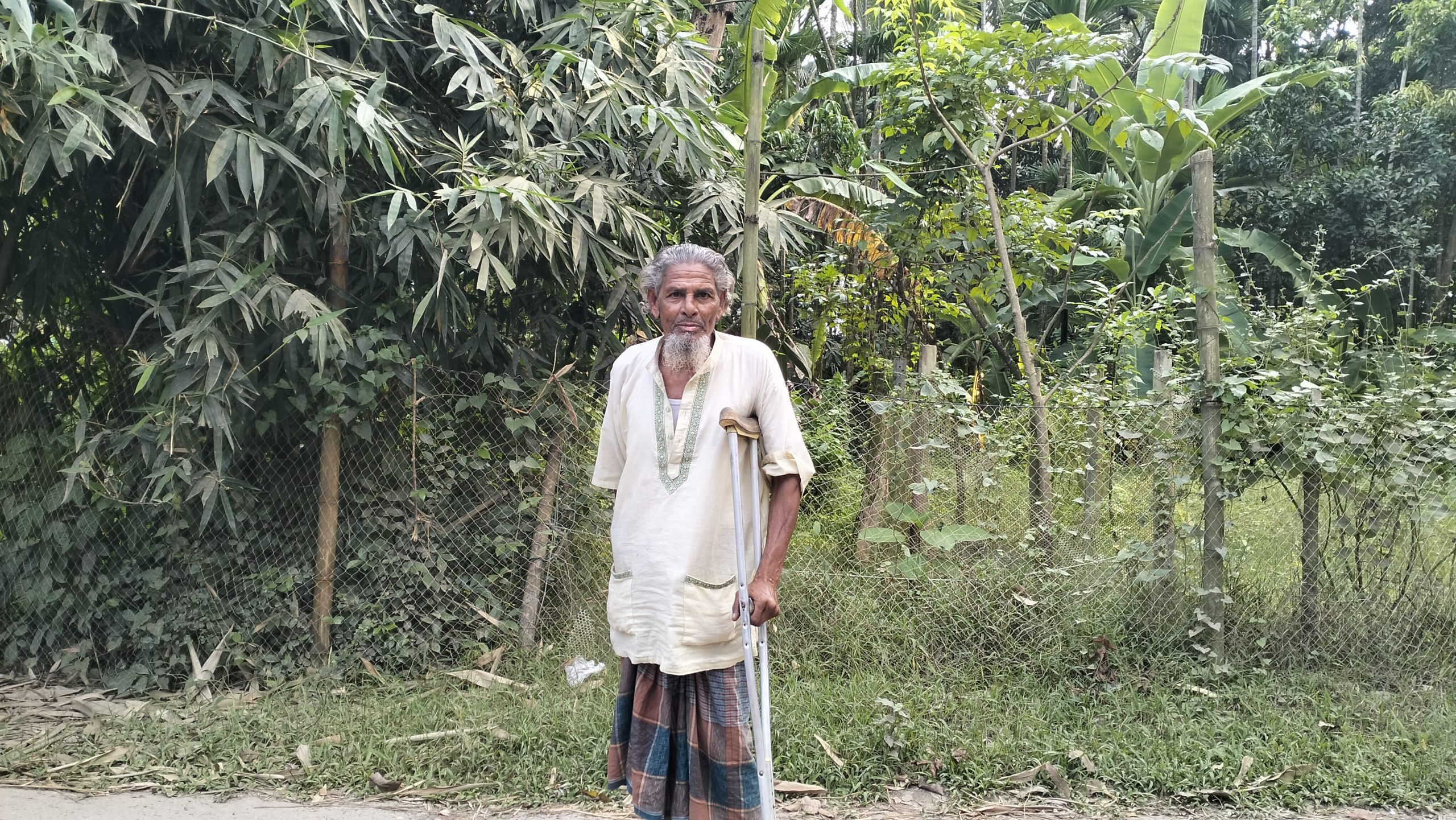
Samsul Haque, 72, has lost count of many things in his life, but not the number of times the Meghna has taken his home: 16. A farmer from Tankir Char in Lakshmipur’s Ramgati upazila, Haque moved with his family to Boyar Char in 1996. Repeated displacement disrupted not only his livelihood but also the relationships he had built over the years.

“Every time we lost our home, we lost the relationships we had built with people, as many left the village,” he said. “We built houses in new places and became strangers there. Getting to know new places and new people was difficult and took time.”
For children, such upheaval can begin before they are old enough to understand what they have lost.
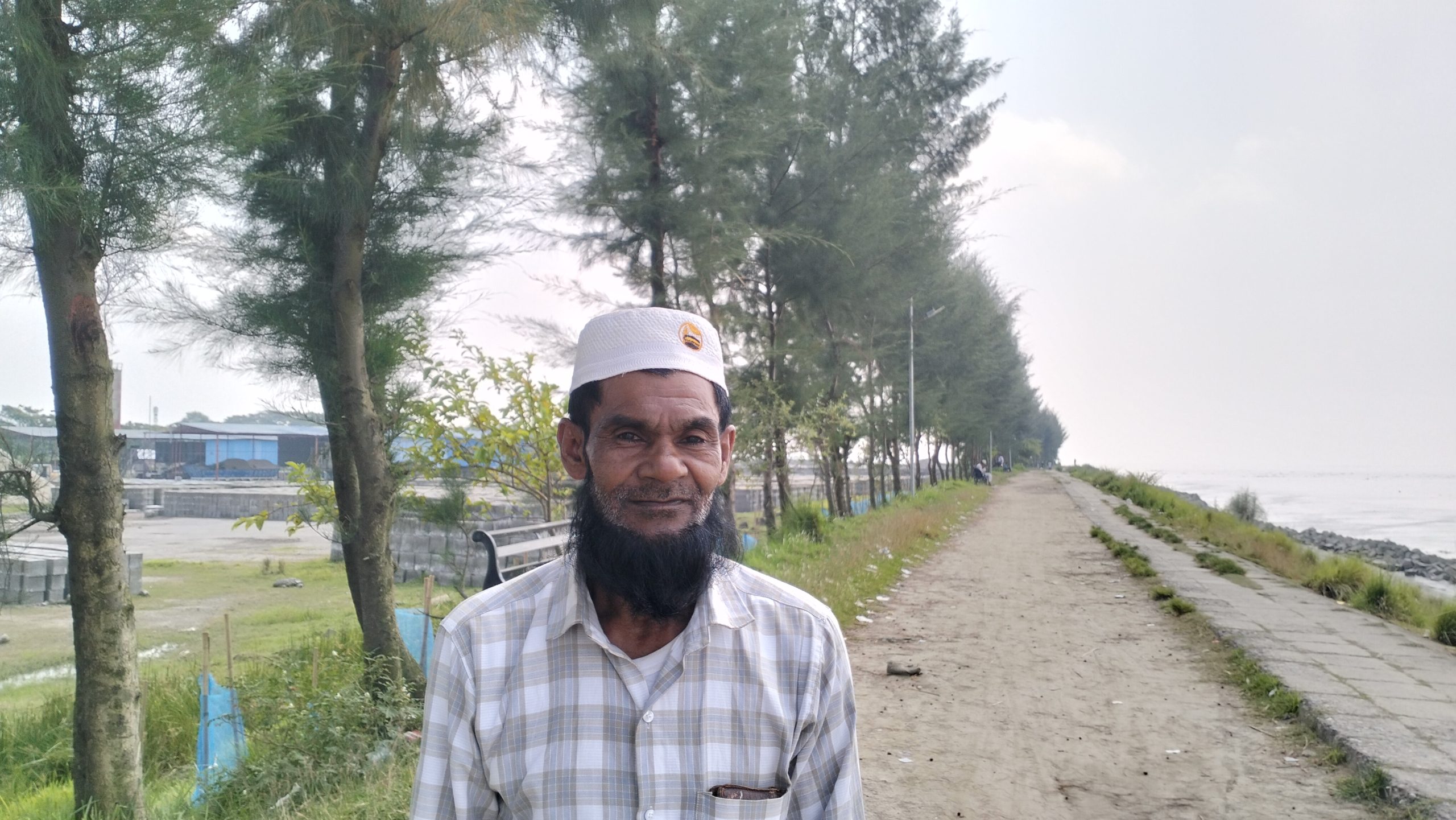
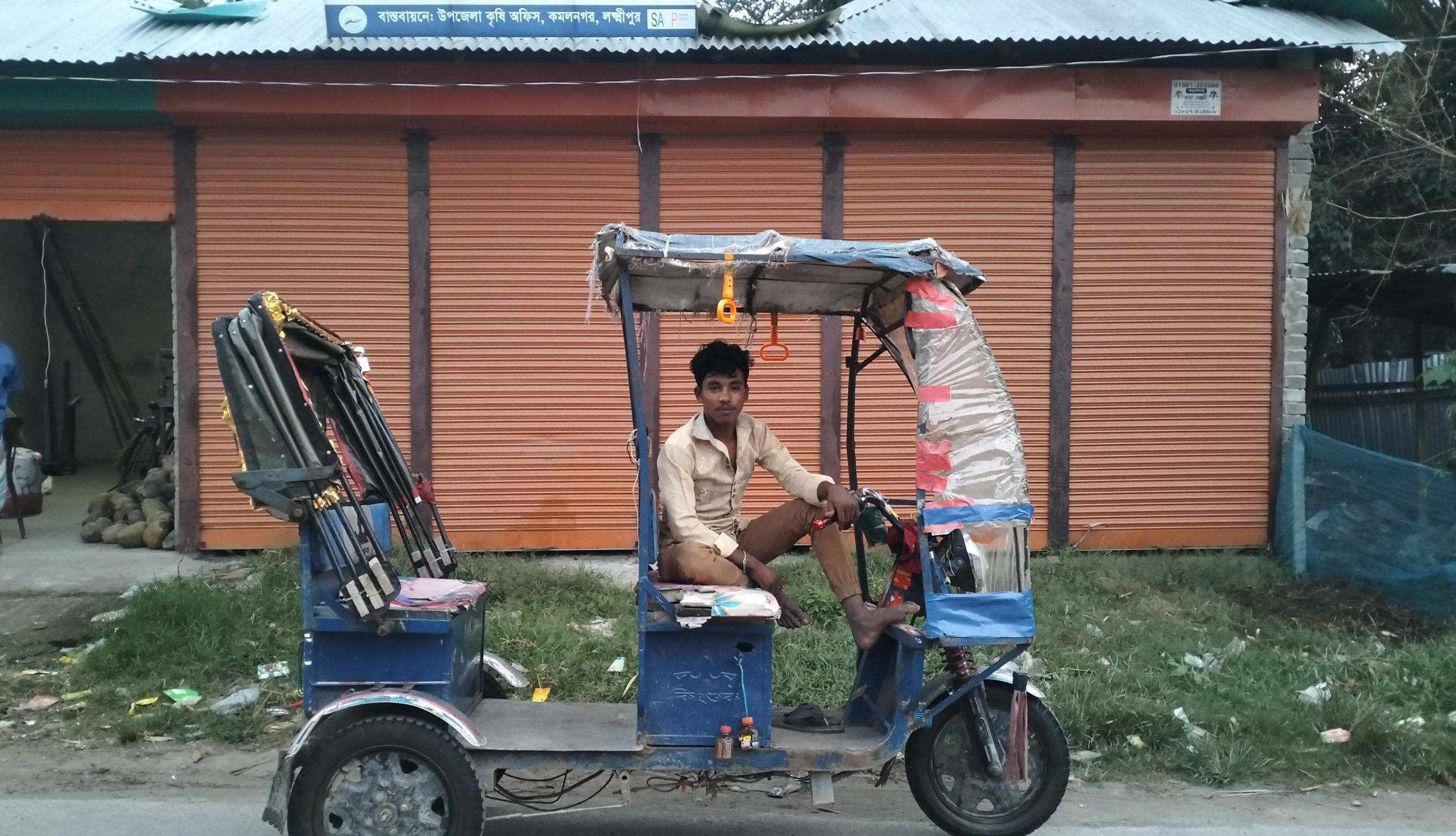
Shakil Hossain, 17, was four when erosion first swallowed his family’s home in Ludua area under Kamalnagar. His family lost their home twice, most recently in 2018. Poverty eventually forced him into work as an auto-rickshaw driver. Now living in Boyalia, Kamalnagar, he has never known the security of a permanent home. What he misses most is not a house or land, but the friends he left behind.
“I was just a child when I lost my friends. Now I don’t see them. I don’t even know how to reach them,” he said. “Sometimes I wish I could spend time with them again. But that never happens. I could not make more friends in the new place either.”
Strangers in their own country
Nahid Islam, now 26 and a law student, was in class nine when his family moved to Hazirhat Union in 2013. “New people, new village,” he said, recalling the difficulty of starting over as a teenager.
Reaching safer ground does not necessarily mean finding acceptance. Some displaced families encounter suspicion and ridicule in their new communities.
“They sometimes mock us by calling us river-erosion people,” Nahid said.




He said displaced people rarely received psychological support, partly because they were unaware that their distress might require professional attention and local health facilities offered little specialized care.
Abdur Rahim, 34, experienced similar treatment after erosion destroyed his home in Uchkhali, 4 no. Char Alexander Union under Ramgati upazila of Lakshmipur, in 2015. He moved to neighbouring Char Poragachha Union and became an auto-rickshaw driver. “What we lost will not come back to us, but what we carry is seen as if we did something wrong and that is why the river swallowed our homes,” he said. “Some people see us as a curse from God.”
Such stigma, he said, compounds the vulnerability of people who have already lost their homes and livelihoods.
The pattern repeats along the coast. In neighbouring Noakhali district’s Subarnachar upazila, English teacher Mosharrof Hossain, 35, lost his home to the Meghna in 2014.
“Whether an erosion-hit family is well-off or poor, we are all seen as a different category,” he said. “It has taken almost a decade to adjust, and we are still adjusting.”
For women, displacement also weakens family ties that once offered everyday support. Hafsa Akter, 29, married into a family living near her parents’ home. When erosion destroyed both households, the families rebuilt far apart.
“My father’s house used to be nearby before the erosion. Now I can hardly visit,” she said. “My children are not that close to my parents’ family either. When our forefathers’ homes, which used to be close, end up far away, it makes us even more lonely.”
Classrooms full of newcomers
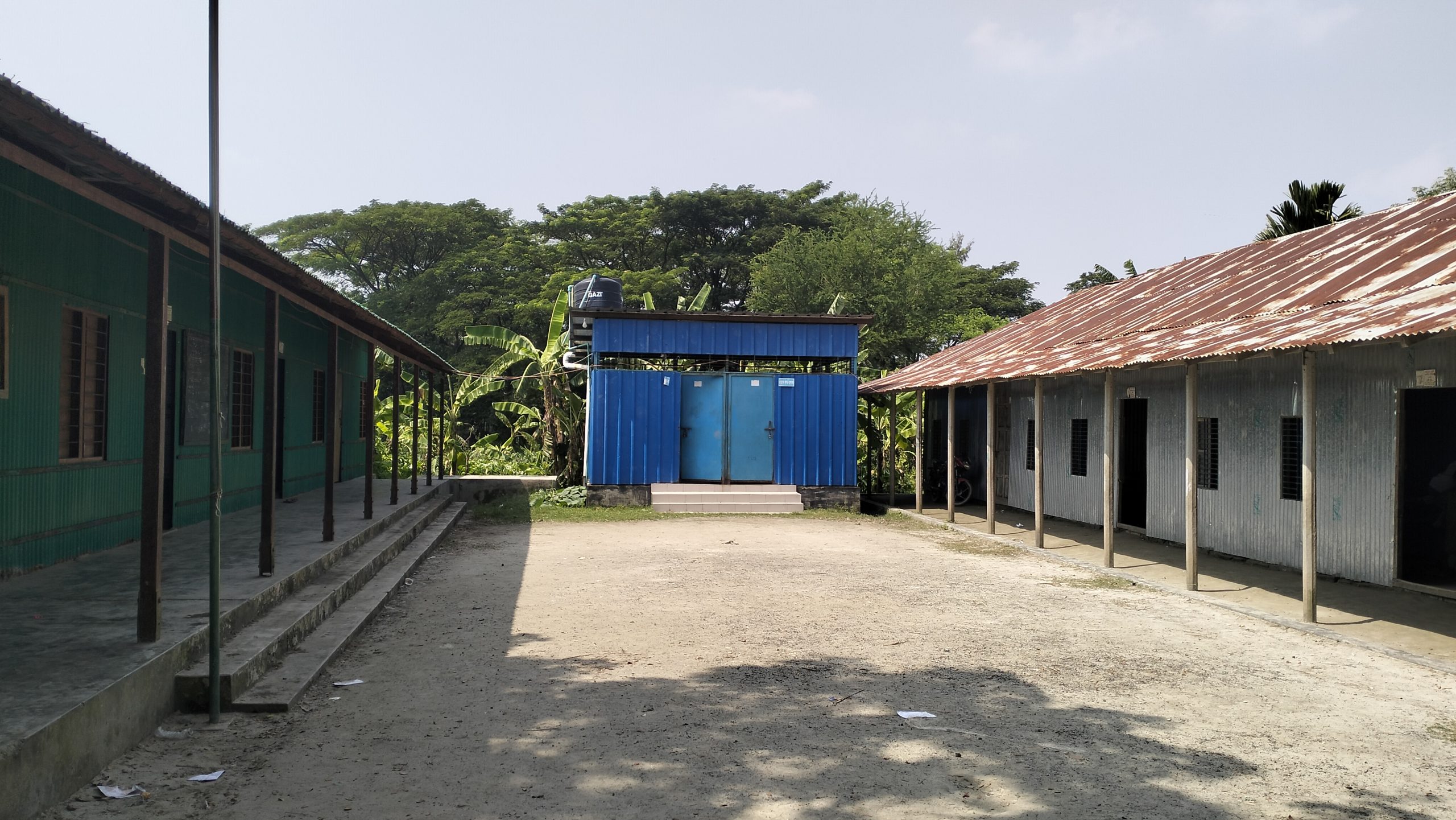
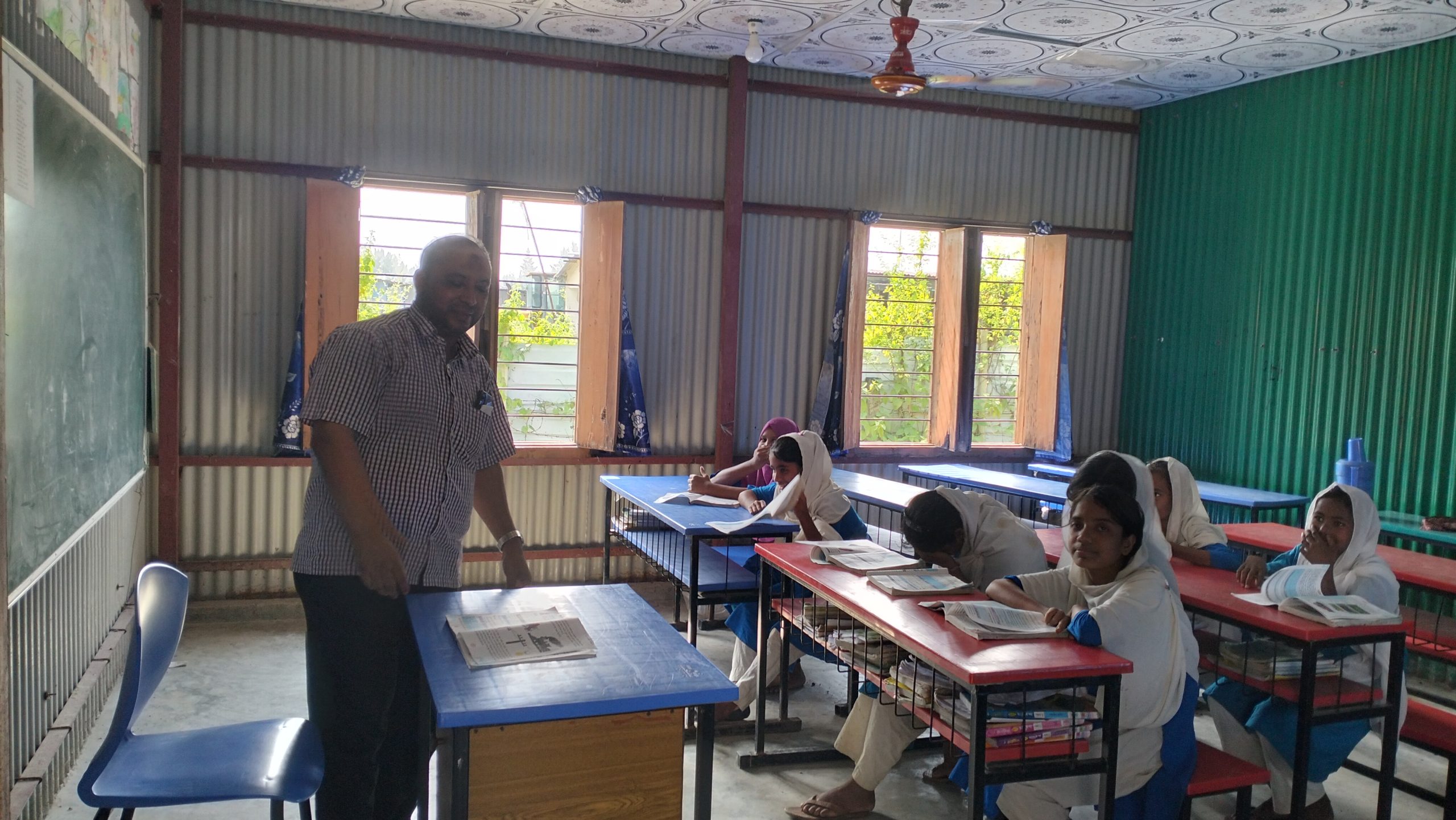
Schools also bear the marks of repeated displacement. Children lose familiar teachers and classmates, struggle to adapt to new institutions and, under financial pressure, abandon education altogether. Fariha, a class five pupil at Madhya Char Jagabandhu Government Primary School in Lakshmipur, experienced this disruption after her home was washed away. The school itself had relocated to the Matabbarhat riverbank area after erosion destroyed its original site in 2012. She struggled to settle into an environment where many pupils had arrived from different places after losing their homes.
Jasim Uddin, Acting headteacher of the school, said enrolment had fallen from 595 students in 2012 to 77 in 2026. Only 11 students remained in class five, he said, as former pupils left and the school’s network of friendships and community ties weakened.
Mohammad Shihab Uddin, 46, an assistant ICT teacher at Charking Mohammadia Dakhil Madrasah in Noakhali’s Hatiya upazila, also sees displaced children arriving every year.
“When they come, it becomes hard for them to adjust. At first, most of the time they don’t talk so much and keep silent. It takes time to make new friends and cope with a new culture.”
He estimates that 15 to 20 such children currently attend the institution. “There is nothing at the institution to improve their mental condition,” he added.

An invisible wound
Dr Noor Muhammad, a professor of psychology at Jagannath University, said repeated displacement can affect children’s psychological development. Losing homes, friendships and familiar surroundings can contribute to anxiety, fear, low self-esteem and difficulties forming relationships. If left unaddressed, these experiences may affect emotional wellbeing, educational progress and the ability to cope with adversity in adulthood.
“Health means mental, physical and social wellbeing. But we are serious only about the physical part. We are not focusing on the others,” he said. He called for expanded mental health services at district and upazila hospitals, where access to specialized care remains limited.
No one is counting
Even the scale of displacement remains difficult to establish. According to Saheberhat Union Parishad of Kamalnagar upazila, registered voters fell from about 21,000 in 2011 to around 15,692 in 2026. Some residents transferred their voter registration elsewhere, while others who moved to nearby unions have yet to update their records. The figures indicate population movement but do not establish how many people were displaced by erosion.
Md Rahat Uz Zaman, Kamalnagar Upazila Nirbahi Officer (UNO), said there was no data for families who had lost their homes to Meghna River.
Kamalnagar-Ramgati Bachao Mancha, a platform advocating for people affected by river erosion, estimates that more than 50,000 people have been affected across five unions in Kamalnagar alone.
“Research needs to be done to understand people’s mental health and trauma after being displaced by river erosion,” Rahat Uz Zaman said. “I don’t know of any government support for people like this.”
According to the Internal Displacement Monitoring Centre (IDMC), nearly 700,000 Bangladeshis were displaced on average each year by disasters over the last decade. A World Bank report suggests that the number could reach 13.3 million by 2050.
The gap is concerning in a country where mental health needs already exceed available services manifold. Bangladesh’s National Mental Health Survey 2018-19 found that 16.8% of adults and 13.6% of children aged seven to 17 had mental health conditions. More than nine in 10 affected people received no treatment.
The government says it plans to expand mental health services beyond major cities. State Minister for Health and Family Welfare M A Muhit said a Community Mental Health project would connect upazila and district facilities with national hospitals, beginning with a pilot in about 20 upazilas before a planned nationwide expansion. However, whether erosion-displaced communities will receive meaningful support remains uncertain.
Dr Fatema Rezina Iqbal, professor and chair of the Department of Sociology at the University of Dhaka, said the social consequences of climate change deserve greater attention. “River erosion causes more than the physical displacement of communities; it disrupts the cultural ties, kinship networks and shared traditions that give people a sense of belonging,” she said.
“When children are separated from extended family, neighbours, friends and familiar community institutions, they lose important spaces for socialization, cultural learning and emotional support.”
Rehabilitation, she said, must go beyond shelter and education to help children rebuild social connections and grow within supportive communities.
This story was produced with the support of Internews’ Earth Journalism Network