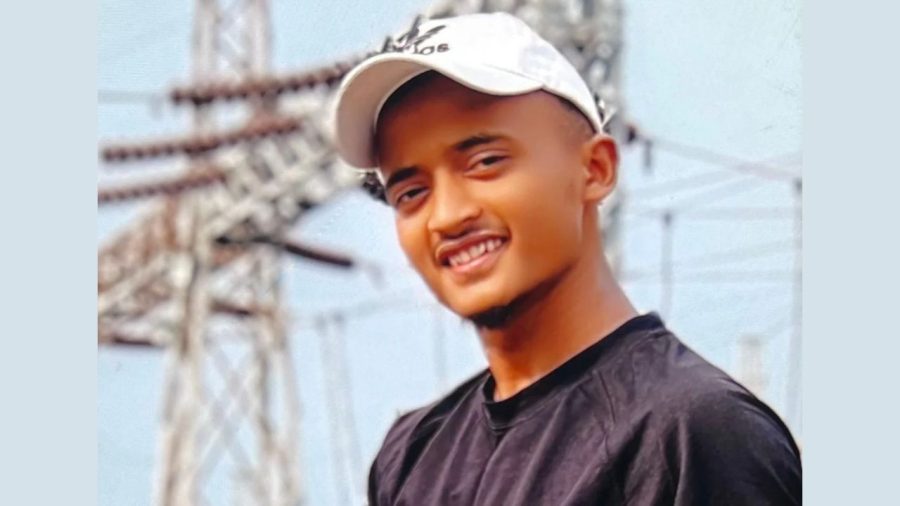



A human rights organisation has demanded an independent and neutral investigation into the death of an 18-year-old youth who was shot in the neck during an operation by the Special Response Battalion (SRB) at Dhalpur in Jatrabari, Dhaka.
The victim, Maruf alias Dukhu Mia, 18, worked at an aluminium pot factory in Dayaganj and was the youngest among three brothers and a sister.
According to his cousin Bithi Akter, Maruf returned home from work on Tuesday evening and informed his wife Mim that he was stepping outside briefly.
Shortly afterwards, relatives learned through a messenger that a shooting had taken place near the WASA gate, where Maruf was shot in the neck. He was taken to Dhaka Medical College Hospital, where attending doctors declared him dead.
According to eyewitnesses, six individuals identifying themselves as SRB members arrived at the City Polli field in Dhalpur and handcuffed three people. When local residents threw brick chips at them, two individuals opened fire, shooting Maruf.

Bithi Akter claimed she saw several men wearing black t-shirts and black trousers shooting towards Maruf, who had gone to the field to play cricket and was caught in the crossfire between two groups.
Findings by the rights body citing relatives also noted that Maruf went to the nearby street upon hearing commotion, shortly after which news of his gunshot injury emerged.



Conflicting claims over shooting
Police claimed that Maruf was shot during a gunfight between SRB personnel and alleged drug dealers during an anti-drug drive on Tuesday night. According to the police narrative, local residents and alleged drug traders attempted to snatch an arrested suspect, leading to a clash.
MZM Entekhab Chowdhury, director of the legal and media wing of SRB, claimed nearly 100 alleged drug traders attacked SRB members, snatching their mobile phones and money bags, prompting SRB personnel to fire blank shots after attackers tried to snatch weapons.
However, Humayun Ahmed, deputy assistant director of SRB-10 Lalbagh camp, denied sending any team to conduct an operation in that area. Moreover, relevant authorities could not confirm whose bullet caused Maruf’s death.
Cases filed by SRB
Over the incident, SRB-10 filed two separate cases on Tuesday. The first case was filed against four named individuals under Section 36(1) of the Narcotics Control Act, 2018 for drug possession. The second case was filed against the same four individuals alongside 120 to 130 unidentified persons under Sections 143, 144, 186, 332, 353, 307, and 34 of the Penal Code, accusing them of assault, attack, obstructing public servants in official duties, and attempted murder.
Concerns over extrajudicial killings
In a signed press release issued on Thursday, Ejazul Islam, executive director of Human Rights Support Society (HRSS), expressed deep concern and grief over the youth’s death.
The organisation highlighted severe contradictions in the statements of officials, noting that while one claim cited firing blank shots in self-defence, an SRB camp denied dispatching any team to the area.

HRSS noted that the incident took place a day after Md Ali Hossain Fakir, inspector general of police (IGP), commented that police were prepared to engage in “crossfire” if permitted by the government.
Describing such comments as alarming in light of Bangladesh’s long history of extrajudicial killings, HRSS questioned whether structural reforms and accountability had been genuinely established after renaming the Rapid Action Battalion (RAB) to SRB.
Demands for independent probe
Emphasising that the right to life is protected under Article 32 of the Constitution of Bangladesh and Article 6 of the International Covenant on Civil and Political Rights, HRSS pointed out UN guidelines requiring strict necessity and proportionality in law enforcement’s use of firearms.
HRSS put forward a seven-point demand for a fair probe, including an independent investigation outside the force involved and publication of its findings; preservation and use of ballistics tests, autopsies, CCTV footage, call detail records, and operational documents; temporary withdrawal of operational personnel from duty; legal measures and safety guarantees for the victim’s family and witnesses; trial and compensation for the deceased’s family; withdrawal of comments hinting at extrajudicial killings alongside clear operational guidelines; and structural reforms with independent oversight and accountability for SRB.