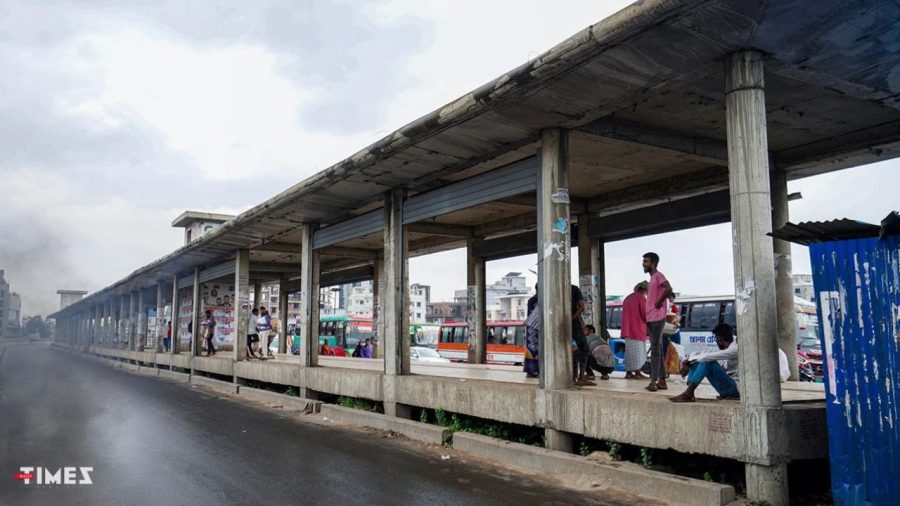



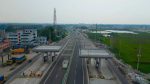
Fourteen years of construction, thousands of crores of taka in foreign debt, and endless misery for residents of Dhaka and Gazipur have culminated in a decision to tear down Bangladesh’s first Bus Rapid Transit (BRT) infrastructure.
Unable to operationalise the specialised corridor, the government has decided to dismantle the costly structures and convert the route into a standard highway.
A cabinet meeting on Sunday finalised the fate of the project, which was confirmed last Monday through a letter signed by Taslima Ahmed Poly, deputy secretary at the Road Transport and Highways Division.
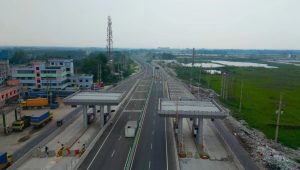
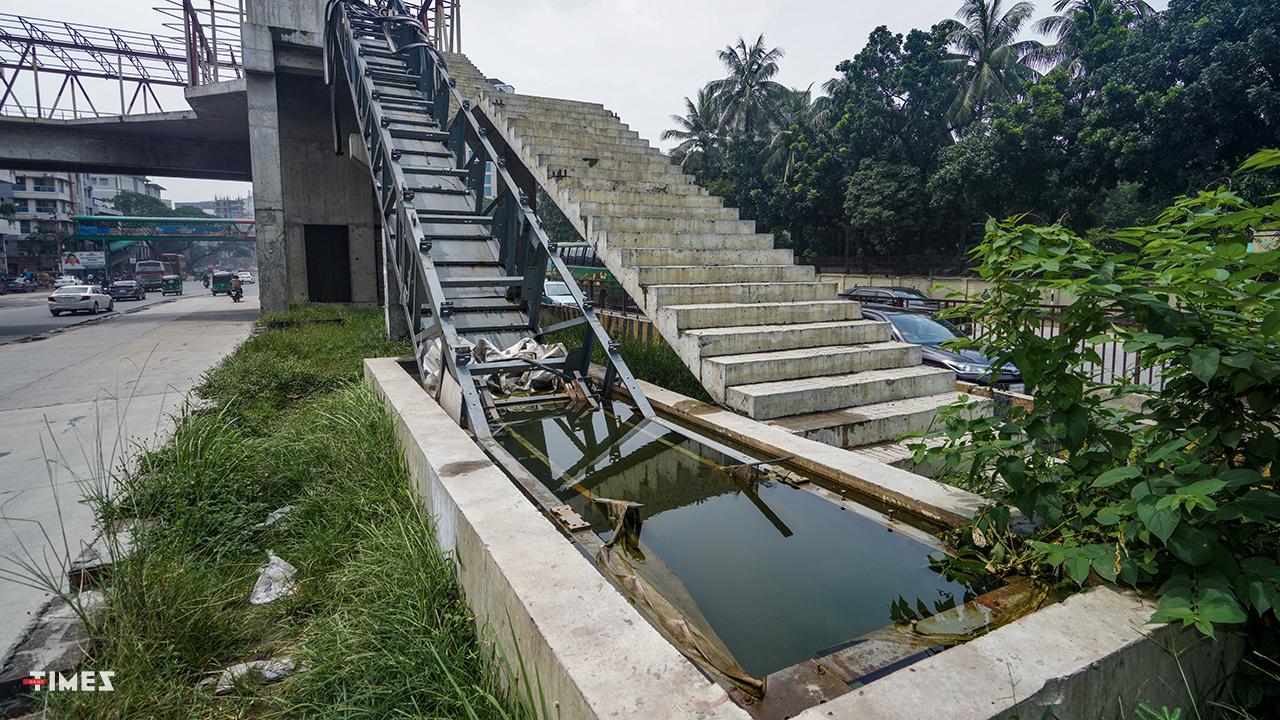
Under the decision, specialised stations and lane dividers along the corridor will be removed to create a standard six-lane highway with three lanes in each direction. The project’s two overpasses will not be demolished, but expanded from two lanes to four.
Meanwhile, state-owned “Dhaka Bus Rapid Transit PLC,” established to implement and manage the project, is being dissolved, with its operations and supervision transferred to the Roads and Highways Department (RHD).
Formal project closure will follow discussions with development partners to resolve legal complexities.
The Road Transport and Highways Division instructed urgent implementation of the directive, requiring an initial progress report within 15 days, followed by monthly updates on the third day of every month until completion.

Designed to fail from the outset
Conceived in 2012 with an initial construction timeline of 12 years ending in December 2024, the nearly 20-kilometre corridor from Dhaka Airport to Gazipur was initially marketed as a revolutionary, signal-free, affordable, and eco-friendly public transport solution.
However, fundamental flaws in execution ensured it functioned as a sinkhole for public funds rather than a transit system. Originally estimated at Tk4,268.32 crore, expenditure exceeded Tk3,000 crore.
Although officials claimed 97 per cent infrastructure completion and Tk2,811 crore spent, overall physical progress stood at just 77.48 per cent, while Asian Development Bank (ADB) records logged physical progress at 94.82 per cent.
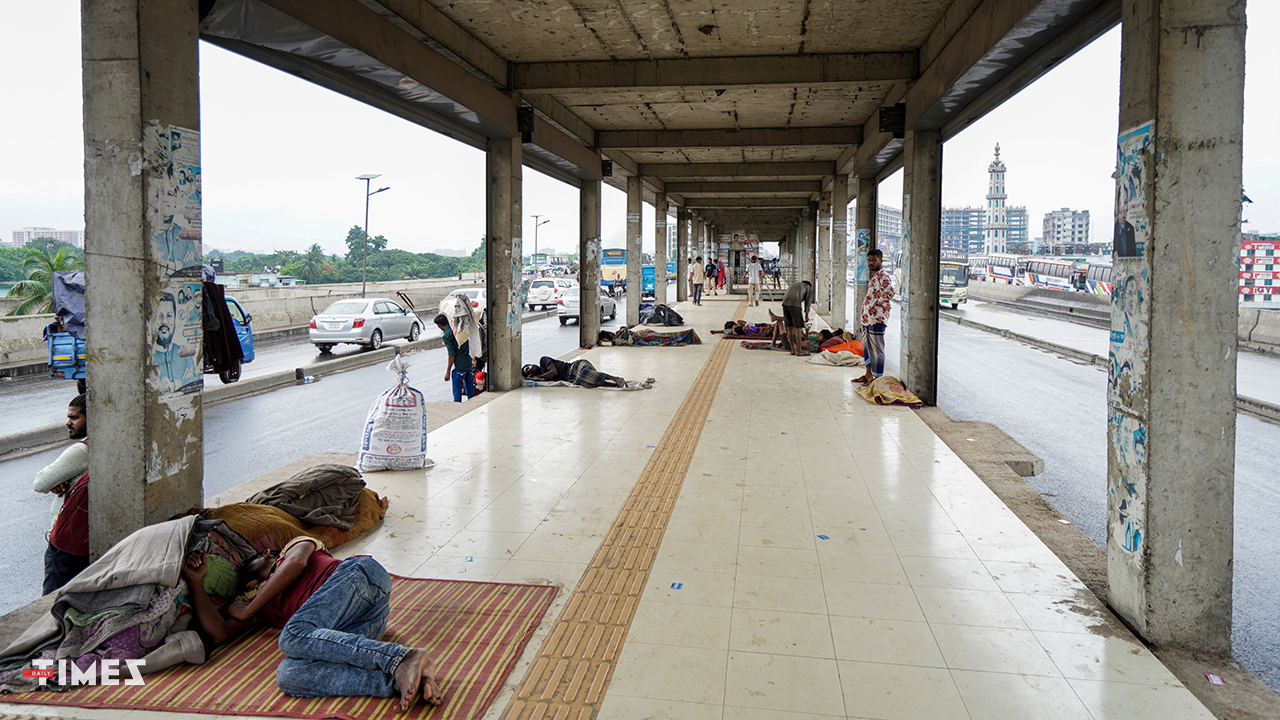
With the extended deadline expiring in December 2024 without a single bus running, the project’s tenure was left to expire. The legacy is a burden of thousands of crores of taka in foreign loans that national budgets must service over the next two decades.



Repayments on ADB loans have already commenced, forcing the national exchequer to pay regular principal and interest charges for a non-existent transit service.
Fourteen years without a single bus
An analytical review of the project demonstrates how non-procurement of rolling stock doomed the transit line to failure. A functional bus rapid transit system hinges on specialised vehicles, yet the government failed to purchase a single bus across 14 years of construction.
In 2017, the United Nations Economic and Social Commission for Asia and the Pacific (ESCAP) recommended acquiring 18-metre-long articulated buses with automatic doors, but the plan was abandoned.
Subsequent plans to procure electric buses through public tenders were similarly withdrawn.
The final attempt in April 2024 to tender for 137 diesel-operated air-conditioned buses also collapsed. Consequently, a 62 million euro loan approved by the French Development Agency (AFD) for bus procurement remained entirely unutilised.
This persistent inaction left the completed corridor useless and underlined a systemic failure in project governance.
Ruin, rust and discarded options
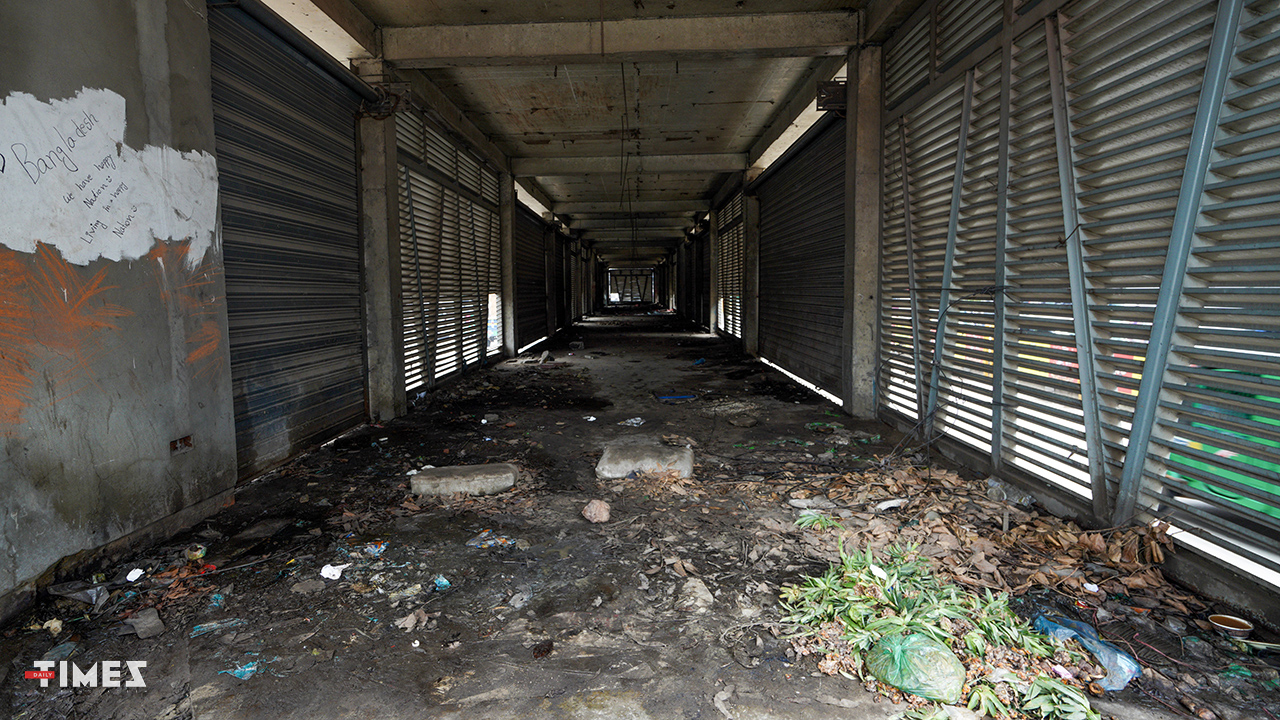
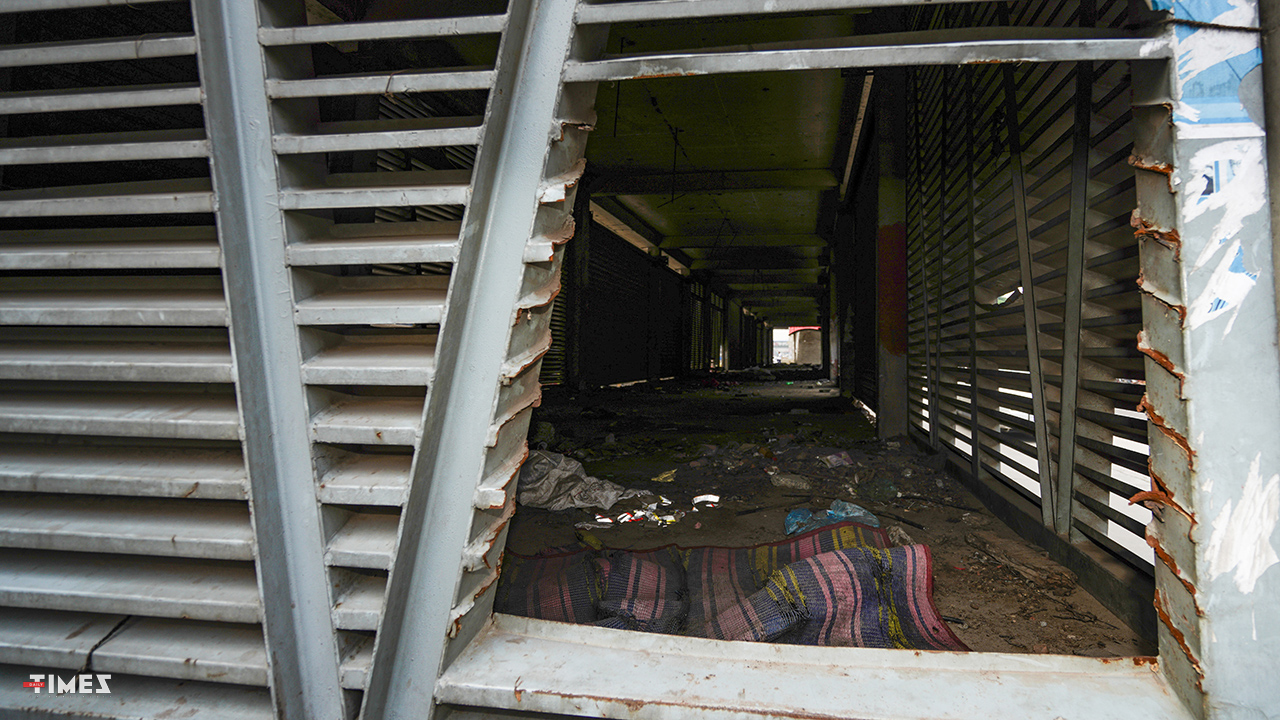
Despite ADB recording physical progress at 94.82 per cent – reflecting major spending on road widening, flyovers, the Tongi bridge, stations, and a depot – much of the constructed infrastructure lies in ruin. None of the 15 built stations ever opened to the public.
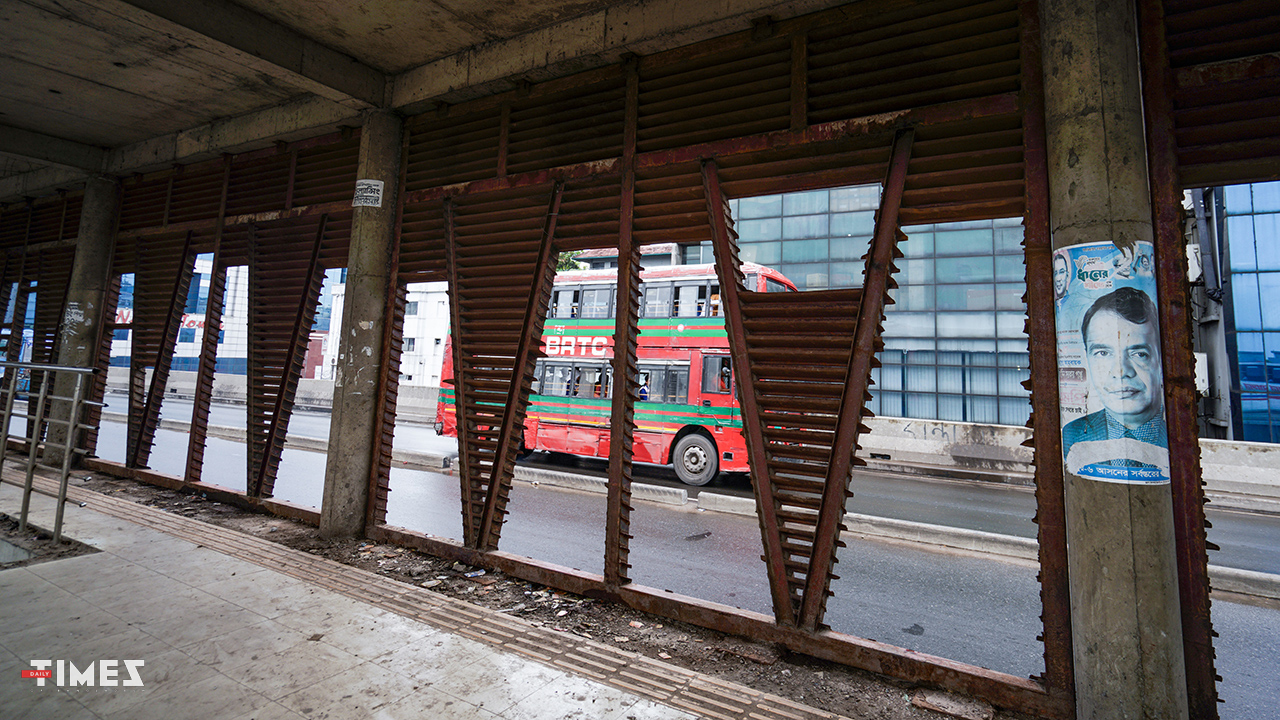
Security and oversight broke down following attacks on state installations during the public uprising two years ago. Escalators at an Uttara station have long been broken, while lifts, electrical equipment, and metal structures have suffered severe dust and rust damage from neglect.
The dedicated BRT lanes are currently overrun by general traffic, contradicting the core design of a rapid transit network.
Before selecting total demolition, the government weighed four options outlined earlier to TIMES by Hadiuzzaman, transport expert.
The first option was to complete remaining works; the second was an integrated franchise system allowing buses to operate across both mixed and BRT lanes; the third was converting the corridor into an elevated flyover and expressway; and the fourth was removing all BRT infrastructure to restore a standard highway.
Authorities ultimately selected the fourth and most destructive alternative.
A dark day for public transit
The decision triggered intense backlash from urban planners.
Prof Md Mosleh Uddin Hassan, general secretary of the Bangladesh Institute of Planners (BIP), noted in a statement on Tuesday that removing infrastructure built at vast public expense raises grave questions regarding mega-project planning and execution.
In its statement, BIP termed the decision a “black day” in the history of sustainable, energy-efficient, and inclusive public transit, alleging that it serves the interests of private car users and local and foreign construction lobbies.
BIP pointed out that the decision violates the core recommendations of both the ‘Gazipur Transport Master Plan’ (GTMP) and Dhaka’s “Revised Strategic Transport Plan” (RSTP), while betraying Gazipur and Uttara residents who endured 14 years of construction misery.
The organisation also highlighted that cabinet officials selected the worst available option on 18 October but omitted it from the post-meeting briefing, raising concerns over conflict of interest and data suppression.
BIP demanded the revocation of the cancellation, the creation of a unified agency to operate both BRT and Mass Rapid Transit (MRT), a shift toward plan-based long-term transport strategies, prioritised transport for women, short-distance commuters, persons with disabilities, and low-income groups, and the strengthening of the Dhaka Transport Coordination Authority (DTCA) under the Prime Minister’s Office (PMO).