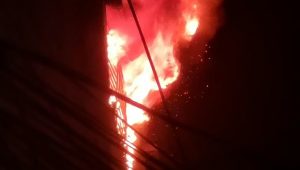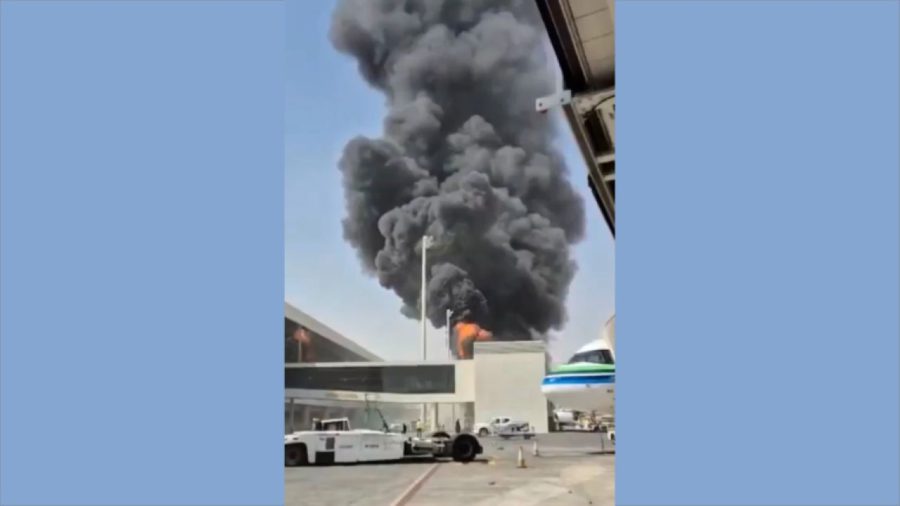



At least 12 people, including two Bangladeshi nationals, were killed and 309 others injured in a missile strike on Riyadh’s King Khalid International Airport in Saudi Arabia.
The incident, the deadliest on Saudi soil in more than a decade, prompted the Saudi-led coalition to pledge a strong response against Yemen’s Houthi rebels on Sunday, AFP reports.
The coalition blamed the Iran-backed Houthis for the attack, which it said was carried out with a missile, calling it a “full-fledged war crime”. The strike came after a truce between the rebels and the Saudi-backed Yemeni government collapsed in July.
US President Donald Trump indicated that Washington could join military action against the Houthis.
A passenger told AFP that a terminal at the airport was hit.
“I was at Gate 403. I saw Gate 401 being hit and injured people in front of me. Everyone was running,” the witness said.
Saudi Arabia’s civil aviation authority said the dead included four Saudi nationals, two Bangladeshis, one American, one Egyptian, one Jordanian, one Syrian, one Palestinian and one Sudanese citizen.

It said some of the 309 injured were in serious condition.
Airport operations were suspended after the attack, while authorities continued to assess the damage.
A medical source said health authorities issued an emergency call for doctors to help deal with the large number of casualties. Two doctors told AFP that several pilgrims travelling to Mecca were among the injured.
Foreign embassies advised their citizens to avoid the airport.
Coalition spokesman Maj Gen Turki al-Malki described the strike as a “cowardly terrorist attack” on a civilian facility. He said the attack, which killed and injured civilian passengers and airport staff, amounted to a war crime.



Earlier, the coalition said it had intercepted missiles targeting Saudi Arabia and destroyed launch sites.
The Houthis had claimed responsibility for strikes on the airport on Thursday that killed three people and damaged an aircraft, but they did not immediately claim Saturday’s attack.
The attack was the deadliest in Saudi Arabia since May 2015, when an Islamic State suicide bombing killed 21 worshippers at a Shia mosque in Qatif.
Fighting in Yemen intensified in July after a four-year UN-brokered truce collapsed. The conflict has added to wider regional instability and concerns over energy supplies.
Saudi Arabia has led a coalition backing Yemen’s government since 2015 and is now being drawn further into the conflict.
Asked on Saturday whether the United States might join Saudi military action against the Houthis, Trump said, “We may.”
He said he would speak with Crown Prince Mohammed bin Salman and described the attack as “not acceptable”.
Several US media reports said previous Saudi requests for American military assistance against the Houthis had been turned down.
The US, Canadian, German and Spanish embassies in Saudi Arabia urged their citizens to avoid the airport.
A senior Western diplomat told AFP that several embassies had barred their staff from using the airport over the coming week.
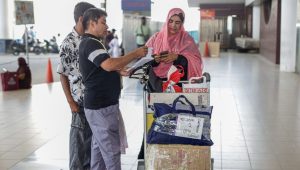
Passengers carrying luggage were seen waiting outside a nearby metro station after the attack.
The strike came just before Saudi Arabia’s annual convention and entertainment season, which begins this month and includes major business and investment events.
In Yemen, military sources said Saudi-backed government forces were advancing against the Houthis in areas around the Bab al-Mandab Strait that the group captured last month.
The Yemeni government last week announced a counter-offensive aimed at retaking all territory held by the Houthis.
The rebels confirmed clashes in the Bab al-Mandab area, a key route for Red Sea oil and cargo shipments but said they had repelled the government forces.
Claims by both sides could not be independently verified due to rapidly changing conditions and limited access for journalists.
Anna Jacob, an analyst at the Arab Gulf States Institute, said Saudi Arabia was likely to take an even tougher stance against the Houthis after the recent attacks.
“One thing is for sure, we are moving up the escalation ladder in a very dangerous way,” she said.