



Among university teachers in Bangladesh, genuine researchers are rarely seen. Since I am a physicist, I will use physics as an example. The most prestigious journal in physics is Physical Review Letters (PRL). Of all the Nobel Prize-winning work in physics, 67 percent has been published in this journal.
As far as I know, in the 54 years since independence, not a single researcher conducting research in Bangladesh has managed to publish an article in PRL. By contrast, I am not even talking about India as a whole – just Kolkata. Several articles are published in PRL from Kolkata every month.
The reason we do not have publications in such journals is that most of our research is repetitive. Some of it is incremental. As far as I know, there has never been any truly disruptive research in Bangladesh. Our students and teachers who go to the United States are able to do such research because there they have collaboration and an appropriate environment. We do not have that because we have never been able to establish the ecosystem necessary for research.
The ecosystem begins with recruitment. When I appoint a teacher, the first criterion should be whether that person is a good researcher. But what do we do? We appoint lecturers who have only completed a masters’ degree. They are not expected to have a substantial research record. If they are lucky, they may have produced a paper while writing their thesis, but that cannot be used as a meaningful measure of research ability.
Someone can come first in their honours or masters’ examinations simply by memorising material. In developed countries, someone who has only completed a masters’ degree is therefore not appointed as a university teacher. They have not been tested. They must first demonstrate whether they are capable of conducting research or whether memorised knowledge is their principal strength. That is why a PhD is necessary. A PhD requires a master, in the sense of a mentor – it is an apprenticeship. You spend several years under a supervisor learning how to conduct research. That is the training.

When appointing someone as a teacher, I need to examine their PhD research. If they obtained first-class results in their honours and masters’ degrees simply by memorising, all their shortcomings will become apparent at this stage. You cannot conduct research through memorisation; you cannot become a researcher that way. You have to be creative.
Even then, the world’s leading universities, including Harvard, do not look only at a PhD. During a PhD, you have a supervisor. But after obtaining the PhD, whether a researcher can independently develop their own ideas and conduct research is demonstrated through a postdoctoral position. A postdoc should therefore be the minimum qualification for appointment as a university teacher.
By appointing someone with only a masters’ degree as a university teacher, we take an enormous risk. They may subsequently go abroad to pursue a PhD. A large proportion of them never return. That is also a financial loss for the university. When they go abroad for a PhD, they are granted study leave and continue to receive their salaries. If they do not return – as I saw recently, 148 university teachers have failed to return – that is clearly not right. If, instead, I appoint someone who has already completed both a PhD and a postdoc, I would never have to grant them study leave again.




Schoolteachers require training. But university teachers cannot be trained through pedagogy in the same way. There can be occasional short courses on research. There can also be training on ethics – for example, what the relationship between teachers and students should be, so that inappropriate situations do not arise. Teachers can also be made aware of research misconduct, plagiarism and academic dishonesty. But I strongly oppose training university teachers in the same way as schoolteachers.
University teachers should attend conferences and seminars from time to time. Leading researchers from different countries come to these events, and our teachers can interact with them. Seeing how internationally recognised academics lecture, how they conduct themselves, how they communicate and how they share ideas – that is the real training for university teachers. Yet in our country, some people want to establish training institutes for universities. I am compelled to say that they have no idea how a university actually works.
Our universities are, in fact, no longer really universities. In my view, with the number of qualified teachers we have in the country, we could have established a maximum of 15 proper universities. Instead, we have created 150. Alongside that, teacher recruitment continues. But these people are not genuine university teachers. Most are merely acting the part of teachers.
Even if I give them millions of taka, will research happen? Giving money to an unqualified person does not produce research. I told former UGC chairman Professor S. M. A. Faiz that the billions of taka distributed through the HEAT project would not result in good research. Rather, I said, the money could make people even more dishonest.
Recently, I saw that nearly half a hundred teachers had taken research funding from the UGC but subsequently failed to submit their reports. The reason is simple: we did not recruit teachers who were capable of conducting research. Even with these teachers, however, research could have been undertaken if we hired postdocs. If we could bring postdocs from China, India or the United States, for example, it would be possible.
With some exceptions, 95 percent of the PhDs here are trash. The reason is that many people who come to pursue a PhD want merely an ornamental doctorate. They want the title of ‘Doctor’ before their names. But how did they obtain the PhD? Did they take four years’ leave from their jobs to conduct research? We have always seen them running around dealing with government affairs. It is absurd. There are also many people who pursue nominal PhDs in the country simply to secure promotions.
The current government has allocated $1.2 billion for 58 universities in this budget. Harvard University alone has an endowment of $6.7 billion. Singapore has allocated $3.7 billion for a single university. What kind of environment do our students live in? They live in overcrowded dormitories. They cannot eat properly; they have nowhere decent to sleep. There are fights in one place and constant noise in another. People beat one another. Can this be called an educational environment?
Ashoke Sen is one of the three or four greatest physicists in the world. He could have gone to MIT or Harvard if he had wanted to. Why did he not? Because the Indian government kept him there with dignity. When I invited him to one of our conferences, we wanted to pay his travel expenses. He refused. He replied, “The Indian government gives me whatever I want.”
So, if we do not give knowledgeable and capable people the respect they deserve, we will not produce knowledgeable people in this country. Ashoke Sen remains in India, inspiring countless young people. There is also Deepak Dhar, who received the Boltzmann Medal, and there is Chandan Mazumdar. They have inspired and trained countless people.
India has institutions such as the Tata Institute, the Harish-Chandra Research Institute, the Indian Institute of Science, the Indian Statistical Institute and the Bose Institute in Kolkata. How many such institutions do we have? Do we have even one comparable institute in Bangladesh?
Zahid Hasan, one of the leading Bangladeshi scientists of his generation, is currently working at Princeton University. He is currently regarded as a foremost Bangladeshi professor. We hope that we will soon be able to produce more scientists like him, but before that, we need to bring about changes in the education system – especially in university curricula, increase funding for research, and prioritise merit in faculty recruitment. Campus partisan politics and political bias in appointments must be avoided, and teachers must focus on genuine research.
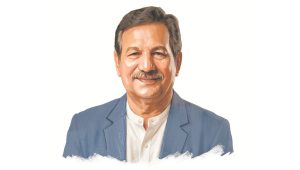
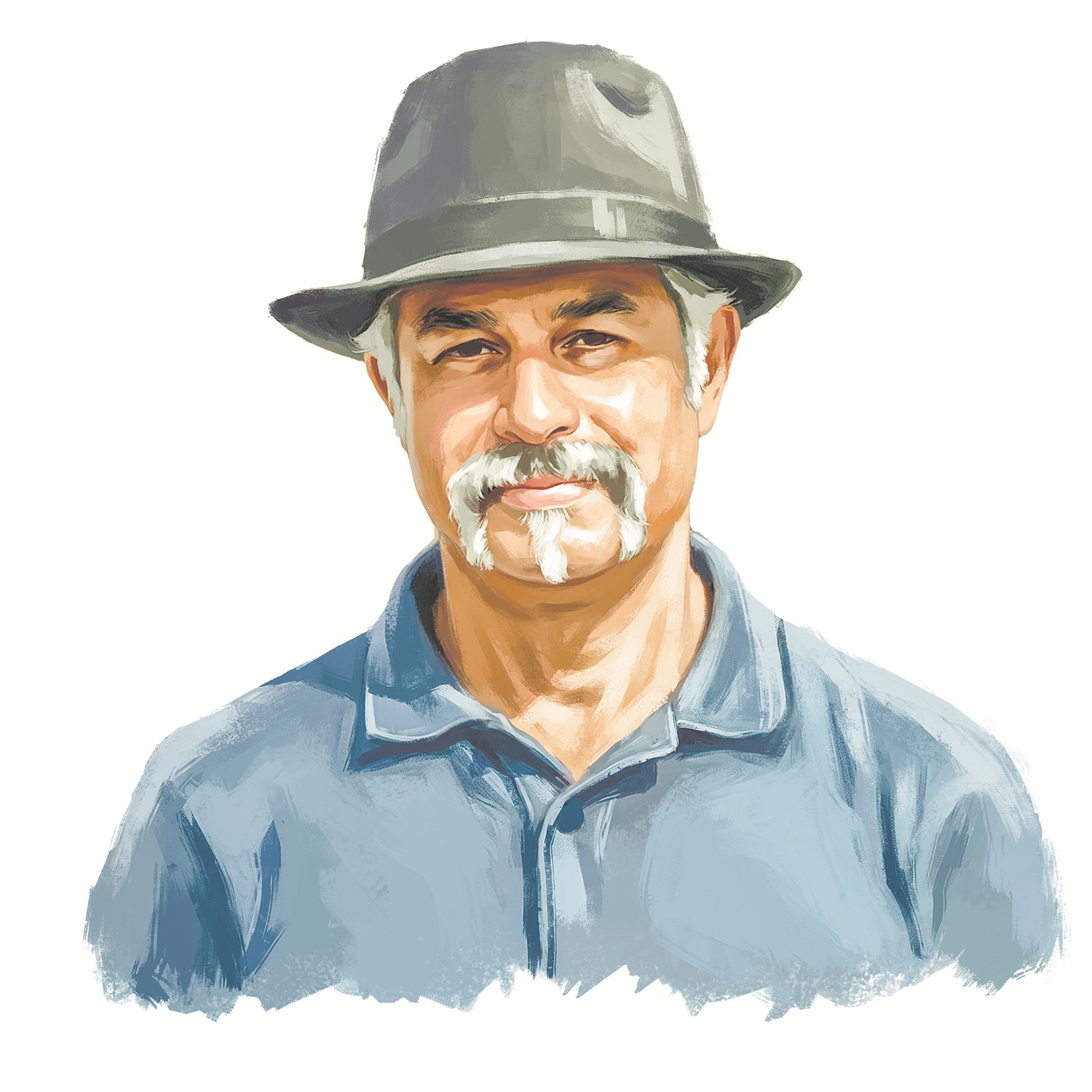
Author is a Professor of Physics, Dhaka University, and internationally renowned academic.