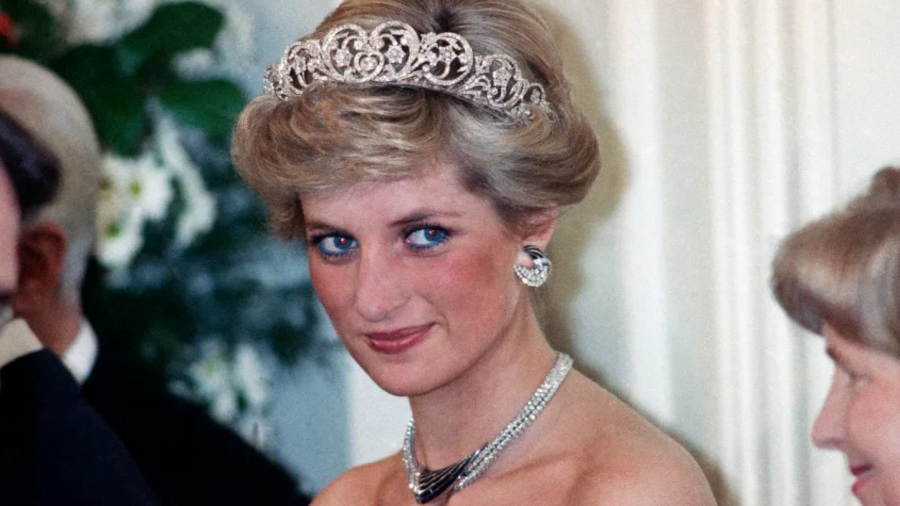

The day is marked in my memory because I was in London. News of the accident involving Princess Diana was aired on the radio the evening before, and the bold letters in newspapers on 1 September 1997 ended the hope millions were clinging to. Living in Maida Vale, I had just gone to the local store to do some shopping when the atmosphere inside the shop seemed tense. Looking down at the stack of papers, the reason was clear: in large letters it read, Diana dead!
Twenty-nine years later, the people’s princess is back in the news over a few lines written in a book. An explosive allegation made by Earl Spencer, brother of the late Lady Diana Spencer, has brought back memories of Diana, her turbulent years as wife of the then Prince Charles, now the King of Great Britain. Royalty is always news in Britain! Contention between two aristocratic houses, a guaranteed media sensation.
Royal magnetism is sustained through the astute propagation of the royal mystique along with the maintenance of persistent interest among the people, especially a large section who proudly identify themselves as pro-monarchists. While a steady number of anti-royalists, especially the young, feel the establishment is a remnant of the past and is an anachronism, it cannot be denied that much of Britain’s international appeal stems from the royal family and their activities.
Worldwide popularity of the Downton Abbey television series only compounded the fascination with aristocrats and royalty. In strict monetary terms, royal houses and museums open to the public do bring in a large revenue for the country. Be that as it may, the current spat is between two upper-class families: the House of Windsor versus the House of Spencer.
Earl Spencer’s line in a book that Prince Charles appeared insensitive while speaking to him on the phone after Diana’s car crash death in Paris, plus the allegation that at one point, Prince Charles remarked that soon everyone will forget Diana, have brought the frosty relation between the two houses out in the open. Yep, you can call it washing dirty royal laundry in public! Sadly, this current feud only undermines the memory of Princess Diana, intensifying the grief for her two sons.

The most complicated aspect of the current imbroglio is that it polarises people: some are siding with the statement of the palace, which said that the tragedy must have clouded the reasoning of Earl Spencer. However, Earl Spencer stated vociferously in an exclusive interview with the BBC that he is speaking the truth and Prince Charles actually made the callous comments following Diana’s death. One side is, of course, speaking the truth while the other is being disingenuous.
A variety of news outlets have covered the ongoing row, with several hinting that Earl Spencer might have stirred up a storm because he is not financially stable. The crude message being: he needs money, and what’s better than creating a pandemonium involving royalty and Princess Diana?
During the BBC interview, the interviewer asks, in what can be called a marked tone of incredulity, whether Earl Spencer is alleging that the reigning king is lying. Now this question appears to assert that a person who is a king is above human flaws and cannot lie. At least, that’s what I felt. Why can’t a king lie, and hasn’t he ever lied before? Once again, we see a lamentable attempt to paint royalty as far above the common person, as an epitome of virtue.




Yes, royalty is privileged; they live a life a common person can never dream of, but they are, like all of us, humans with very human drawbacks. In public, their persona is strictly choreographed, as are their lives, but in general, these are just men and women like the rest with their own set of foibles, travails and tribulations. With no disrespect to King Charles, he may be wearing the throne, but he is, in the end, a human who has to face life’s challenges like the rest.
Since the setting of the phone call mentioned by Earl Spencer goes back to 1997, it only makes sense to actually go back to that year, scour the newspapers of the time and speak to those who will give a non-partisan, objective account of the mood in Britain after Diana’s fatal car crash.
Let’s go back to September 1997, just after the tragedy. Britain was in grief, the state was in turmoil, and royalty was in the mud. Whether it was the late Queen, Prince Charles, his brothers or any other member of royalty – the whole institution faced national wrath plus an existential crisis. The royal family’s acceptance fell to its worst state and, at one point, the future of the monarchy appeared precarious.


Diana’s death brought out the cold treatment she had received from the royal family, with an anti-monarchy feeling sweeping through Britain. Perhaps Tony Blair, the then PM, should be interviewed and, if he speaks the truth, the collective feeling of contempt for the House of Windsor in September 1997 may come out. Facing a nationwide feeling of resentment, the royal family quickly amended many of its standard stolid expressions, coming out of the cocoon, swiftly setting aside the carefully honed centuries-old royal aloofness. Someone must have given them some very judicious advice at that time, which the family applied to the letter, thus triggering a process to revive the royal allure.
Very conveniently, the complex social setting of late 1997, in which royal popularity reached a nadir, is ignored, but to understand the current feud, a trip back to the past is crucial.
Maybe the king did not say that Diana would be forgotten soon in the way Earl Spencer now recalls, but this much we can say: given the intense pressure plus the backlash the royal family plus Prince Charles were facing in 1997, it wouldn’t be surprising if he had, in a moment of exasperation, said something in that line.
Let’s digress a bit and come to our own society, where parents and seniors, while reprimanding their children or juniors, often utter the line: you should die of shame. In reality, they never mean it. We have all heard the line countless times after coming back home with the annual exam report card.
In the same manner, Prince Charles might have said something when he was overwrought, which should not be used to judge him. He is again a human and can have very human outbursts. In moments of anger, we do say a lot of things we do not mean, and this may well apply to the phone conversation between Earl Spencer and Prince Charles.
Let this end now because words uttered in moments of anger, anguish and desperation should be laid to rest. But please do not suggest a king cannot lie! Like every human being, any king or queen will have their fair share of virtues and vices.
The views expressed in this article are solely those of the author
The author is a freelance writer