
Major financial shifts in Japan, characterised by 30-year high bond yields and historic joint foreign exchange interventions with Washington, are sending reverberations across global borrowing costs and financial markets.
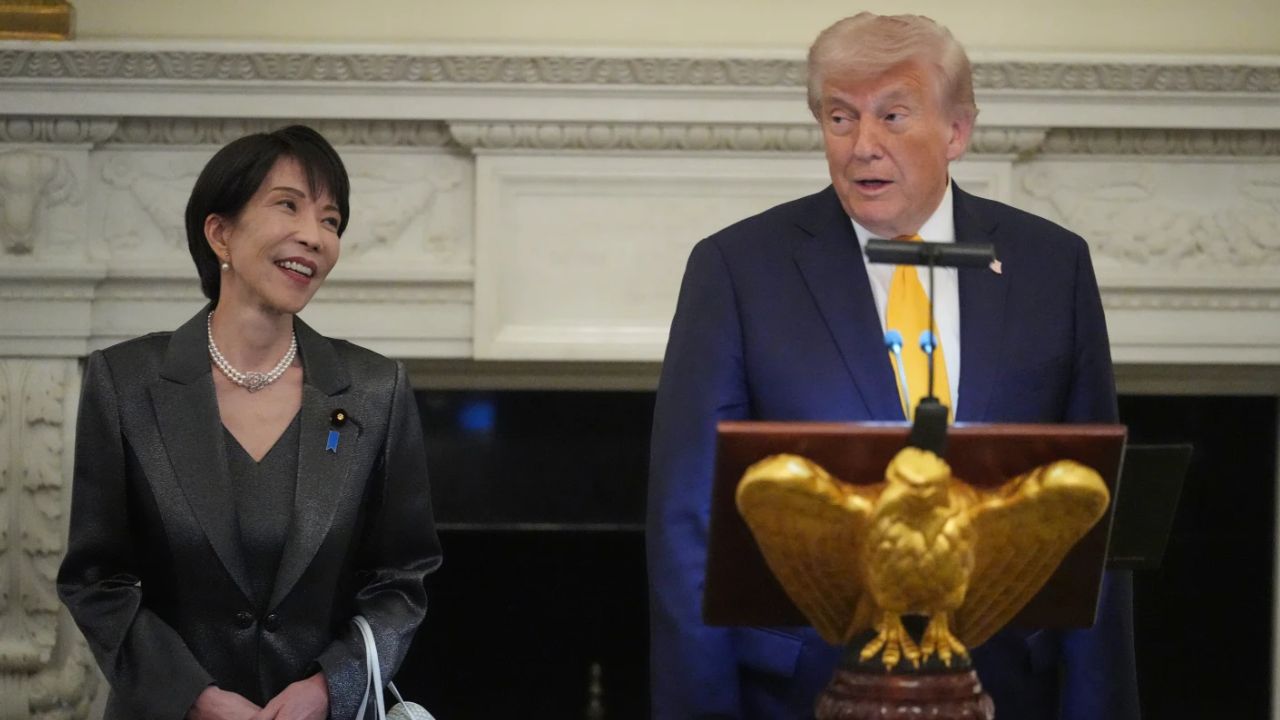
The growing intertwinement of the American and Japanese economies comes into sharp focus this week as US President Donald Trump and Japanese Prime Minister Sanae Takaichi prepare to meet on Tuesday in New York City on the sidelines of the UN General Assembly, reports CNN.
Bond market pressures, central bank policy
Driven by persistent inflation, rate hikes by the Bank of Japan (BOJ), and investor apprehension surrounding the government’s spending plans, yields on Japan’s 10-year government bonds recently surged to their highest level in three decades.
While 10-year bond yields in the United States, France, Germany, and the United Kingdom have climbed to near 20-year highs, Japan has been among the hardest hit in the global bond market sell-off.
The soaring yields reflect a broader global transition away from the post-2008 post-crisis era of ultra-low interest rates into an era of higher borrowing costs.
After decades of ultra-low interest rates designed to combat deflation, the BOJ began raising interest rates in 2024.

Just last week, the Japanese central bank implemented its second-rate increase of the year in an effort to cool down inflation.
As bond prices slumped amidst persistent inflation and central bank rate hikes, Japanese yields soared.
Fiscal concerns, global contagion
Financial markets are also assessing Prime Minister Takaichi’s budget plans, with investors wary of her proposals for tax cuts and increased government spending.




With Japan already carrying an enormous debt load, these proposals would swell borrowing needs, prompting investors to demand higher yields as compensation for holding Japanese debt.
This domestic yield surge carries widespread international implications, as higher yields in Japan make Japanese bonds more attractive to investors, who could potentially withdraw capital from other markets.
Japan stands as the largest foreign holder of US Treasuries, making its domestic market shifts critical to US bond market flows.
Yen fluctuation, US foreign exchange strategy
Parallel developments in currency markets have drawn heightened focus ahead of Tuesday’s bilateral meeting.
In late July, the US Treasury joined Tokyo in a historic joint intervention to bolster the yen after the currency plummeted to a 40-year low against the US dollar. Although the yen has not re-touched those historic lows, it has weakened closer to them in recent weeks.
US Treasury Secretary Scott Bessent has embarked on an extraordinary campaign this year to intervene in currency markets to support the yen.
Analysts explain that Bessent’s actions are designed to prevent Japan from selling off its dollar assets, including US Treasuries, to shore up the value of its own currency.
Data released by the US Treasury Department showed that Japan reduced its Treasury holdings in May, June, and July.
Further sales of Treasuries by Japan would push bond prices down and yields higher, escalating US interest rates at a time when affordability and rising yields are already raising concerns.
Carry trade risks, market volatility
Traders are also monitoring the potential unravelling of the carry trade, a strategy where investors borrow cheap yen to invest in higher-yielding assets elsewhere.
If the yen strengthens rapidly while Japanese interest rates rise, borrowing in yen becomes costlier, potentially forcing investors to sell off assets such as stocks and US Treasuries to close their positions.
Adam Turnquist, chief technical strategist at LPL Financial, noted that a multitude of factors could create volatility in the market and weigh on the US Treasury market, explaining the increased commentary from the US Treasury regarding how the BOJ should handle monetary policy.
American policy seeks to walk a fine line – avoiding a sharp yen depreciation that triggers Japanese asset sales, while preventing a rapid yen surge that pulls capital away from US markets.
Highlighting the sensitivity of global and US markets to Japanese bond and currency shifts, Turnquist emphasised that “stability is key”.