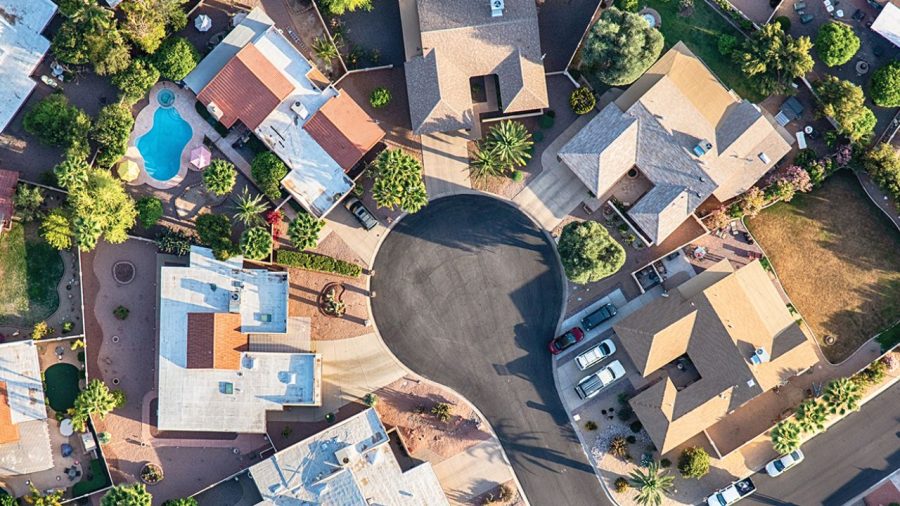

Imagine living in a neighbourhood built without cars, where quiet walkways and green plazas replace asphalt roads and traffic noise. That is the reality at Culdesac, the first modern car-free neighbourhood built from scratch in the United States.
Located in Tempe, a suburb within greater Phoenix, Arizona, the 17-acre mixed-use development offers a fresh approach to urban living by placing pedestrians before automobiles.
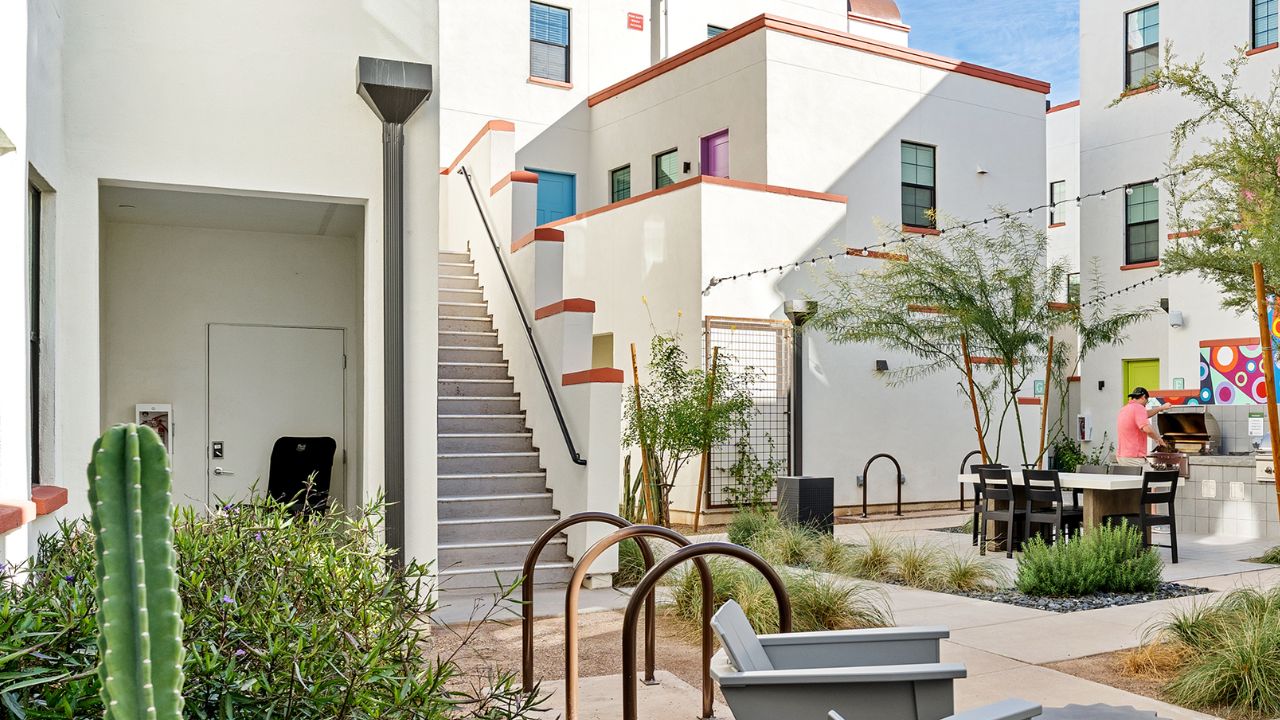
When resident Sheryl Murdock walks through Culdesac’s central plaza, which serves as an open-air communal living room, she hears conversation, clinking glasses, and cornhole games instead of roaring engines, reports BBC.
Lined with low-slung white buildings, fairy lights, colourful murals, and magenta bougainvillea, the area reminds her of a Mediterranean village in Greece.
Architect Daniel Parolek designed Culdesac after travelling through historic hill towns and coastal villages in Italy and France.
Noting that these historic places were built before cars existed to accommodate people, Parolek questioned why individuals should only enjoy walkable communities whilst on holiday.

He argues that modern societies made a “Faustian deal” with automobiles, resulting in sprawling asphalt, traffic jams, pollution, social isolation, and extreme urban heat.
Culdesac represents a bold experiment in Tempe, where wide suburban sprawl and limited public transit usually make owning a car essential.
When the first residents arrived in 2023, sceptics doubted whether a car-free neighbourhood could survive in such a car-dependent region.
To overcome this challenge, the development operates on a principle of being “car free, but mobility rich”. The 17-acre complex provides everyday necessities within steps, including eateries, shops, a Korean convenience store, a doctor’s office, a dog park, a swimming pool, a gym, and a coworking space.
For longer journeys, a light rail stop right outside connects residents to downtown Phoenix in 45 minutes and Phoenix airport in 30 minutes.



Further transport options include self-driving electric Waymo robotaxis, e-bikes rented from Archer’s Bikes, and shared electric cars available for $5 an hour.
Sheryl Murdock moved to the complex to cut her carbon footprint whilst studying for a postdoctoral degree in ocean sustainability at Arizona State University (ASU). The light rail carries her to campus and local supermarkets in about 10 minutes, whilst she cycles across Tempe, a designated Gold-Level Bicycle Friendly Community.
Murdock says her experience taught her that she prefers a “15-minute city” model, adding that Culdesac feels like a true neighbourhood where eco-conscious residents naturally bond over shared values.
Research shows walkable cities foster healthier, happier, and less lonely populations, aligning with global urban movements like Copenhagen’s Nordhavn district and Barcelona’s superblocks.
According to United Nations figures, switching from personal cars to public transport, cycling, and walking cuts individual carbon emissions by 2.2 to 3.6 tonnes each year.
When fully completed in a few years with approximately 760 units and 1,000 residents, Culdesac is expected to eliminate around 3,000 tonnes of greenhouse gas emissions annually.
The development also counters extreme desert heat through clever architectural design. By placing buildings close together, the structures shade one another and cool the narrow walkways, known as “paseos”, whilst drawing in natural breezes.
Apartments feature windows on opposite sides for cross ventilation, and the lack of dark asphalt helped lower ground surface temperatures by 30 to 40°F (17 to 22°C) compared to surrounding pavements in a 2023 Harvard University study.
Culdesac supports a vibrant local economy with around 21 small businesses, including a James Beard-nominated Mexican restaurant, DIY ceramics and candle-making studios, a bike shop, and a sustainable clothing store.
Special zoning rules allow residents to operate businesses directly from their apartments, whilst market days bring live music, handmade craft stalls, and Navajo-inspired blue corn croissants from ReddHouse bakery.
Parolek noted that removing cars unlocks immense opportunities to build thriving communities.
Parent company Culdesac plans to expand the concept across the United States following strong interest from city governments, transit agencies, and property developers.
Erin Boyd, Culdesac’s government relations and external affairs lead, stated that the project proves Americans want car-free living even in car-centric areas like Phoenix.
Located at 2025 E Apache Blvd, Culdesac offers visitor parking, alongside nearby accommodation on the light rail line such as Moxy Hotel Tempe and FOUND:RE in downtown Phoenix.
Visitors can take pottery classes at Pip Crafts + Clay, browse pre-loved clothes at Sew Used, shop at Maricopa Botanicals, or explore nearby destinations such as Tempe Town Lake and the Desert Botanical Garden.