
“Is there a place more peaceful than the haor?” Jisan says when I ask him whether he loves living here.
On the face of it, I have reasons to agree with him. I arrived in Mithamoin, one of Kishoreganj’s haor upazilas, yesterday. So far, I have found the type of peace I crave: no traffic jams, no sound pollution, and no hectic urbanism.
While returning to my hotel after dinner last night, I passed a tea stall where a group of men were chatting and watching an old Bengali film on TV. This felt like a scene from the ’90s when television was still the centre of evening entertainment. The men seemed to have a laid-back attitude toward life, a luxury I could not afford despite having a good job and more amenities in Dhaka.
Today, I see that same attitude in Jisan, which I believe contributes largely to his sense of peace. He makes a modest income as an autorickshaw driver, transporting passengers from his hometown of Mithamoin to the neighbouring Itna upazila. As his father is unemployed, he supports the family with his earnings.
“I am a 10th grader and will sit the secondary school certificate exams next year. I do not go to school every day. I just take the exams,” he tells me, his eyes set on the horizon as he drives down one of the most spectacular roads I have ever seen in Bangladesh.
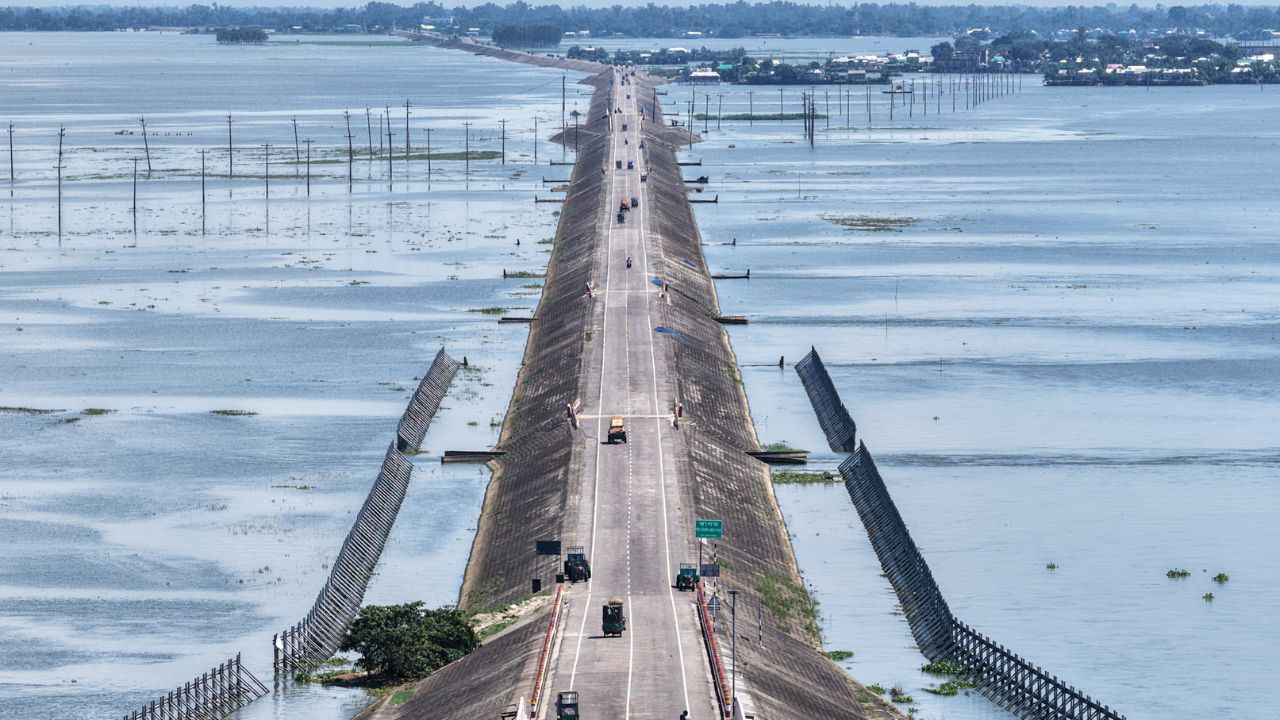
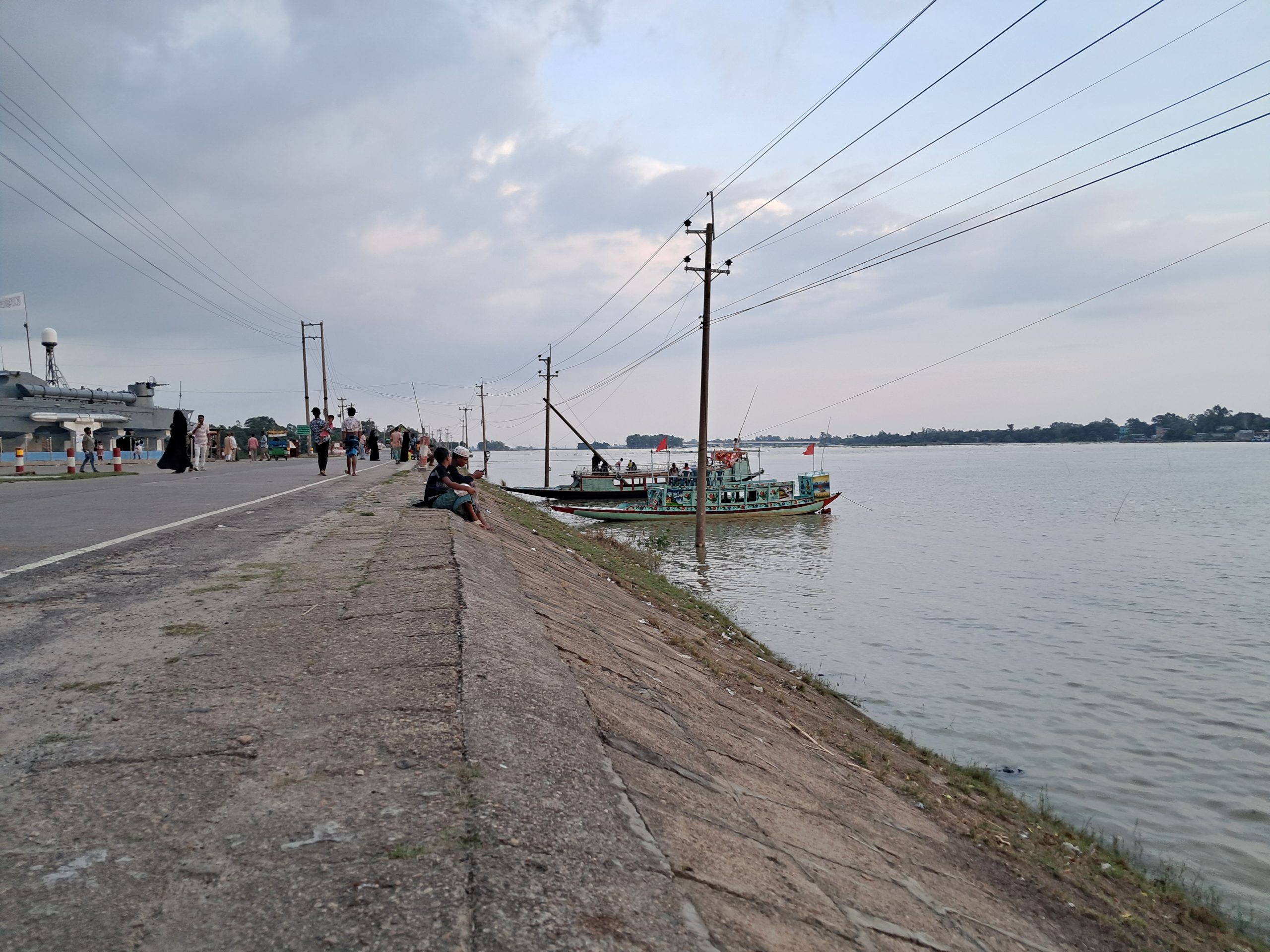
Drone photos and videos posted on social media have made this road – which connects the three haor upazilas of Itna, Mithamoin, and Austagram – go viral. It cuts through the wide expanse of haor water in the monsoon and vast stretches of cropland in the dry season. Because of its sloped edges, it resembles a long embankment.
I clutch a metal handle near my head, balancing myself beside Jisan on the driver’s seat. It is a hot August morning, with white cloud banks blanketing much of the deep blue sky. The rumble of the autorickshaw mingles with the rush of the wind, forcing Jisan and me to speak loudly to hear each other.
“My father bought me the autorickshaw. There have been accidents on this road, but I never had one. The tourists coming on motorbikes from other districts mostly crash while driving recklessly,” he says.
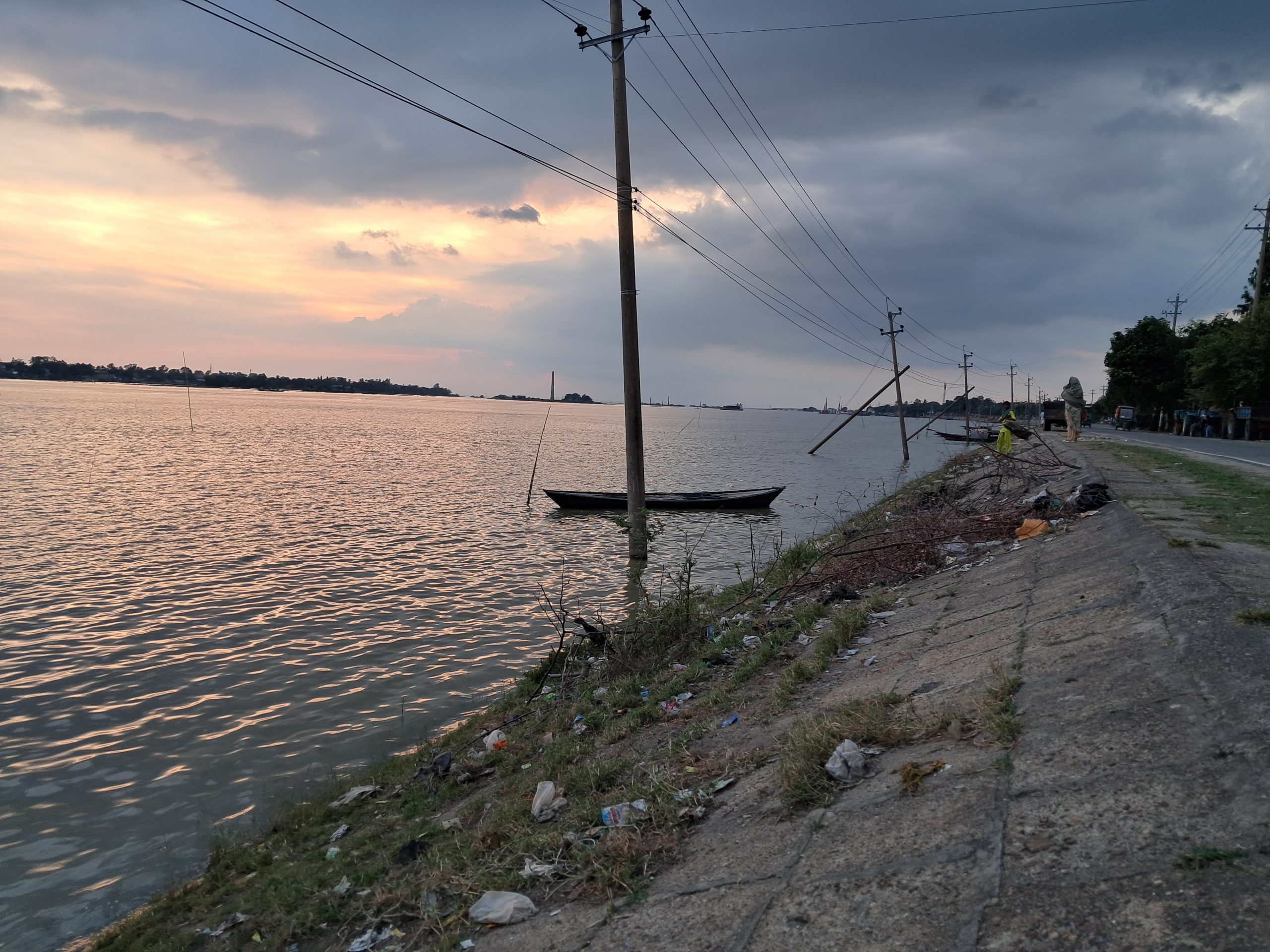
The road to Itna has bends and bridges of varying sizes, just like the Mithamoin-Austagram stretch that I travelled yesterday. Today, I see similarly captivating views as Jisan chugs up a bridge and glides down the other side. Boatmen steer small boats, parts of transmission towers remain under water, and dense trees surround rural houses in a nearby floating village.


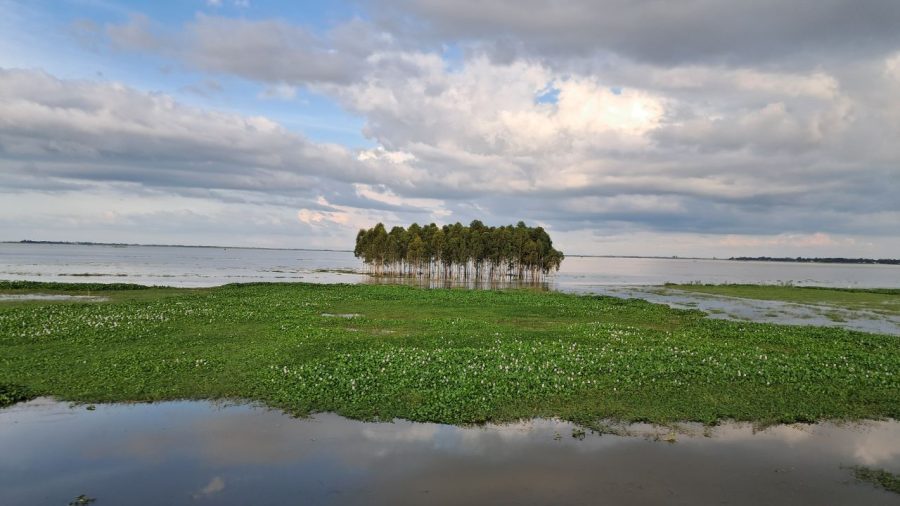
The haor region in northeastern Bangladesh is a vast wetland that is inundated every monsoon, and its residents have adapted by living in elevated villages that the water cannot conquer. But here is the catch – the villages turn into small islands when the water comes, making boats the lifeline of daily life. It is a throwback to ancient Bengal, when waterways were the only means of communication.
Born in Mithamoin, Bangladesh’s former president Abdul Hamid is well aware of how severely this seasonal flooding impedes haor life. He had an ambitious plan – constructing a nearly 30km road that would remain above the water. The road, inaugurated in 2020, has transformed what it means to live in haor.
This transformation has its limits, argues Md Rezaul at Itna Bazaar, the upazila’s main marketplace along the shore where Jisan has dropped me off. Rezaul earns a living both as a boatman and a farmer. His boat, plying the Itna-Ajmiriganj route, can carry 10-15 passengers.
“The road has not made, and will not make, boats redundant. It connects the centres of the three haor upazilas but cannot take you to the floating villages where people live,” he explains, adding that boats are also indispensable for transporting goods.
Several men surround us, listening attentively and sometimes chiming in about the advantages of the road. One of them asks Rezaul to hurry up and sail. Rezaul’s phone rings, but he rejects the call and continues to talk to me amid the hum of boat engines.
The road has certainly benefitted him, but he says autorickshaw drivers have been the biggest beneficiaries. They may make more money than him, but his earnings have not fallen drastically because the two modes of transport serve different purposes. Some of his fellow boatmen have switched to autorickshaw driving to capitalise on the road economy, but he has stuck to his boat.


Located on the waterfront, the Itna Upazila Health Complex buzzes with patients when I arrive there. Nursing supervisor Kinkari Rani Roy leads me around the ground floor to show the long queues. She intervenes and tries to pacify a woman, who keeps yelling at someone for reasons I cannot immediately understand.
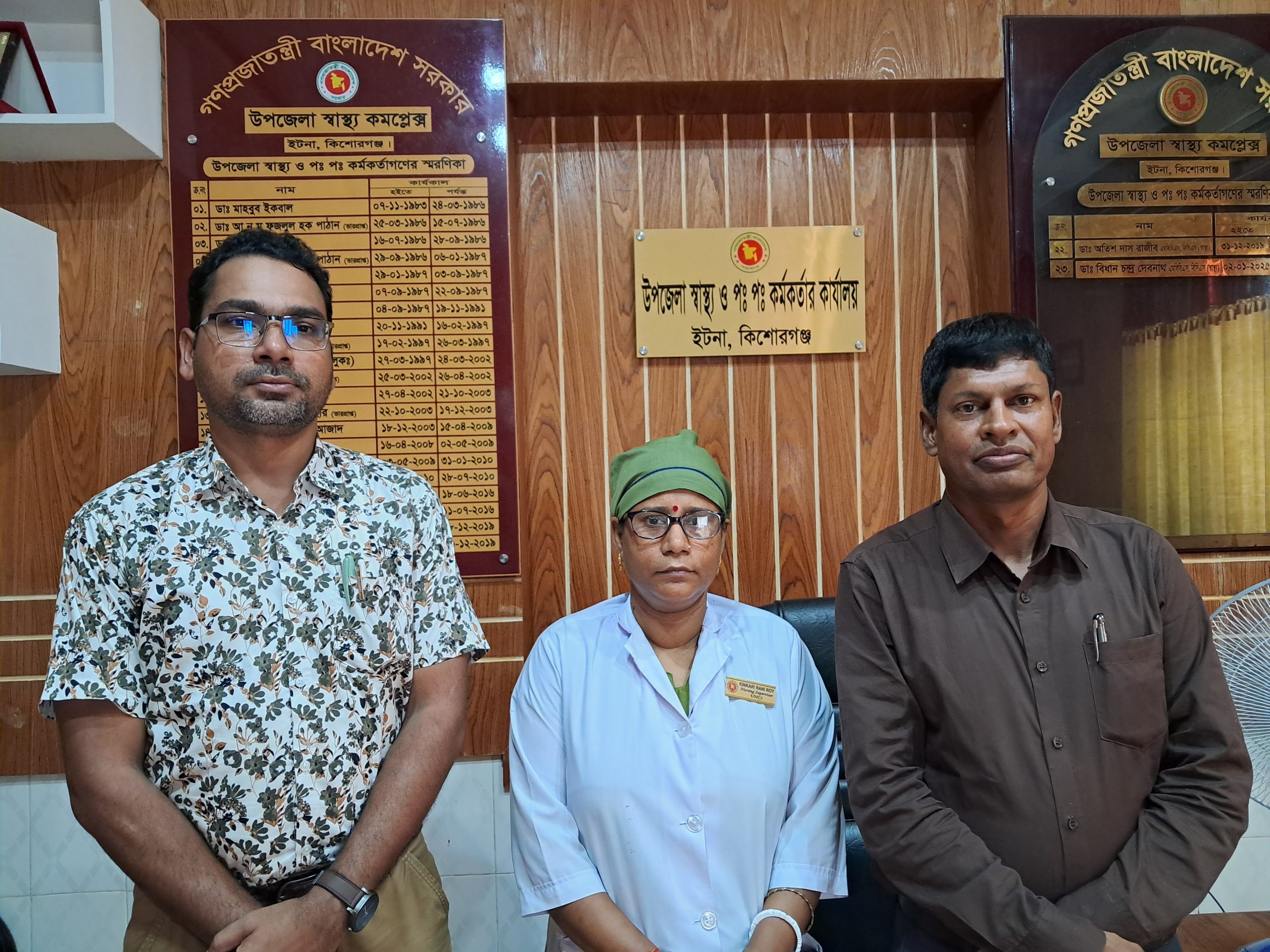
It is a 50-bed facility, but patients end up on the floor as the capacity is occasionally exceeded, Resident Medical Officer Md Mahbubul Alam tells me, sitting next to Kinkari in the upazila health and family planning officer’s room. Doctors appointed from the 48th civil service batch have eased the crisis of physicians here, but nurse shortages persist despite multiple requests sent to the higher authorities. There is also inadequate accommodation for the doctors and nurses.
Kinkari says 28 patients were hospitalised yesterday, taking the total tally to 44. However, service delivery is still strained as 12 nurses and one midwife are working against 25 and five positions, respectively. Even among the 12 nurses, two are on maternity leave and another two are on deputation elsewhere, exacerbating the problem.
In terms of access to healthcare, haor itself poses the greatest challenge. Patients needing advanced care cannot be taken to Kishoreganj in the evening as boatmen call it a day when the sun sets. Ambulances carrying patients are ferried to Kishoreganj in the dry season, but the service is suspended once the monsoon turns the area into a water kingdom.
Emergency patients bear the brunt of this isolation. When Mahbubul was doing the night shift in the emergency department a week ago, a patient named Gias Uddin came around 1:30am after suffering a cardiac arrest. The sexagenarian had diabetes and was also on antihypertensive medication.
“The electrocardiogram revealed a massive heart attack. He could not breathe properly. We provided oxygen, injections, and medicine before referring him to Kishoreganj,” he recalls.
But no boat or trawler could be arranged in the dead of night. Mahbubul called a speedboat operator several times, but the phone remained unanswered. Gias died after a while.
“We were helpless,” Mahbubul says.
Secured inside weathered red metal barriers, a multi-coloured tank stands at the gateway to Itna. As I pass it on the way back to Mithamoin from the healthcare facility, it seems less like a military vehicle and more like a symbol of the endurance of haor people, who live at the mercy of water for several months. That endurance is stretched to its limits when a medical emergency strikes after midnight.
Yet, Fazlu Khan likes the water not because it is an “everyday part” of his life but because it “brings tourists”. If more tourists come, he makes more money as a lemonade seller. He had previously sold lemonade at Mithamoin Bazaar for eight to 10 years but now does so at the three-way junction of the haor road.
“I have been doing business at the junction for three to four years. I earn more here than I did at the bazaar. This has made it easier for me to run my family,” he tells me after serving a glass of lemonade.
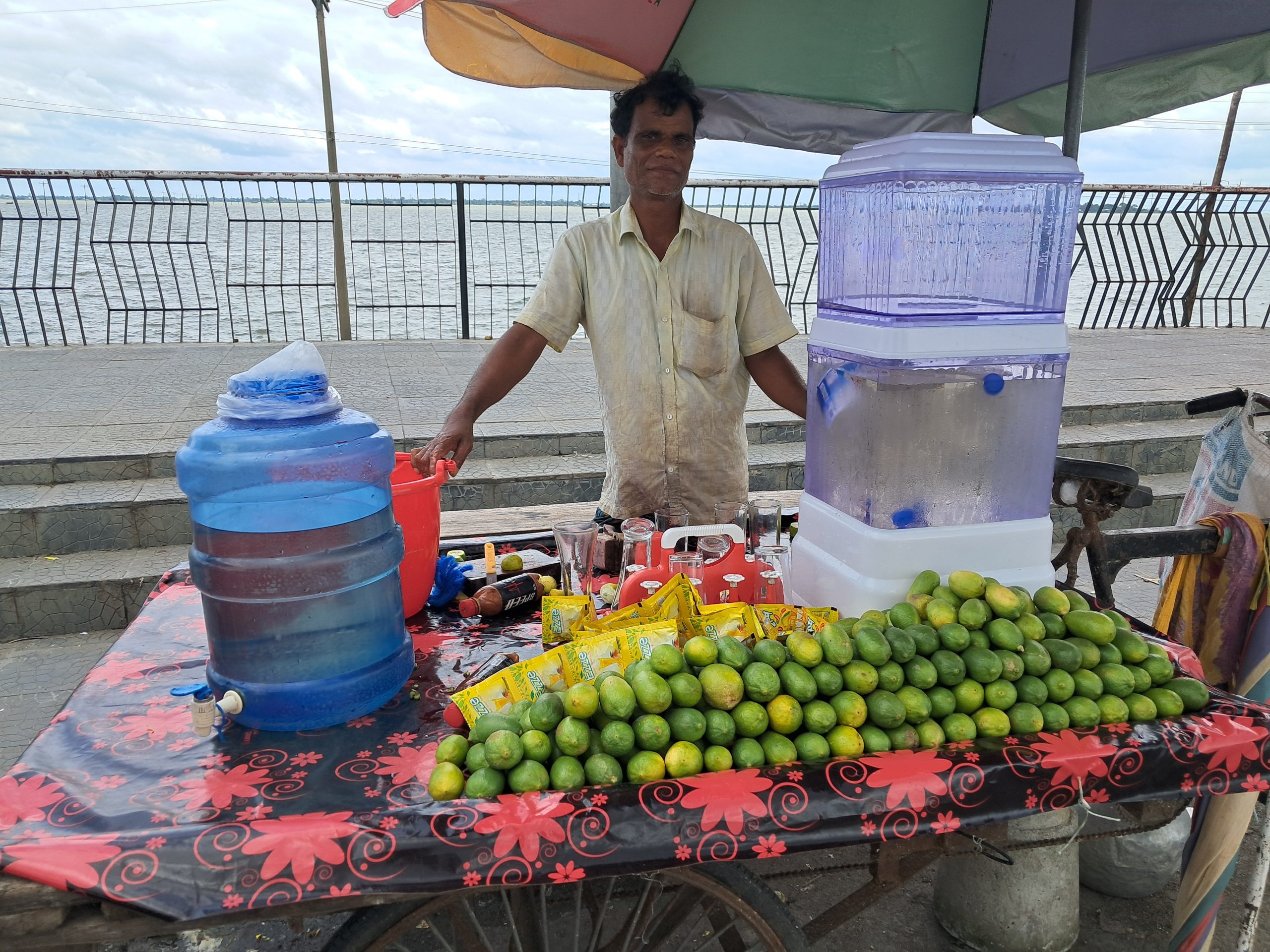
He used to sell a single serving for Tk10 at the bazaar and has not raised prices yet. I am surprised because this does not account for inflation and the rising cost of living over the years. But he says he can make a profit, appreciating that vendors here do not have to pay bribes to do business.
The junction was vibrant yesterday afternoon. Visitors took pictures and selfies with the white-brown landmark, horse owners walked their animals around to attract customers, and jhalmuri (spicy puffed rice) sellers cried their wares. I hardly see anyone today, but Fazlu says they will come in a few hours.
It is half past 12, and I get on a big boat at the Mithamoin terminal to travel to Balikhola, from where Kishoreganj can be reached by road. The departure is imminent, but only a few passengers are aboard. I am worried about possible delays as I may miss the Dhaka-bound train scheduled to depart from Kishoreganj station in the afternoon.
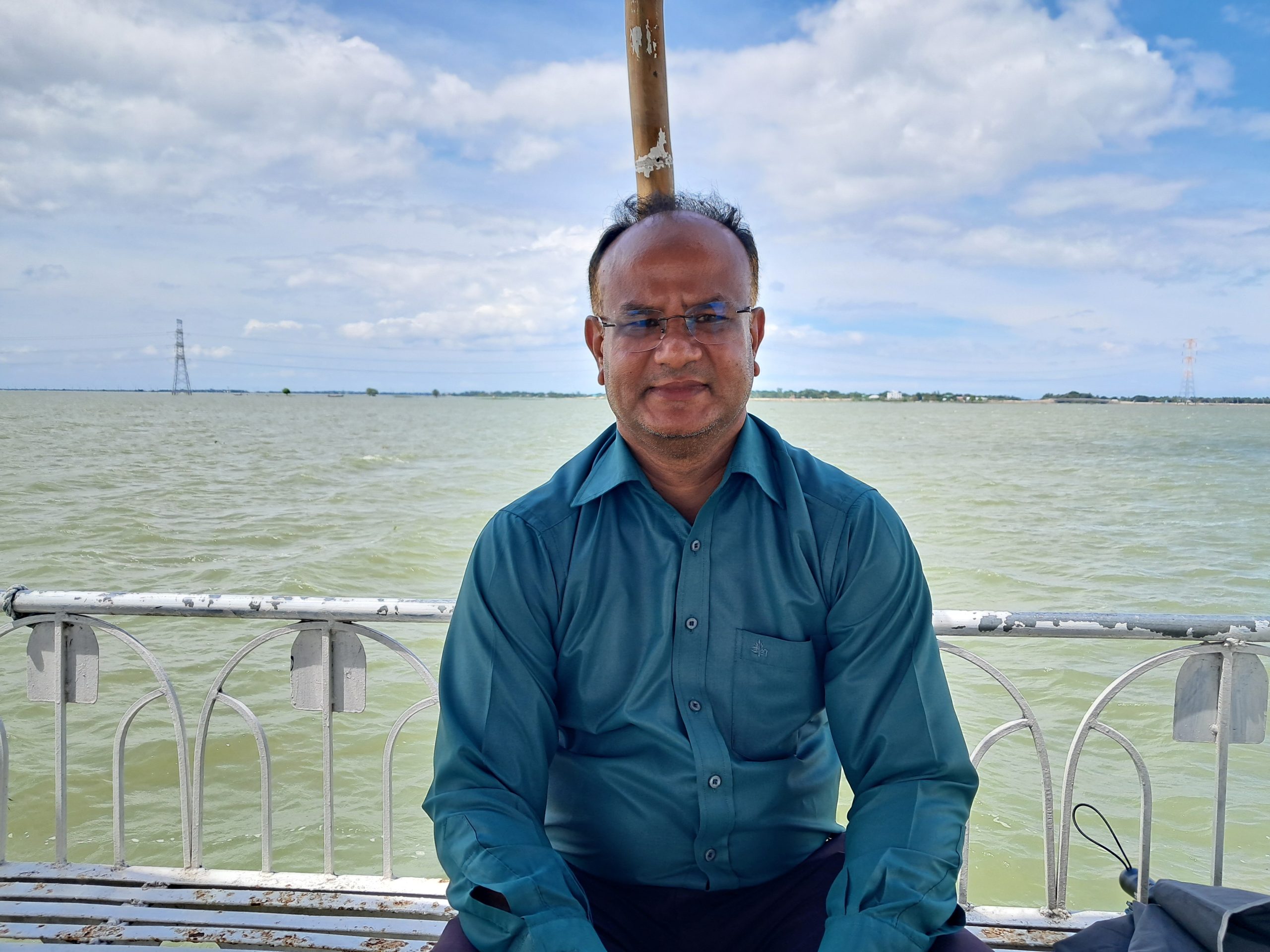
The boat will start on time, a bespectacled passenger with a high degree of baldness reassures me. His name is Md SA Shaheen Shah, and he is wearing a teal blue shirt tucked into black pants. A lecturer in accounting at Muktijoddha Abdul Haque Government College in Mithamoin since 2015, he tells me higher secondary educational opportunities in haor were limited in the past as there were no colleges.
“Now that we have colleges, students are studying, but the majority of them are not attentive mainly due to a lack of awareness among parents. We have fewer GPA-5 scorers compared to the upland areas,” he says.
The haor road has widened access to education, enabling students to enrol in institutions outside their native upazilas. But many of them still have to take boats because they are from remote villages with no high schools. The high schools they go to are located in places that only have boat connections, Shaheen explains.
He also says the female education rate in haor was very low before, but the three upazilas now have girls’ schools. I find the road’s impact on marriages particularly interesting. In the past, for instance, an Itna resident was reluctant to marry someone from Mithamoin or Austagram as the water was a major inconvenience, but inter-upazila marriages happen these days.
We are on the upper deck of the boat, the handful of passengers scattered around the metal benches along both edges. The boat rocks, pushing through the waves in the murky water. Walking along the haor road last evening, I heard the water crashing against the edges like giant waves on a shore.
Shaheen recalls being on a boat that was caught in a nor’wester a decade ago. He and his colleagues were returning to Mithamoin after finishing invigilator duties at a college. As the storm brewed, gusty winds blew and big waves jolted the boat.
“A female colleague was so frightened that she cried. Even we, the men, were scared. The storm subsided in 15-20 minutes, and we safely reached Mithamoin,” he says.
Just as he describes the incident, our boatman announces a propeller-like component has become detached and disappeared in the water. His colleague dives in to look for it. I feel that facing a storm Shaheen has just described could be less frightening than being stranded here with a dead engine.
A small, single-deck boat called in by our boatman arrives to rescue us. It has no benches, only plastic chairs stacked for passengers. We outnumber the chairs, forcing the remainder of us to remain standing.
Some white patches of cloud suddenly turn grey, with a cool wind blowing after a while. I assume it is raining somewhere nearby. Unless it turns into a tempest, I am ready to welcome a spell of rain and enjoy it under the canopy.
It does not rain even after we reach Balikhola. The boatman gives me a Tk10 discount because he does not have the change. To him, the water is peace.