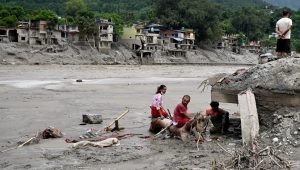
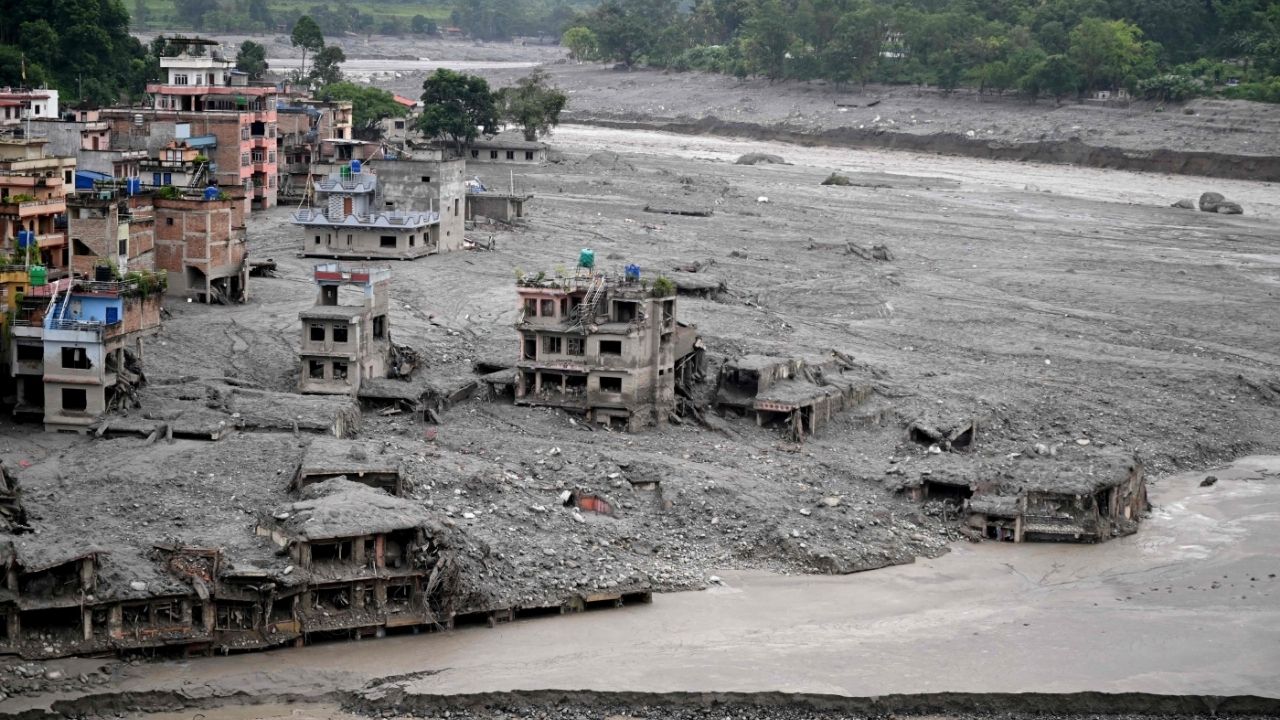
Rescue teams in Nepal are continuing efforts to locate survivors of last week’s catastrophic flash flood, which struck the Himalayan nation and neighbouring Tibet on 26 August, killing more than 1,000 people and leaving thousands still unaccounted for.
A week on, authorities are working through debris-filled hydropower tunnels and damaged infrastructure as hopes of finding more survivors fade, with foreign specialist teams now assisting the search, according to Reuters.
At least 1,114 people have been confirmed dead and 2,916 remain missing in Nepal, while China has reported 16 deaths and 546 people still missing. Experts believe the disaster, an unprecedented surge of ice, rock, mud and debris down the mountains, was triggered by a glacier collapse.
The UN Development Programme estimates the flood generated 2.2 million tonnes of debris, including building wreckage, rock and sediment.
About a tenth of Nepal’s electricity generation capacity has been affected, after the flood damaged eight operating power projects and four under construction; officials say only some can be repaired.
Nearly 50 suspension bridges were also hit, of which 20 are considered repairable, while the rest will need to be rebuilt entirely. A further 31 motorable bridges were washed away. Nepal’s finance minister has said the country may need between $4 billion and $5 billion to rebuild.
Rescuers using heavy machinery, helicopters and excavators have reached more than 11,000 people so far, backed by over 9,200 army troops deployed to assist with rescues, body recovery and clearing blocked roads.

Efforts are currently concentrated on the tunnels of destroyed hydroelectric plants, where powerhouse chambers offered people places to shelter.
Authorities are still working through collapsed debris and floodwater to reach 639 people believed trapped at project sites, including dozens thought to be inside tunnels; about 279 people have already been rescued from these locations.
Nepal’s foreign minister said last week that the country required outside help mainly in specialised and technical areas where it lacks expertise, rather than in search and rescue itself.
Alongside relief supplies and aid reportedly worth more than $42 billion, several countries have sent specialised rescue teams.
India and China have deployed tunnel experts and forensic teams, while South Korea is dispatching a 44-member emergency relief team.
Beijing has said it will send further DNA identification specialists and supplies, and Singapore has sent a six-person victim identification team, with 13 additional members and DNA testing equipment due to arrive on Wednesday.
Heavy machinery reached the worst-hit Gyirong border crossing into Nepal for the first time on Wednesday, after China rebuilt the only access road, which had been washed away in the flood.
Supplies and equipment had previously been airdropped to front-line rescuers who trekked through the mountains to reach the site. State broadcaster CCTV showed footage of rescue crews using life-detection devices and search dogs alongside excavators at the scene.