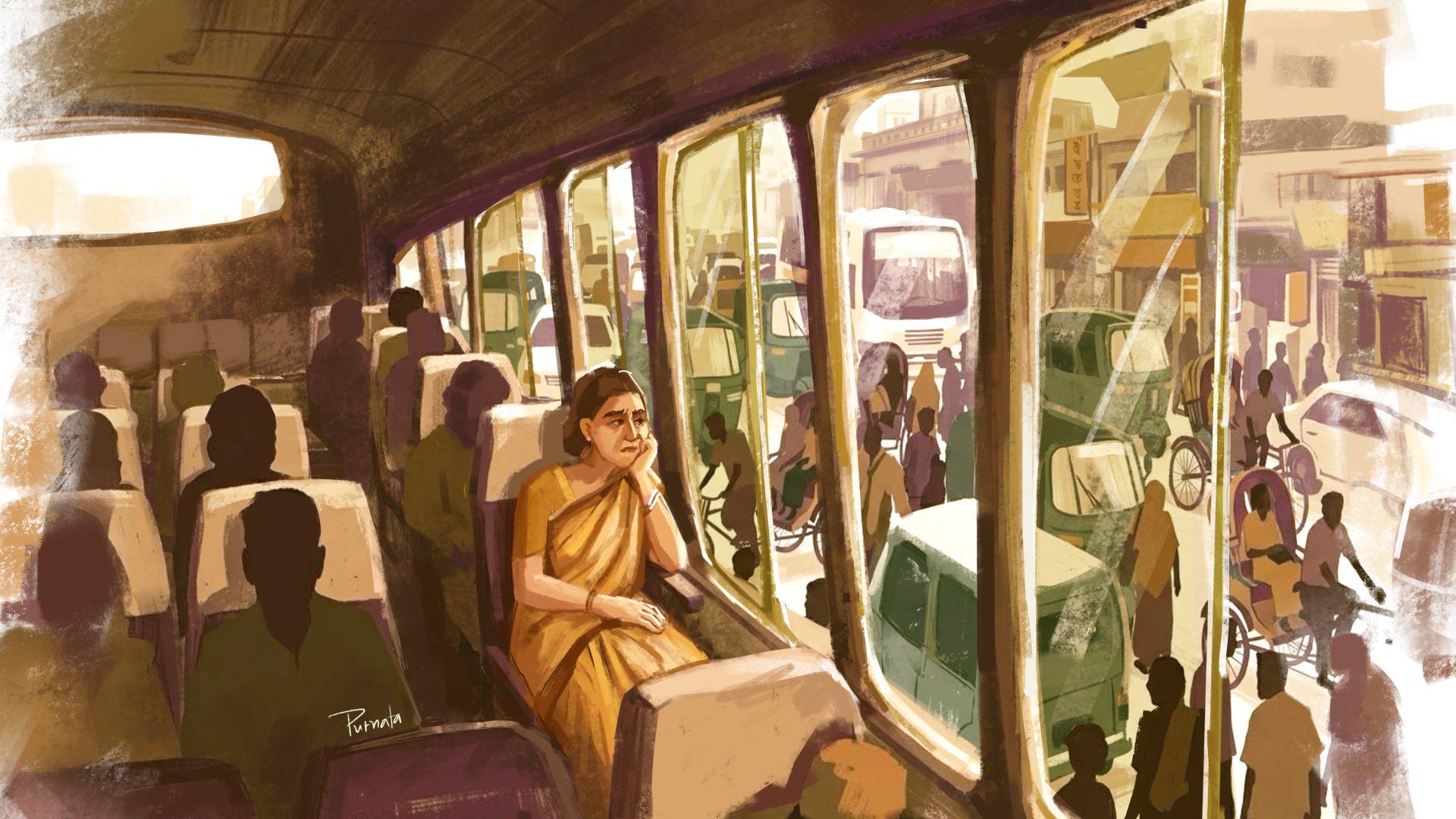



It is 8:30am at the Bijoy Sarani intersection, and the city is at a complete standstill. Outside, a symphony of impatient hydraulic horns blares in unison, the humid morning air is thick with the grey exhaust of idling buses, and the heat rising from the asphalt is almost palpable. For the average Dhaka commuter trapped inside a CNG, a public bus, or a car, this daily gridlock is not just a logistical hurdle; it is a psychological crucible.
As our commutes stretch from minutes into exhausting hours, the physical confinement and helplessness trigger what mental health experts call “traffic stress”. This form of chronic urban anxiety spikes cortisol levels, tightens shoulders, and leaves professionals arriving at their offices already mentally depleted. While we cannot control the city’s legendary congestion, a growing movement toward urban mental health suggests we can control our internal response. Reclaiming this idle, stressful time through practical mindfulness and targeted breathing exercises can transform a chaotic commute into a sanctuary of quiet reflection.
In a fast-paced urban environment like Dhaka, our minds are constantly projecting forward: To the morning meeting, the pending email, or the school run. When physical progress is blocked by a sea of vehicles, a profound cognitive dissonance occurs. The brain enters a “fight-or-flight” state, yet there is nowhere to run.

Addressing this “traffic stress” is a critical frontier for urban mental health and anxiety relief. Mindfulness does not require a quiet room or a yoga mat; it is simply the practice of bringing your awareness entirely into the present moment without judgment. By shifting our focus from the stagnant road ahead to the immediate sensations of our own bodies, we can interrupt the anxiety loop before it escalates.
To survive the daily grind, commuters can practice simple, discrete breathing exercises designed to stimulate the parasympathetic nervous system, which naturally lowers heart rate and blood pressure:




The 4-7-8 centring breath: Sit comfortably with your spine as straight as your seat allows. Inhale quietly through your nose for a count of 4. Hold your breath for a count of 7. Exhale completely through your mouth, making a soft whoosh sound, for a count of 8. Repeating this cycle four times acts as a natural tranquillizer for the nervous system, immediately cutting through the frustration of a sudden delay.
Tactile box breathing: Used widely for high-stress situations, this technique is easily adaptable to a stationary vehicle. Inhale for 4 seconds, hold for 4 seconds, exhale for 4 seconds, and hold empty for 4 seconds. To stay grounded, rest your hands on the steering wheel or your lap, focusing entirely on the physical sensation of your lungs expanding and contracting.
Sensory anchoring: When the noise outside becomes overwhelming, close your eyes halfway and find three specific sounds within your immediate environment: The hum of the car’s AC, the rustle of your bag, or the rhythm of your own breath. This anchors your mind inside your personal space, creating a psychological barrier against the chaotic external environment.
As Dhaka grapples with rapid urbanisation, managing our mental wellbeing must go hand-in-hand with physical health strategies. We often spend our commutes doomscrolling on our smartphones, compounding our anxiety with digital noise. Swapping ten minutes of screen time for intentional breathing not only mitigates “traffic stress” but also builds long-term emotional resilience.
The next time the traffic lights turn red, and the gridlock settles in, resist the urge to fret over the ticking clock. Instead, sit back, relax your shoulders, and take a deep, conscious breath. The road may be blocked, but the path to mental peace remains entirely open.