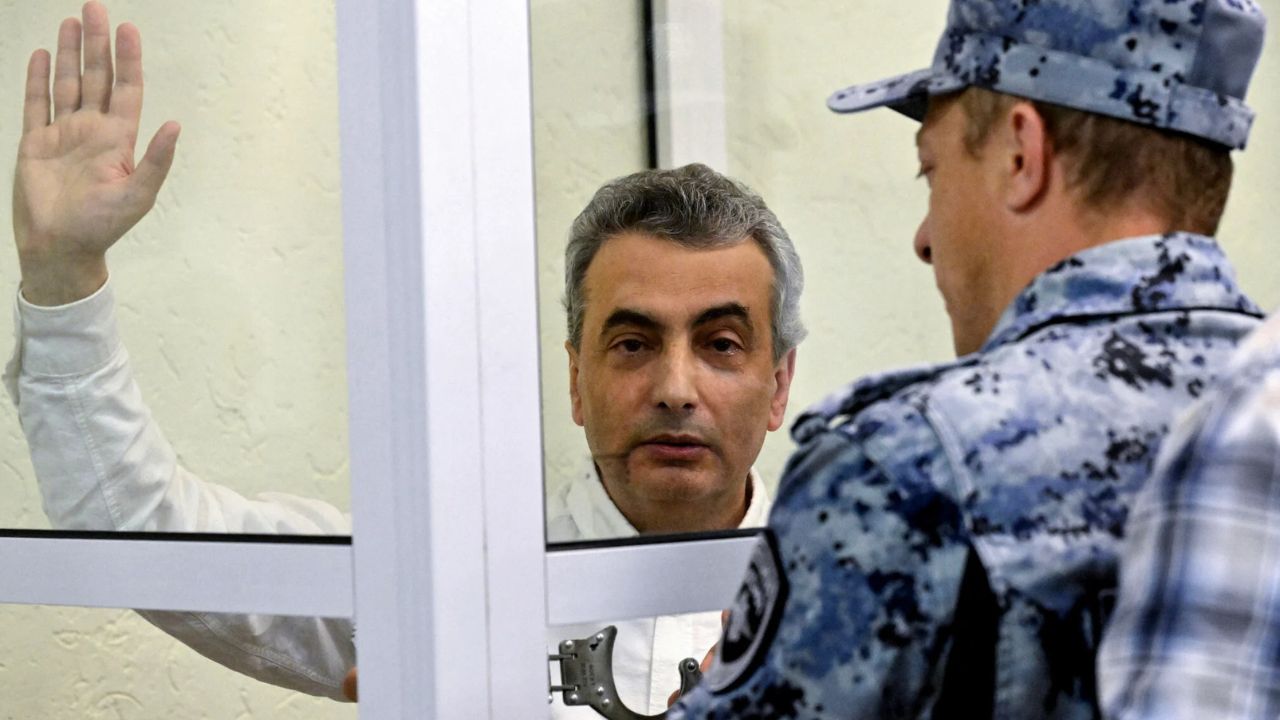



Russia’s prominent anti‑war politician Lev Shlosberg has been sentenced to 11 years and one month in a penal colony for “discrediting” the armed forces and “spreading false information” about them.
The 63‑year‑old condemned the verdict by a court in Pskov, saying its sole purpose was to “punish a person for his political, public and civil position.” His liberal party Yabloko, where he serves as deputy head, said it would appeal.
The ruling came minutes before Russia’s Supreme Court rejected Yabloko’s challenge against a ban preventing it from contesting September’s parliamentary elections, BBC reports.
Yabloko was the only registered party opposing Russia’s full‑scale invasion of Ukraine launched in 2022.

Since the invasion, dissent against President Vladimir Putin—who has ruled for nearly 27 years—has been crushed under wartime censorship laws, with public opposition risking heavy fines or long prison terms.
The Pskov court found Shlosberg guilty of “public actions aimed at discrediting the use of the armed forces.” Prosecutors had sought 12 years and one month. The charges stemmed from comments he posted on social media.


In his closing statement, Shlosberg rejected the case as “an imitation of an investigation” designed to “achieve an obviously illegal goal,” according to a transcript published by Novaya Gazeta.
He repeated calls for a ceasefire in the Russia‑Ukraine war and for “political dialogue,” but was repeatedly interrupted by the judge.
Earlier this month, Yabloko was struck from the ballot over accusations of supporting the “international LGBT movement,” which Russia’s Supreme Court has designated extremist.
A lawsuit by pro‑Kremlin nationalist party Rodina also alleged copyright infringement. Yabloko denies all charges.
All 10 other parties cleared to run in the 18–20 September election back the war. State pollster VCIOM reported United Russia’s approval rating at 32.1% earlier this month, its lowest since May.
Despite slipping support, the Kremlin is widely believed to retain the means to secure its desired outcome, while independent election watchdogs have been stripped of much of their oversight capacity.