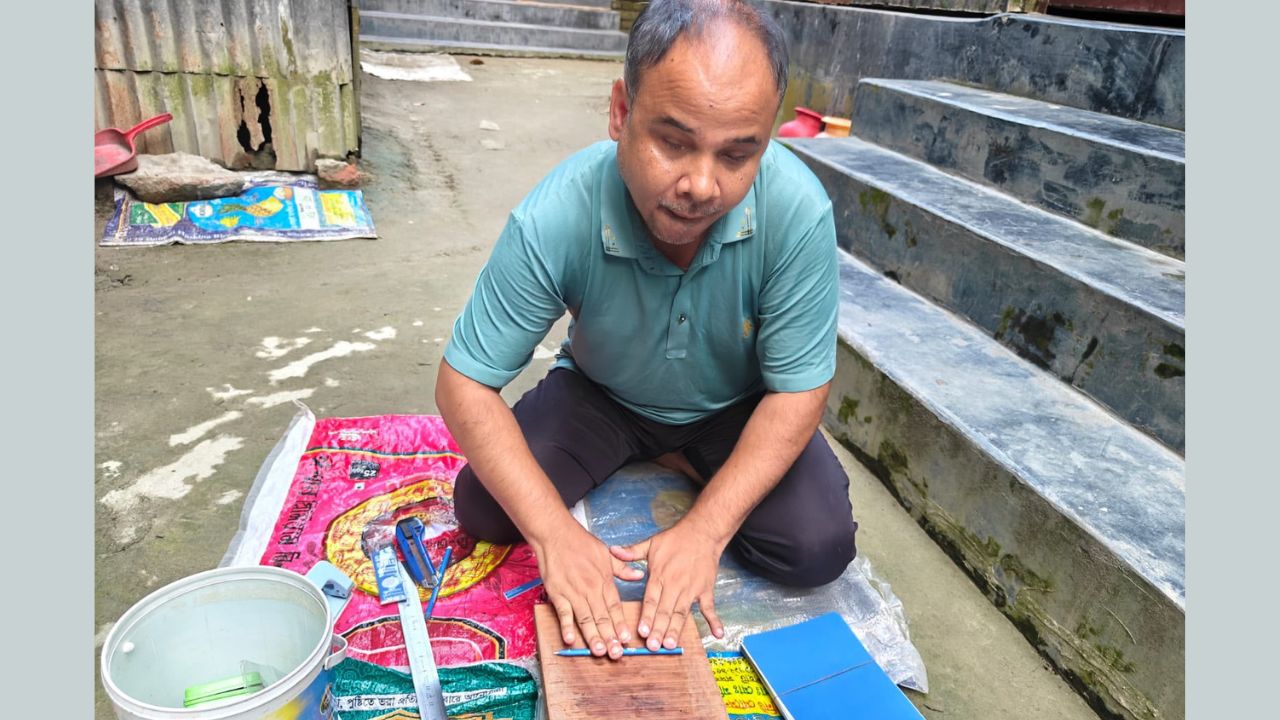

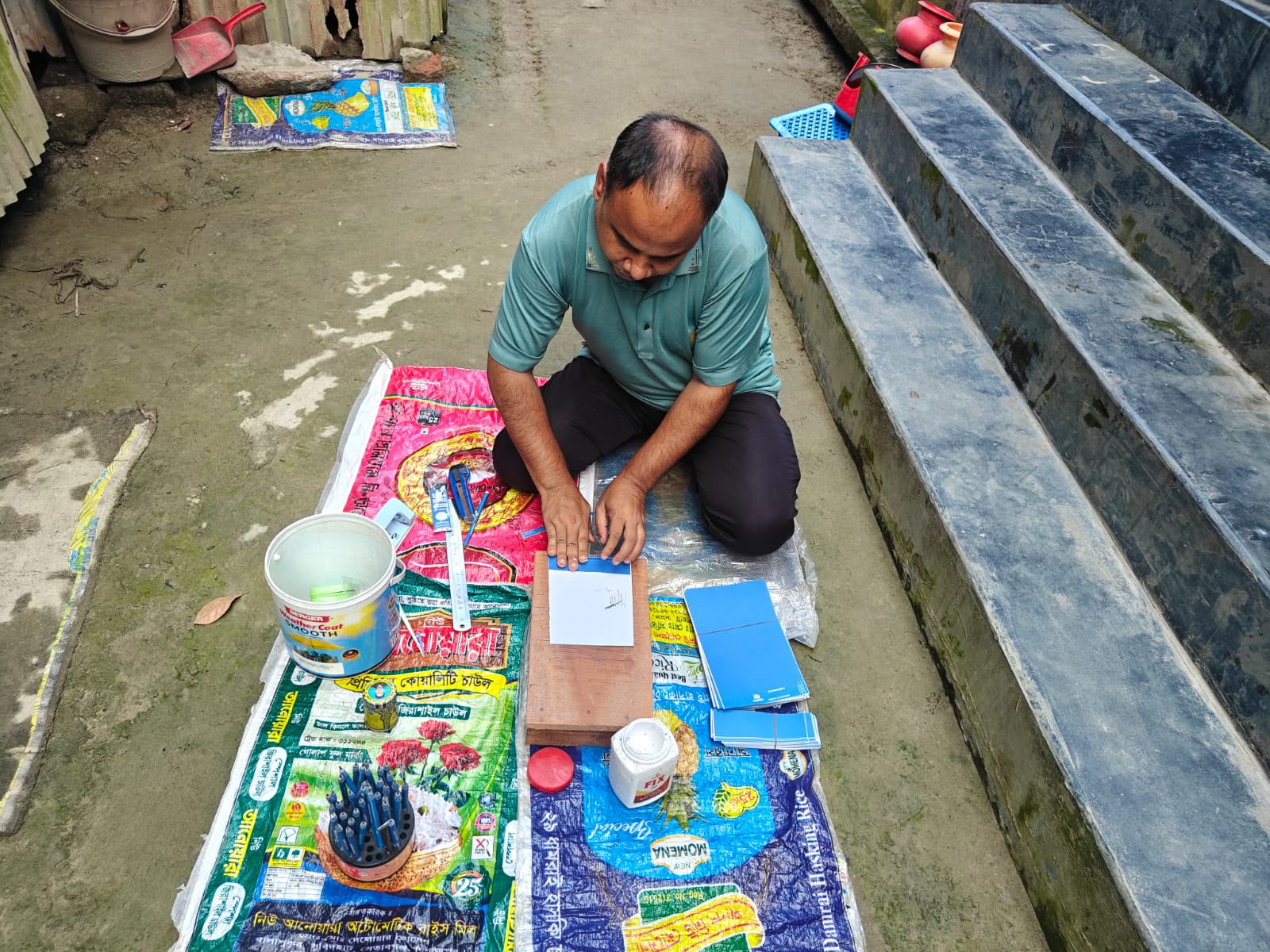
In the quiet, sun-dappled courtyard of Uttar Falia village, just two kilometres from Gaibandha town, a pair of hands moves with effortless, rhythmic grace.
Shariful Islam cannot see the vibrant colours of the paper he handles, nor can he watch the sunlight warm the earth around him, having been born without the gift of sight.
Yet, guided by a brilliant inner light and an unwavering sense of purpose, Shariful continues to prove that vision is not about what your eyes perceive, but what your heart dares to imagine.
Today, this inspiring master’s graduate is quietly leading a green revolution from his family’s homestead, handcrafting eco-friendly paper pens designed to heal a planet suffocating on single-use plastic.
A green spark in the silence of adversity
Every single day, millions of plastic pens are discarded into landfills, rivers, and soil, taking centuries to break down. For Shariful, that environmental tragedy was not merely a distant issue, but a direct call to action.
Speaking to TIMES of Bangladesh, he explained that plastic is extremely harmful to the environment, which is why he took the initiative to craft these pens with the health of the planet in mind.

His creation offers an elegant solution: a biodegradable paper pen that harmlessly decomposes back into the earth once the ink runs out.
Within moments, his practised fingers wrap ink refills in bright paper, secure them firmly with non-toxic glue, and lay them out in the courtyard sun to harden into durable writing instruments.
Beyond their planet-friendly design, the pens offer a practical relief for students, as plastic pens become slippery with sweat during long examinations lasting three or four hours, whereas these paper pens absorb sweat and allow students to write comfortably.
From shattered dreams to campus fame
Shariful’s journey to this quiet courtyard triumph was paved with relentless hardship.




Born into a low-income household, he refused to let either physical limitations or financial adversity halt his education.
He passed his Secondary School Certificate examination from Gaibandha Islamia High School in 2015 and his Higher Secondary Certificate from Gaibandha Government College two years later.
Driven by ambition, he travelled more than 500 kilometres from home to sit for the admission test at the University of Chittagong, where he completed his bachelor’s in sociology in 2023 and his master’s in the same subject two years later.
When the Covid-19 pandemic hit, his father Rafiqul Islam’s small trading business collapsed, leaving the family on the verge of losing all their capital.
Returning home, Shariful knew he had to act. He first learnt about paper pens through Nasima Akter of Jashore, initially sourcing them from her before seeking her advice and starting production himself in 2023.
His university friends quickly came forward to support him, helping the pens and handmade notebooks rapidly gain popularity amongst students across the country.
Building a business against the odds
Shariful now produces and sells an average of 1,000 pens and 500 notebooks each month, with notebooks priced between Tk20 and Tk40, and each pen selling for Tk10.
To reach more customers, he has rented a small shop at Pulbandi Bazar, about one kilometre from Gaibandha town.
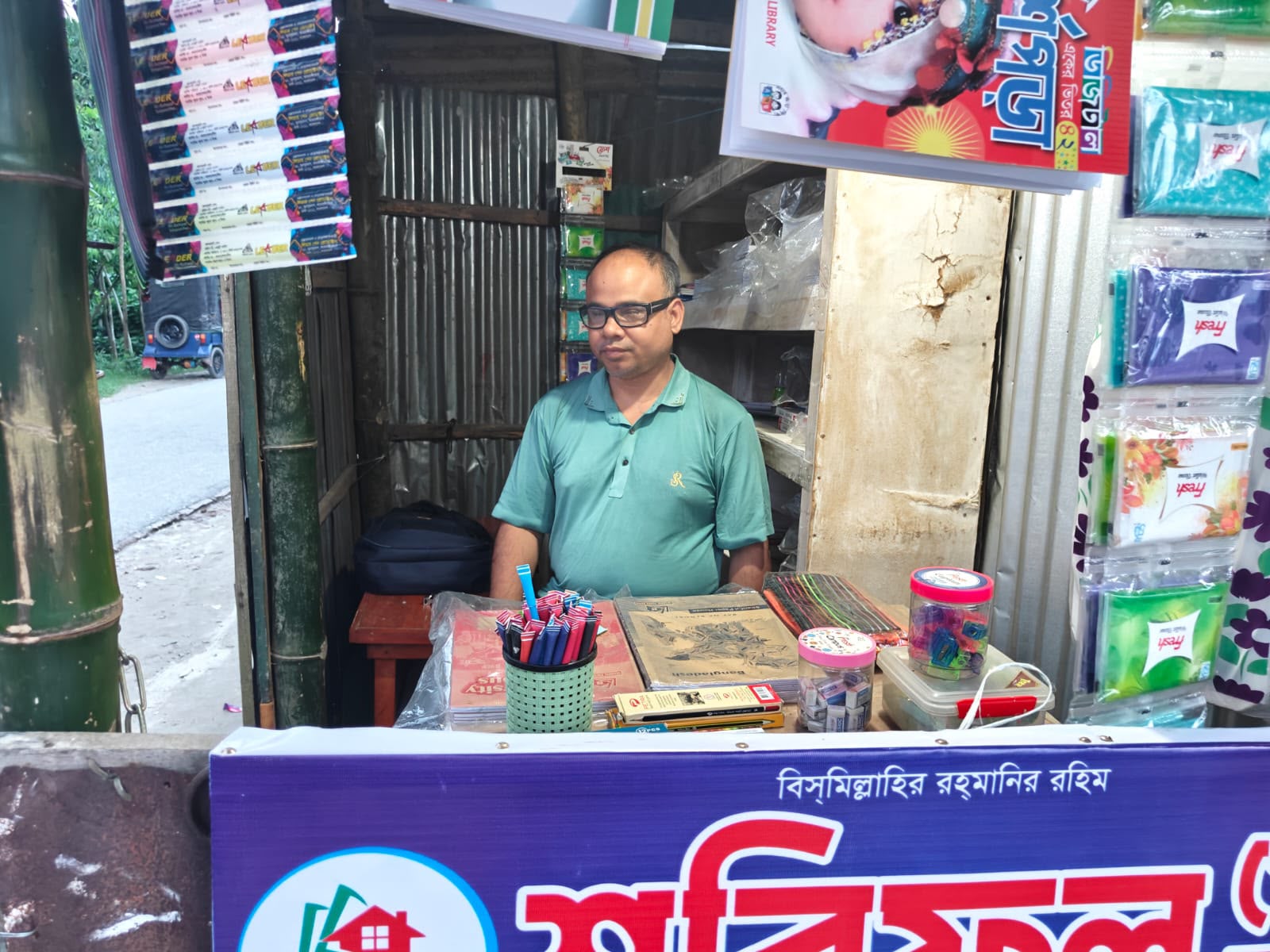
The financial return, however, remains modest. With each pen costing around Tk7 to produce, he earns a profit of about Tk3 per unit, leaving him with a monthly income of roughly Tk2,000 to Tk3,000, meaning he still relies on his father’s earnings.
Yet, despite the limited number of pens that can be crafted by hand each day, every single item produced represents a victory of spirit over circumstance.
A beacon of hope for an entire community
For the local people, Shariful’s efforts represent far more than a modest business, serving as a powerful source of inspiration for overcoming life’s greatest obstacles.
Local student Mizanur Rahman remarked that Shariful is a living example for everyone, having overcome every barrier to complete his university education despite his visual impairment.
College teacher Harun Or-Rashid praised him as a deeply humble and polite young man whose independent efforts to protect the environment are a genuine cause for local pride. Recognising the potential of his initiative, Gaibandha Sadar Upazila Nirbahi Officer Sabuj Kumar Basak assured that the government will provide every possible support to help Shariful improve and expand his business.
Real change rarely requires grand corporate gestures; more often, it begins with a single, conscious decision to do better.
By turning simple paper into a tool for environmental healing, Shariful Islam proves that physical limitations are no barrier to shaping a better world.