


Asian stock markets mostly closed higher on Tuesday, as South Korea and Japan recovered a portion of the losses sustained in recent sessions following heavy selling of artificial intelligence (AI)-related shares. While US stock futures moved slightly higher, oil prices saw a decline.
South Korea’s Kospi index rose 4.7 per cent to 6,821.41, bouncing back from a 4.5 per cent drop the previous day. The recovery was spearheaded by technology stocks; Samsung Electronics climbed 7.4 per cent and memory chip maker SK Hynix gained 6.4 per cent.
Although the Kospi has declined by more than 20 per cent over the past month due to profit-taking and concerns regarding an AI investment bubble, the index remains up by more than 50 per cent so far this year.
In Japan, the Nikkei 225 gained 2.8 per cent to 65,926.41 after reopening following Monday’s public holiday, recovering part of last week’s losses.

Leading the gainers was Kioxia Holdings, which surged 15.9 per cent, while chip testing equipment maker Advantest rose 6.9 per cent. SoftBank Group advanced 6.1 per cent, and Tokyo Electron added 1.3 per cent.
Taiwan’s Taiex index climbed 3.6 per cent, bolstered by a 2.8 per cent rise in Taiwan Semiconductor Manufacturing Co (TSMC), the world’s largest contract chipmaker.



Elsewhere in the region, Hong Kong’s Hang Seng Index edged up less than 0.1 per cent to 25,150.75, and China’s Shanghai Composite Index rose 0.6 per cent to 3,819.66. Australia’s S&P/ASX 200 added 0.1 per cent, whereas India’s Sensex slipped 0.1 per cent.
Oil prices eased following Monday’s gains. Brent crude, the global benchmark, fell 0.7 per cent to $88.63 a barrel, while the US benchmark crude dropped 0.3 per cent to $82.24 a barrel.
Investors remain focused on the Middle East after reports that Iran attacked another tanker in the Strait of Hormuz. The United States launched fresh strikes on Iran for a tenth consecutive night, while Tehran continued retaliatory attacks against US allies in the region.
Diplomatic efforts are ongoing, with Iran’s interior minister visiting Pakistan, which has been acting as a mediator, though no breakthrough has been announced.
Analysts at ING noted some signs of potential de-escalation between the US and Iran but warned that significant differences remain. They also highlighted that attacks by Yemen’s Iran-backed Houthi rebels on shipping linked to Saudi Arabia have increased concerns over global oil supplies.
On Wall Street on Monday, the S&P 500 fell 0.2 per cent, the Dow Jones Industrial Average dropped 0.6 per cent, and the Nasdaq Composite slipped by less than 0.1 per cent.
Despite this, several major semiconductor firms posted gains: Nvidia rose 0.2 per cent, Micron Technology gained 1.9 per cent, Broadcom climbed 2 per cent, and Advanced Micro Devices (AMD) advanced 1.6 per cent after expanding its AI partnership with Microsoft.
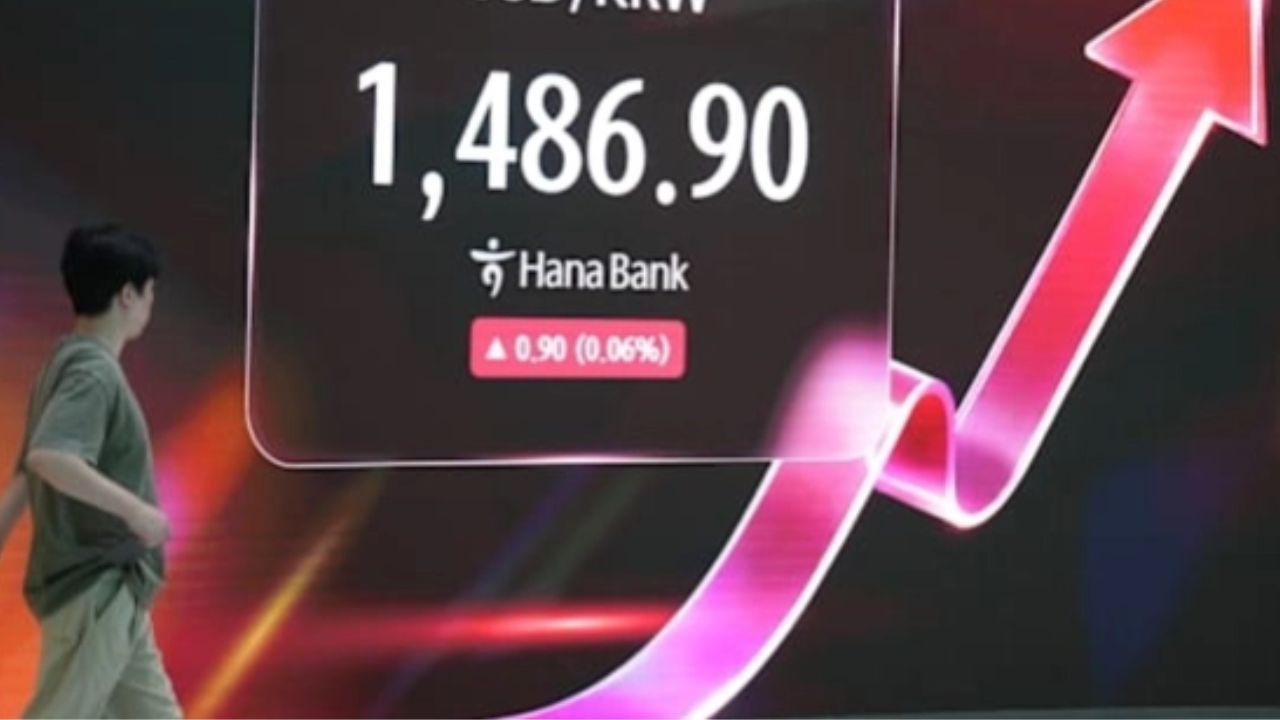
In currency trading, the US dollar was little changed at 162.48 Japanese yen, while the euro remained steady at $1.1414.