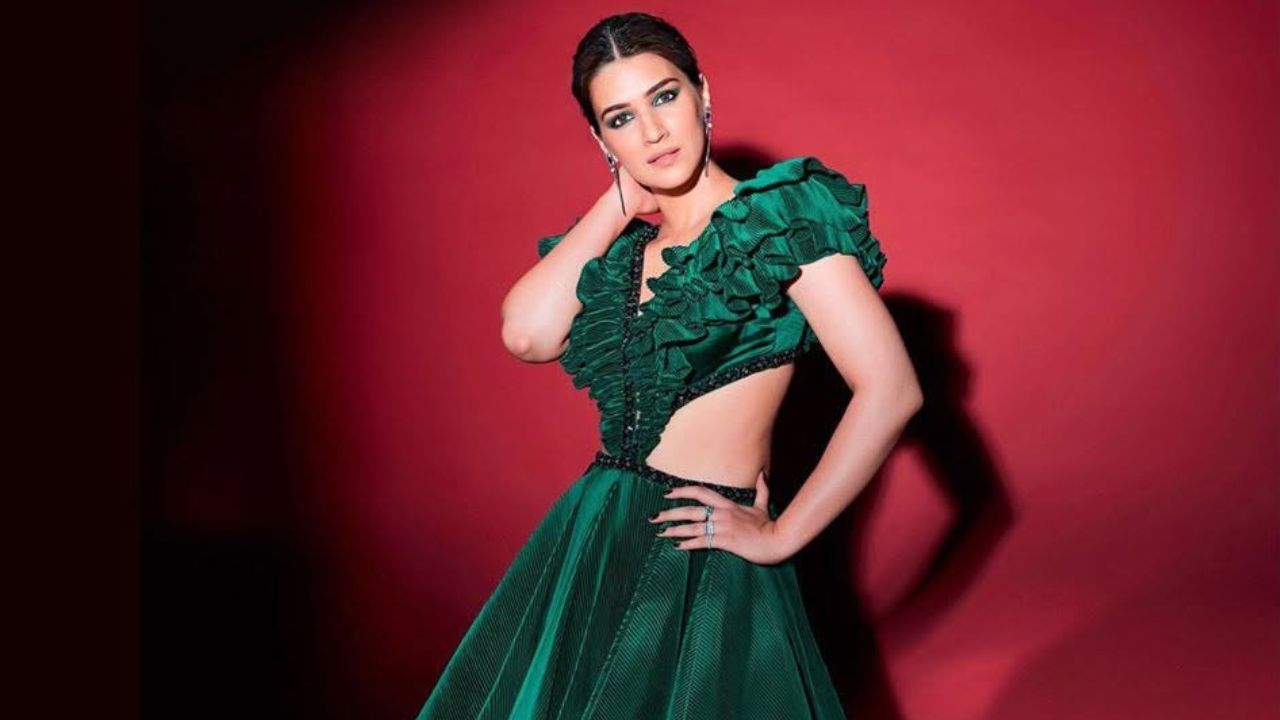

Red carpets, blockbuster films and millions of fans often create the illusion that success erases inequality. Yet National Award-winning actor Kriti Sanon says the reality behind the camera tells a different story.
In an interview with The Indian Express, Sanon reflected on more than a decade in the film industry and described an environment where male actors often receive greater respect, influence and visibility than their female counterparts.
She recalled that when she entered the industry in 2014, female characters were frequently written as little more than romantic interests, with little effort made to define their identities or backgrounds. While she believes stronger roles for women are becoming more common, she said most mainstream films remain centred on male stars.

Sanon also described everyday inequalities on film sets. She said women who question directors are often labelled as “overanalysing”, while the same suggestions from male actors receive praise. She remembered occasions when male co-stars were given better rooms and cars, stressing that the issue was never about luxury but about respect. “Don’t make me feel less,” she said.




The actor also revealed that she once stepped away from parts of a film’s promotional campaign after a male co-star decided where and when she should participate. She returned only after the director personally requested her support, saying she did not want the filmmaker to suffer because of someone else’s decision.
Sanon acknowledged that conditions have improved and said women today are increasingly standing up for themselves. She admitted she eventually learned to challenge discrimination whenever she felt undervalued.
Her comments extend beyond Bollywood. They expose a problem that persists across much of South Asia’s entertainment industry, where women still fight for equal recognition despite matching the talent, workload and commercial appeal of their male colleagues.
If an established star with a National Award and a string of successful films still feels sidelined, it raises an uncomfortable question: what hope is there for newcomers and lesser-known artistes? It is a question that resonates not only in India but also in Bangladesh, where genuine equality behind the camera remains a work in progress.