The 9th Urban Dialogue 2026 concluded today at a city hotel in the capital with the issuance of a 16-point Declaration aimed at prioritising pro-people urban development.
Urban INGO Forum Bangladesh, which organised the day-long event, called for the immediate operationalisation of the National Urban Policy 2025, the Spatial Planning Act 2026, and the National Adaptation Plan (2023–2050) to protect the country’s urban population from climate, housing, and livelihood shocks.
Urban INGO Forum Bangladesh informed this press release issued on Wednesday.
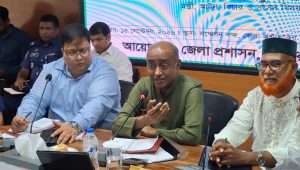
Held under the theme “Policies to Action: Transforming Cities for People,” the dialogue focused on creating more inclusive and resilient urban environments. The event brought together government officials, international and national non-governmental organisations, academics, urban activists, and representatives from informal settlements.

Speaking as the Chief Guest at the opening session, Md Saidur Rahman Khan, Secretary of the Ministry of Disaster Management and Relief, emphasised that national development is impossible without integrating disaster management into development programmes.
He noted that, under the leadership of the prime minister, Bangladesh has become a global leader in disaster management but warned that rapid urbanisation requires stronger preparedness.
“Following the prime minister’s directives, an initiative has been taken to develop nearly 100,000 urban volunteers to address earthquake risks, with around 50,000 already enlisted,” the Secretary said.

He further highlighted the need for coordinated efforts among the Fire Service, Meteorological Department, and other agencies, alongside long-term strategies such as canal restoration, tree plantation, and adaptive urban planning to make megacities safer.
In his keynote address, Dr Adil Muhammad Khan, Executive Director of the Institute for Planning and Development at Jahangirnagar University, observed that rapid urbanisation is currently outpacing municipal capacity. He identified severe infrastructural deficits and socio-economic disparities as primary hurdles to sustainable growth as the nation prepares for its LDC graduation.
The closing session was attended by Razwanur Rahman, Director General of the Department of Disaster Management, as the chief guest.
Discussions during the day were centred on three vital areas: affordable housing and equitable services, urban livelihoods, and climate-resilient development.
The Declaration urges the government to recognise informal settlements as integral city components, ensuring residents have access to water, electricity, and sanitation regardless of land tenure status.
It also calls for the establishment of a National Heat Action Plan, the creation of neighbourhood-based childcare hubs, and the formal integration of informal waste and sanitation workers into municipal systems with fair pay and health protections.
The Urban Dialogue Declaration serves as a strategic policy document capturing the consensus of the day’s discussions, providing a clear trajectory for achieving sustainable development goals in Bangladeshi cities.
Community representatives participated actively throughout the dialogue, sharing accounts of challenges including heat stress, waterlogging, and limited access to basic utilities.
The Urban INGO Forum Bangladesh, a platform of over 20 international agencies, stressed that these systemic changes are essential for ensuring an equitable future for all urban dwellers.