Every morning, before Dhaka fully commits to the business of being one of the world’s most polluted cities, a group of older people gather at Dhanmondi Lake and begin to laugh.
Not at anything. Not because someone has told a joke. They laugh because they have been instructed to, and because, it turns out, that is enough.
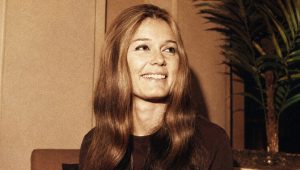
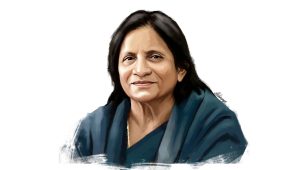
The practice is called laughter yoga. It was created in 1995 by Mumbai physician Dr Madan Kataria and his wife, Madhuri Kataria. They began with five people in a park and a theory: that the body cannot distinguish between genuine laughter and simulated laughter. Their first group quickly exhausted its supply of jokes, so the couple replaced them with structured exercises involving forced laughter, clapping, eye contact and breathing techniques drawn from pranayama.
What sounds, on paper, like the least dignified activity a retired civil servant could undertake in public has since spread to more than 120 countries. In that sense, the groups at Ramna and Dhanmondi are entirely unremarkable. In every other sense, they are exactly where they belong, particularly in the early morning, when the city still has time to breathe before it starts inhaling smoke.

Older residents of Dhaka have a complicated relationship with the city. They remember it before the traffic became an epidemic and before every available plot in Dhanmondi reached for the sky. The lake remains one of the few places that has managed to stay green. Redeveloped in the late 1990s and reopened to the public in the early 2000s, it is now lined with walkways and shaded by trees. Most mornings, it is filled with people who have nowhere more urgent to be. There are worse things than that.
The health benefits are not merely anecdotal. A 2020 systematic review by researchers at Hacettepe University in Turkey examined seven studies and found measurable improvements in blood pressure, cortisol levels and sleep quality among older adults who practised laughter yoga. The review also reported reductions in loneliness, depression and death anxiety.
That final benefit rarely appears in promotional material, but it may be the most significant. The body, it seems, does not require sincerity. It simply responds to the action.




Brity Deb, a yoga instructor at Ananda Yoga and Wellness Institute and Yoga with Deb, said, “Laughter releases feel-good hormones such as serotonin, which helps improve mood. It may not burn many calories, but it can positively affect heart rate and blood pressure.”
For many participants, however, the social benefits are just as important as the physical ones.
“It helps me spend my mornings, meet my friends and talk about life,” said Rafiqul Islam, 68, a retired businessman. “My daughter told me to try it. She said it couldn’t be bad, and at least I would have something to do.”
Researchers often note that laughter is most effective in groups. Anyone observing these sessions would probably identify that as the main attraction. The participants know one another’s names, ailments and life stories. They meet at seven every morning, a level of commitment many relationships never achieve.
Nasrin Begum, 62, began attending after her husband died in 2023.
“At first I thought it was ridiculous,” she said. “People laughing at nothing. Then my son persuaded me to come.”
By half past seven, the group has dispersed and the city grows louder. Traffic returns. Horns begin their daily chorus. But for an hour, a group of people who have lived long enough to know that dignity is often a performance stood together in the open air and laughed at nothing.
Their blood pressure dropped. Their spirits lifted. They went home.
Whether they found it funny is, scientifically speaking, beside the point.