In Dhaka, a short spell of rain is often enough to disrupt everyday life. Streets turn into shallow ponds, movement slows to a crawl, and residents are left navigating foul-smelling stagnant water that lingers long after the clouds have cleared.
In several neighbourhoods, narrow lanes remain submerged for days after rainfall. What should have been routine commutes become a struggle through murky water mixed with drain overflow and household wastewater.
Residents describe a persistent stench that clings to the air, making even brief outdoor activity uncomfortable.
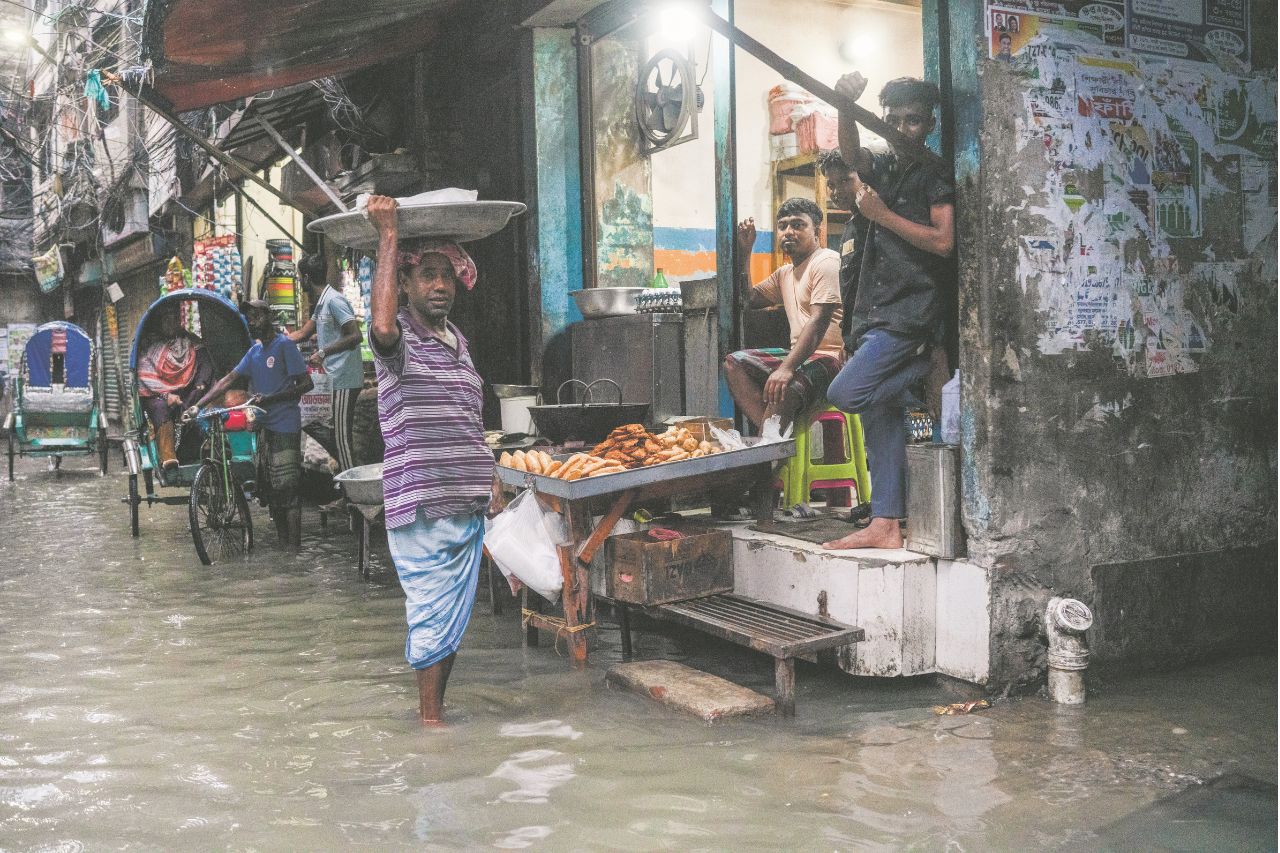
The problem is not limited to rain alone. Wastewater discharged from residential buildings routinely merges with overflowing drains, intensifying the flooding.

As water accumulates, entire stretches of road transform into stagnant pools, forcing residents to wade through contaminated water just to step outside their homes.
Children are particularly affected. Many school-going students walk through ankle- to knee-deep water each morning, arriving at school with soaked uniforms and visible discomfort.

Parents worry not only about the inconvenience but also about the increased risk of skin infections and waterborne diseases.




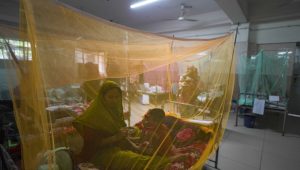
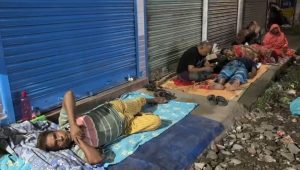
Health concerns are mounting as stagnant water becomes a breeding ground for mosquitoes. With the monsoon season approaching, public health warnings about dengue outbreaks have added to growing anxiety in affected communities.
For many residents, the waterlogged streets are no longer just a nuisance but a direct health threat.

Transport is equally disrupted. Rickshaws struggle to navigate submerged roads, motorcycles often stall, and private vehicles risk damage from prolonged exposure to contaminated water.
What should be short local trips frequently turn into delayed and costly journeys.
For ground-floor residents, the situation can become even more severe.
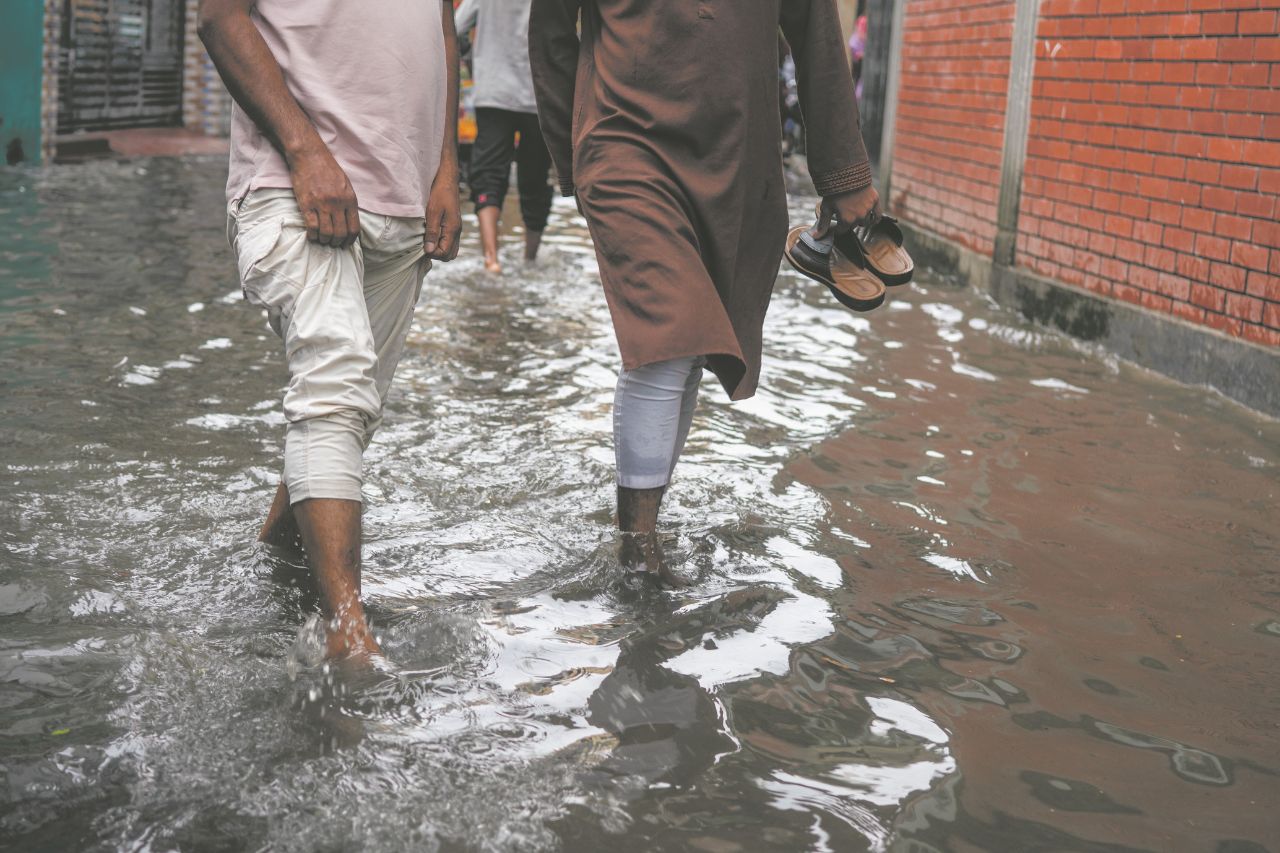
During heavy rainfall, water sometimes enters homes, damaging furniture, electrical appliances, and creating unsanitary living conditions that take days to recover from.
What was once treated as a seasonal inconvenience has become a recurring urban crisis.
As the rainy season intensifies, residents are calling for urgent drainage improvements and long-term infrastructure solutions to ensure that daily life does not continue to drown in stagnant water.