

Bangladesh’s tariff regime is taxing a lower-cost dairy product consumed by most households more heavily than premium alternatives, exposing a growing policy tension between nutrition goals, investment ambitions and revenue design.
At the centre of the debate is filled milk powder (FMP), a blended dairy product made by combining milk solids with vegetable fat and marketed as a cheaper substitute for full cream milk powder. It is widely used by low- and middle-income households as an affordable source of milk-based nutrition and has become one of the most accessible dairy products in the country.
The issue returned to focus after the FY2026–27 budget cut customs duty on bulk infant formula to 10 per cent but left FMP unchanged, despite repeated calls from businesses and trade groups for tariff harmonisation across dairy categories.
According to industry submissions to the National Board of Revenue (NBR), imported FMP faces a 25 per cent customs duty, 3 per cent regulatory duty, 15 per cent value added tax, 7.5 per cent advance tax and 5 per cent advance income tax, resulting in a total tax incidence of 61.8 per cent.
Whole milk powder carries a 10 per cent customs duty and a total tax incidence of 39.75 per cent.
The gap is amplified by import values. FMP is invoiced at about $2.80 per kilogram, compared with $3.86 for whole milk powder, meaning the cheaper product is effectively taxed more heavily in relative terms.
Industry participants say this shifts the burden onto consumers dependent on lower-cost nutrition.

FMP’s role in the market has expanded steadily. It reaches about 88 per cent of households versus roughly 30 per cent for whole milk powder. Imports rose to 23,595 tonnes in 2025 from 18,814 tonnes in 2023, while whole milk powder increased from 78,205 tonnes to 114,530 tonnes over the same period.
Despite its mass use, FMP remains classified alongside sweetened condensed milk. Industry stakeholders say the grouping is structurally misplaced because condensed milk contains significantly higher sugar and lower protein levels, while FMP delivers protein and calcium broadly comparable to standard milk powders.
The pricing impact is already emerging in distribution.
Manufacturers warn sustained cost pressure could trigger shrinkflation—smaller pack sizes instead of higher prices—potentially affecting low-end products, including widely sold Tk10 sachets.




The debate has moved beyond affordability into investment and industrial policy.
In April, Arla Foods Bangladesh urged the NBR to align FMP with whole milk powder duties, arguing that the current structure discourages value addition, innovation and investment.
The company is implementing a three-year programme developing lactose-reduced products, porridge formulations and other FMP-based nutrition products tailored to local demand.
Company submissions estimate tariff harmonisation could unlock about €20 million in near-term foreign direct investment tied to product innovation and capacity expansion, rising to €50 million in the medium term through new facilities, expanded production and value-added dairy manufacturing, including a proposed milk powder tower project.
The proposal has backing from the Danish government and European business groups.


In a letter to NBR Chairman Abdur Rahman Khan, the Royal Danish Embassy said Arla supports the livelihoods of about 250,000 people across its value chain and aligns with Bangladesh’s export diversification strategy targeting South Asian and Middle Eastern markets.
The embassy also cited dairy development work in south-western Bangladesh, where more than 7,000 farmers have been trained and 34 milk collection centres and 54 demonstration farms established.
Arla’s programmes have helped attract about €3.4 million under the Danida Green Business Partnerships scheme and support training for 50,000 farmers, around 80 per cent of them women.
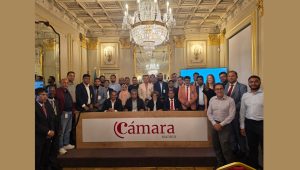
The European Chamber of Commerce in Bangladesh (EuroCham) has also called for duty harmonisation, arguing the current gap distorts competition and discourages value-added manufacturing. The issue was raised in Bangladesh–EU consultations on non-tariff barriers earlier this year.
EuroCham Bangladesh Chairperson Nuria Lopez said European firms remain committed to supplying affordable dairy products.
“European enterprises are committed to meeting Bangladesh’s nutritional demands with safe, affordable dairy,” she said.
“Harmonising duties on filled milk powder will eliminate non-compliant competition, secure state revenue and unlock vital foreign direct investment from European businesses to develop the dairy sector.”
She added that a consistent tax structure would also support nutrition outcomes and Sustainable Development Goal targets.
Industry estimates suggest harmonisation could generate about Tk150 crore in additional annual state revenue through improved compliance and market expansion. Stakeholders also warn that high duties may incentivise some operators to cut costs by compromising quality standards, putting compliant firms at a disadvantage.
International comparisons are increasingly cited in the debate, with countries including Sri Lanka, Pakistan, Vietnam and Cambodia applying broadly similar tariff treatment across comparable milk powder categories.
Industry submissions project the FMP market could contract by about 17 per cent by 2030 under the current structure.
Supporters of reform argue that aligning duties with whole milk powder would improve access to affordable nutrition, strengthen investment incentives and support development of Bangladesh’s dairy value chain.