



Bangladesh’s ceramic industry has expanded rapidly at home but failed to convert that strength into sustained export growth, as rising costs, energy instability and structural constraints erode global competitiveness.
Since 2010, production capacity and investment have grown by around 150 per cent, the home market has doubled to over Tk10,000 crore, and import dependency has fallen from more than 40 per cent to about 15 per cent of the demand in fiscal year 2024–25.
Yet export earnings have slipped below the 2010 level.
According to Export Promotion Bureau (EPB), ceramic exports in the last fiscal year fetched $35.22 million, down from a peak of $68.97 million in 2018-19.
The sector now has 75 factories with a combined investment of Tk19,247 crore, creating nearly 55,000 direct and about half a million indirect jobs.
Despite that scale, exporters say the industry has not built a stable long-term export trajectory.
“Over the last 15 years, the domestic market has expanded significantly, but export growth has remained uneven,” said Bangladesh Ceramic Manufacturers and Exporters Association (BCMEA) General Secretary Irfan Uddin.
“Since Covid, exporting to international markets has become more difficult, as rising input costs are forcing us to miss orders and buyers are shifting elsewhere,” he added.
Energy has emerged as the most immediate constraint.

Gas tariffs have surged by nearly 200 per cent over the past five years, while irregular supply and fluctuating pressure are disrupting kiln operations, where consistent temperature control is critical to product quality.
“Where we used to get about 90 per cent export-quality output, that has dropped to around 65 per cent due to gas pressure fluctuations,” said BCMEA General Secretary Irfan Uddin.
“In ceramic production, even a small temperature deviation can make products unsuitable for export markets,” he added.
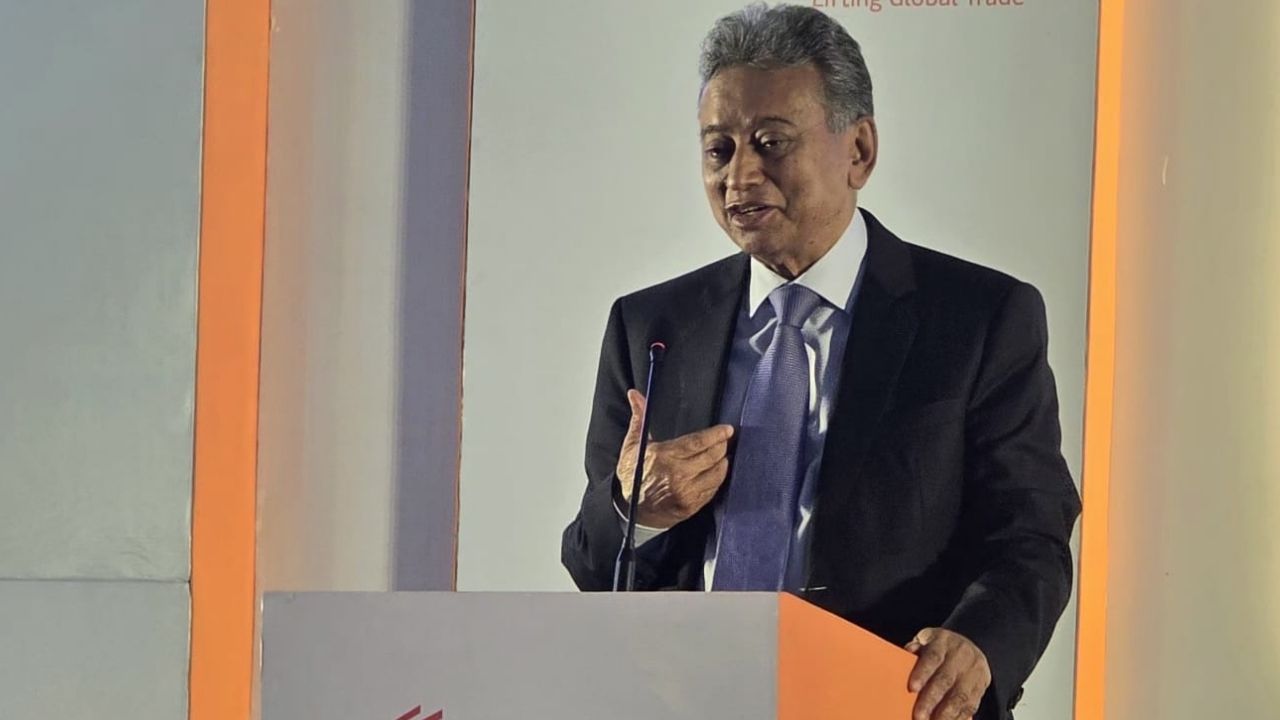
AkijBashir Group Deputy Managing Director for Building Materials Mohammod Khourshed Alam said the industry is now facing one of its most difficult phases.
He pointed to a combination of energy shortages, weak demand and broader economic pressures linked to geopolitical tensions in the Middle East.
Production costs have risen by more than 35 per cent, while product prices have increased by only 7–8 per cent, squeezing margins and undermining export competitiveness, he said.



The sector’s structural reliance on imported inputs is amplifying the pressure. More than 90 per cent of ceramic raw materials are sourced from abroad, exposing manufacturers to exchange-rate volatility and global supply disruptions.
That supply-side strain is now converging with softer demand.
Domestic consumption, the industry’s main growth driver, is slowing as the real estate sector stagnates and public projects face delays.
At the same time, capacity expansion has continued, creating a mismatch between supply and demand.
The outcome is intensifying price competition in the local market, further compressing margins.
Subsector performance reflects the pressure unevenly.
Tiles, the largest segment, highlight the domestic–export divergence.
In FY2024–25, local tile sales rose to Tk5,854.12 crore from Tk5,662.55 crore a year earlier, but export earnings fell to Tk6.58 crore from Tk16.77 crore, while imports increased to Tk1,299.03 crore.
Domestic producers still held 81.94 per cent of the market, indicating strong local dominance but weakening external competitiveness.
Tableware remains the industry’s primary export driver. BCMEA members shipped tableware worth Tk501.38 crore in the past fiscal year, slightly down from a year ago, while local sales increased to Tk792.99 crore.
EPB calculates exports based on the proceeds received, while the industry association tracks the shipment figures only.
However, targeting a brighter future, some manufacturers are continuing to invest in modern facilities and technology in the segment to improve quality and consistency for global markets, said AkijBashir Group Deputy Managing Director for Building Materials Mohammod Khourshed Alam.
According to him, sanitaryware has emerged as a relatively stronger growth segment.
Ceramic exports rose to Tk101.89 crore from less than Tk7 crore three years ago, while local sales climbed to Tk1,317.36 crore, accounting for 65 per cent of the home market.
Industry insiders said the segment could scale further if energy reliability improves and policy support strengthens.
Still, the broader outlook remains constrained.
According to Irfan Uddin, at least 10 factories among members are currently out of production, reflecting stress within the sector.
Policy support is also seen as inconsistent.
Export incentives for ceramics have been reduced from 10 per cent in 2019 to 6 per cent in the current budget, while frequent changes in tax and tariff structures are complicating long-term planning.
Uninterrupted and reasonably priced gas and electricity supply should be the top priority for policymakers, given the industry’s energy-intensive nature, said Khourshed Alam.
He also called for more predictable fiscal policies, improved customs processes and faster refund mechanisms to reduce the cost and complexity of exporting.
Even under pressure, some firms are continuing to invest.
AkijBashir Group is expanding capacity and upgrading technology across tiles, sanitaryware and tableware, with a focus on efficiency and sustainability.
The industry’s long-term trajectory will depend on fixing issues with both the domestic and export competitiveness, said Khourshed Alam.