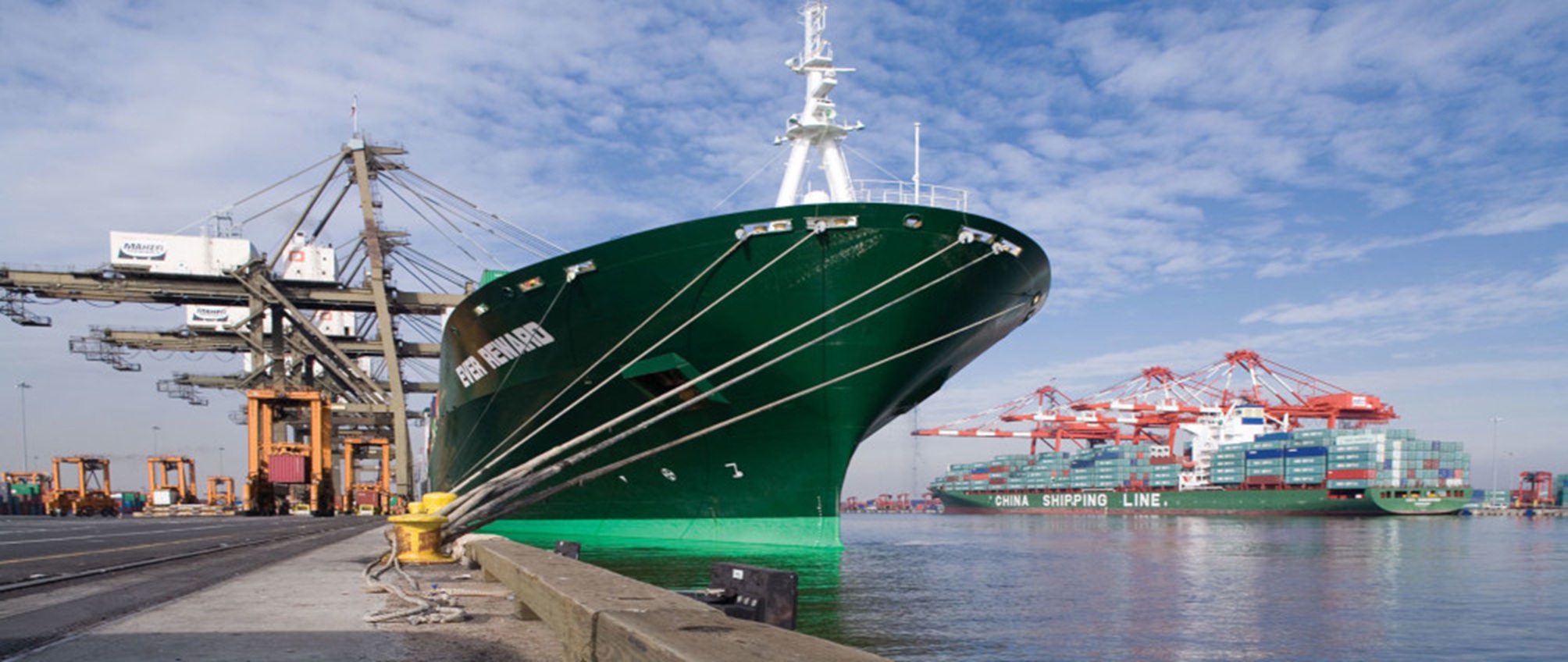

Ports are not merely gateways for ships. In the 21st century, they are strategic assets that determine a nation’s speed to market, its attractiveness to investors, and its position in global value chains. As Bangladesh stands at a critical juncture of economic transformation, the way we manage and operate our ports will decisively shape our future. This is why the transition from a traditional service or tool port model to a modern landlord port model is not a choice driven by fashion, but a strategic necessity grounded in global experience, national interest, and economic realism.
Historically, ports, including those in Bangladesh, evolved from tool ports, where port authorities owned infrastructure and equipment while also handling cargo operations. This later transitioned into the service port model, where authorities still dominated operations but outsourced selective services. Today, however, the global consensus has shifted decisively towards the landlord port model. Under this framework, the state retains ownership of land and core infrastructure, while private, specialised terminal operators invest in equipment, technology, and day-to-day management. This separation of roles has triggered what many describe as a structural renaissance in port efficiency and governance.
A common concern is that such a model may erode sovereignty. In reality, sovereignty is not defined by the number of cranes operated by the state but by its capacity to regulate, secure, and optimise national assets. In the landlord model, the state remains firmly in control of land, channels, and regulatory authority. Contracts are governed by domestic law, performance is strictly monitored, and operators can be replaced if standards are not met. Rather than diluting sovereignty, the model enhances it by embedding international standards of transparency, safety, and environmental compliance within a nationally controlled framework. The advantages of this model are both tangible and transformative. Efficiency improves in terms of faster loading and unloading, through disciplined time management, real-time data monitoring, and adherence to global operational benchmarks. Modern landlord ports deploy advanced digital systems that track vessel turnaround times, berth productivity, and cargo flows with precision.
The economic consequences of inefficiency are stark. Bangladesh currently lags behind competitors such as Vietnam by approximately 11 days in certain export cycles. In global trade, time is cost, and cost determines competitiveness. High-value, time-sensitive industries, such as electronics, automotive components, and advanced manufacturing gravitate towards countries that can guarantee speed and reliability. Bangladesh has achieved remarkable success in garments, but its export base remains narrow. Without modern logistics anchored in efficient ports, diversification into higher-value sectors will remain constrained.

This is why trade policy cannot be separated from port policy. Free trade agreements (FTAs) may reduce tariffs, but they do not eliminate delays. Investors assess total landed cost, which includes logistics efficiency, reliability, and risk. For Bangladesh to fully capitalise on FTAs, its ports must operate at global standards. The landlord port model provides precisely that foundation.
Our region offers clear evidence. Pakistan’s Port Qasim, Sri Lanka’s Colombo Port with terminals operated by global consortia. They have embraced the landlord port model, demonstrating how private operators under a landlord framework can rapidly expand capacity, introduce automation, and attract mainline vessels. Vietnam’s Cai Mep-Thi Vai terminals, Malaysia’s Port Klang, and Singapore’s PSA terminals all follow variations of the landlord port model. Singapore alone handled over 41 million containers in 2024.




A critical factor in this success is the role of global terminal operators such as DP World, PSA International, APM Terminals, COSCO Shipping Ports, and Hutchison Ports. These operators bring more than capital – they bring cargo. In maritime trade, cargo flows define relevance. Shipping lines follow cargo, and cargo follows reliability. When globally recognised operators invest in a port, they signal confidence, reduce perceived risk, and attract shipping alliances and multinational manufacturers.
Bangladesh stands at a moment of opportunity. Recent and emerging trade agreements, particularly with Japan and South Korea, are opening new avenues for industrial investment. Japanese firms, seeking resilient supply chains, may relocate production bases from China or Vietnam. Korean industries are exploring opportunities in electronics and engineering. Even shifting global trade dynamics may encourage Chinese manufacturers to diversify production into Bangladesh.
At present, a significant portion of Bangladesh’s container traffic relies on transshipment through regional hubs, adding both time and cost. The next logical step is to enable direct shipping. Larger vessels, direct calls to Europe, and reduced dependency on intermediary ports can significantly enhance competitiveness. This requires terminals capable of handling high volumes, operating continuously, and maintaining global service standards. Projects such as the Bay Terminal and the Laldia Container Terminal are designed to meet these requirements. Their potential operation under a landlord framework, involving experienced international operators, offers Bangladesh an opportunity to leapfrog incremental constraints and achieve rapid transformation.
The impact of such transformation extends beyond port boundaries. Efficient ports enhance the overall ease of doing business, a key determinant of foreign investment. They accelerate industrial growth by ensuring timely import of raw materials and export of finished goods. They also foster human capital development, as local professionals gain exposure to advanced operational systems and global best practices. Employment expands not only within ports but across logistics, transport, warehousing, and manufacturing sectors. Therefore, the landlord port model should be integrated into Bangladesh’s broader maritime and industrial strategy, aligned with trade diplomacy and infrastructure development. The choice is not between sovereignty and efficiency, nor between national control and foreign participation. It is between stagnation and transformation. For Bangladesh, the path to prosperity will once again be decided at its ports, and the time to act is now.
The views expressed in this article are solely those of the author
The writer is an OSP, NDC, NCC, PSC & Chairman, Chittagong Port Authority