Bangladesh’s energy demand could double or triple in the next 15 to 20 years, prompting calls for diversification, more investment and policy reform to ensure supply security, the American Chamber of Commerce in Bangladesh (AmCham) said.
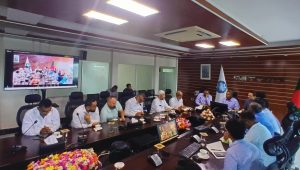
The warning came at a focused group discussion organised by AmCham at a hotel in Banani on Wednesday, where industry leaders, policymakers and experts reviewed challenges and opportunities in the energy and power sector.
AmCham President Syed Ershad Ahmed said coordinated short, medium and long-term strategies are needed, adding that the chamber will submit recommendations to relevant ministries based on stakeholder feedback.
“We favour a consultative approach to develop practical solutions,” he said.
AmCham Vice President and Chevron Bangladesh President Eric Walker said Bangladesh must prepare for a sharp rise in demand and called for renewed drilling, expanded onshore and offshore exploration and additional liquefied natural gas infrastructure.
He also stressed the need for greater investment in solar energy and stronger collaboration between government and industry to deliver long-term solutions.

Excelerate Energy Country Manager Habib Bhuyian warned that prolonged reliance on high-priced spot liquefied natural gas could have severe economic consequences.
He called for a consolidated industry position to guide policymakers and suggested demand-side measures such as staggered office and school timings, standardisation of electric rickshaws and incentives for energy-efficient appliances including fans, televisions and refrigerators.
Independent University, Bangladesh Vice Chancellor M Tamim said boosting output from existing gas fields could take two to five years, while new exploration would take longer.




He said reliance on Bangladesh Petroleum Exploration and Production Company Limited (BAPEX) alone is insufficient and recommended engaging international reservoir management firms to optimise output.
He also stressed the need for a clear policy decision on domestic coal development.
On renewables, he said Bangladesh could add 3,000 megawatts of solar capacity by 2030, along with 2,000 megawatts from rooftop systems, reducing dependence on oil-based power generation during daytime and lowering import costs.
Solshare Managing Director Sebastian Groh called for rationalising duties on solar and storage technologies by removing policy distortions that favour diesel generators and lead-acid batteries.
He said energy service companies should receive equal duty benefits as independent power producers to scale rooftop solar, and urged stronger implementation of green finance so funds reach projects.
He also recommended formalising electric three-wheelers through licensing and regulation to unlock financing and enable their use as distributed energy storage to support grid stability.
Industry experts said renewable energy, particularly rooftop solar, needs to be scaled up through improved financing, higher loan limits and reduced regulatory barriers.
They also called for modernising the grid to enable net metering and electricity buyback, supporting industrial decarbonisation and improving power plant efficiency.
Speakers stressed the need for a holistic energy strategy covering fuel supply, generation and transmission, alongside diversification into liquefied petroleum gas, domestic coal, offshore exploration and geothermal energy.
They also called for expanding liquefied natural gas and liquefied petroleum gas infrastructure through private sector participation, strengthening transmission and distribution systems, promoting regional energy cooperation and improving governance.
Participants urged lowering import duties on solar panels and lithium batteries, accelerating electric vehicle adoption, extending renewable incentives beyond export sectors and ensuring better use of available green funds through credible projects.
Representatives from Chevron Bangladesh, Cross-World Trading Company, Delta LPG, Energypac Power Generation, Excelerate Energy, GE Vernova International, Infrastructure Development Company Limited (IDCOL), Omera Petroleum, Solshare and United Power attended the meeting, along with experts from LightCastle Partners and PwC Bangladesh.
United States Embassy Commercial Counsellor Paul Frost and other stakeholders were also present.