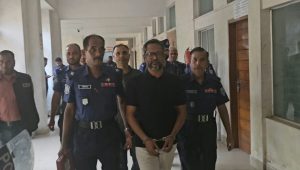
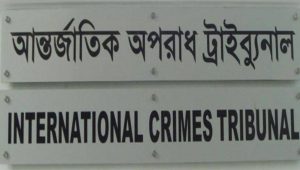
The International Crimes Tribunal-1 (ICT-1) on Sunday postponed the recording of witness testimony in the case against former army officer Ziaul Ahsan, who is accused of involvement in enforced disappearances and murders during the previous Awami League regime.
The prosecution failed to produce any witnesses on the scheduled date, prompting the tribunal to fix 2 April for the next hearing.
The postponement was confirmed by Ziaul Ahsan’s defence lawyer, Nazneen Nahar. Prosecutor Shaik Mahdee informed the media that the witness was unable to attend court due to personal problems, leading to the rescheduling.

This marks the second recent delay, as the prosecution also failed to present witnesses on 9 March, after which the court had initially set the 29 March date.
The tribunal framed three charges against Ziaul on 14 January in connection with the killing of 104 people. These formal charges were taken into cognizance on 17 December last year.


According to the prosecution, Ziaul served as the Director of the Intelligence Wing and Additional Director General (Operations) of the Rapid Action Battalion (RAB) between 2009 and 2016.
During this period, he is alleged to have directly participated in or ordered numerous enforced disappearances and extrajudicial killings carried out by his trusted RAB members with his full knowledge and approval.
Prosecution sources state that Ziaul Ahsan became a close confidant of Sheikh Hasina after being posted to RAB as a Major in 2009.
Consequently, he remained under the Ministry of Home Affairs throughout the Hasina administration and never returned to his parent organisation, the Bangladesh Army, until his compulsory retirement as a Major General in 2024.
The prosecution further noted that he attained the rank of Major General without completing the mandatory courses or training required for such promotions.
He reached this rank without any experience in commanding a battalion, brigade, or formation, a situation described as unprecedented in the professional history of the Bangladesh Army.