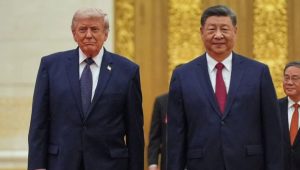
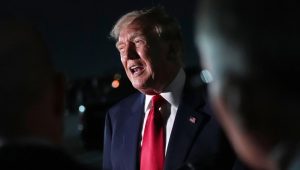
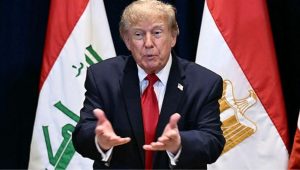
The downturn in crude began following remarks from US President Donald Trump, who declared the Middle East war was “pretty much” over.
This assessment sent both major benchmarks tumbling. US crude benchmark, West Texas Intermediate (WTI), fell more than 10 percent to $85.29 per barrel, while the international benchmark, Brent crude, fell to $88.95 at around 0230 GMT.
The slide in oil prices provided a massive boost to American equities, reversing earlier losses. All three major US stock indices surged, with the Dow Jones Industrial Average closing 0.5 percent higher at 47,740.80 – a dramatic swing of 1,125 points.
In a move directly linked to the market turmoil, Trump announced on Monday that his administration would waive certain sanctions on oil. “We’re also waiving certain oil-related sanctions to reduce prices,” he told reporters, following earlier signals from his administration that it would ease restrictions on oil exports from Russia.

The relief rally extended to Asian markets in early trade on Tuesday. South Korea’s benchmark Kospi index rebounded sharply, climbing more than five percent. Japan’s Nikkei 225 also jumped over three percent in Tokyo before paring some of those gains.
As the economic fallout from the conflict spreads, policymakers are scrambling to respond. French Finance Minister stated that the G7 was “not there yet” regarding a coordinated release of strategic oil reserves, even as the world’s leading industrialised nations held crisis talks.

The bloc’s energy ministers are scheduled to meet later on Tuesday to discuss the situation.
The war continues to disrupt global transport and tourism. French President Emmanuel Macron announced that France and its allies are preparing a “defensive” mission to reopen the strategic Strait of Hormuz as the conflict enters its second week.
In a bid to evade potential Iranian attacks in the region, data from shipping tracker MarineTraffic, analysed by AFP, reveals that several vessels anchored in the Gulf or transiting the strait are altering their tracking data to falsely claim links to China.
The aviation sector also remains on edge, with both Lufthansa and Air France extending their flight cancellations to destinations across the Middle East. Meanwhile, global shipping giant MSC has formally halted certain export shipments from the Gulf, confirming that “all affected cargo will be discharged.”
Some nations have already implemented initial measures to shield their economies from the shock. Croatia, Hungary, South Korea, and Thailand have all imposed price caps on fuel. In early March, China directed its key refiners to suspend exports of diesel and gasoline.
Nigeria’s new Dangote mega-refinery has pledged to prioritise the domestic market to avert fuel shortages. In Japan, the Nikkei newspaper reports that authorities have asked oil reserve holders to prepare for a potential release of stockpiles.