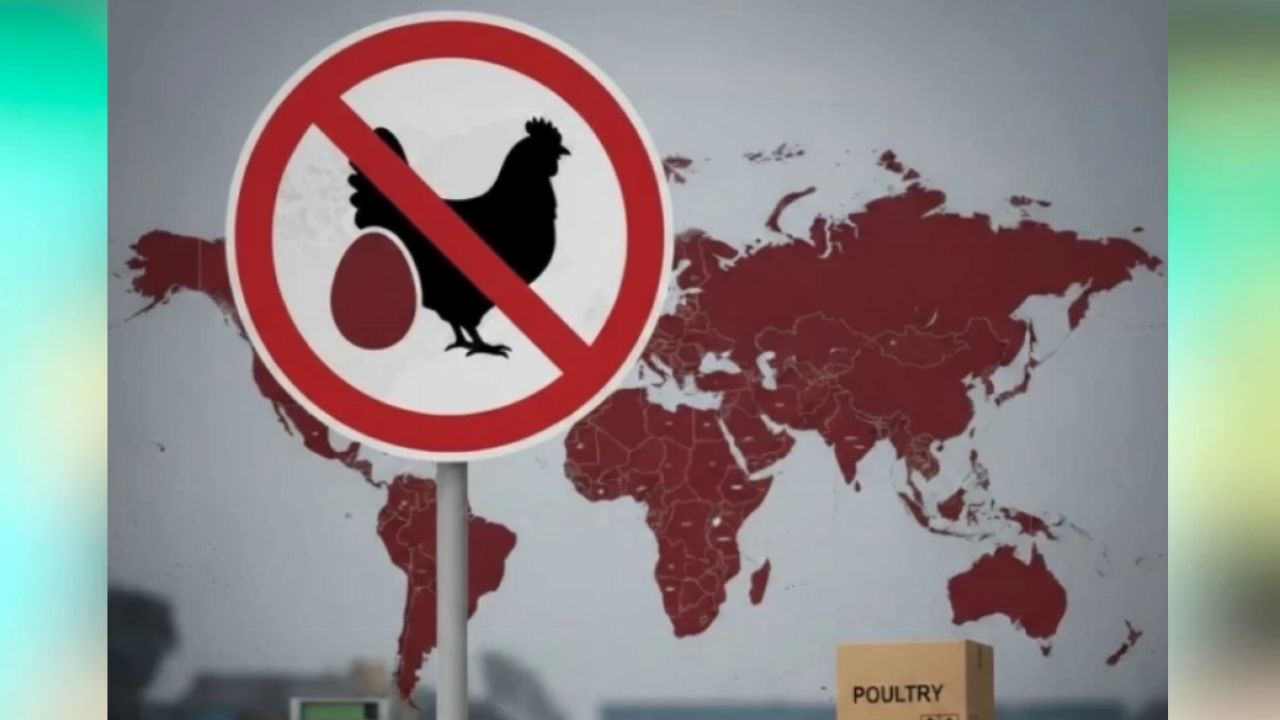

The Saudi Food and Drug Authority (SFDA) has imposed a comprehensive ban on the import of poultry and eggs from 40 countries, including Bangladesh.
In addition to the total ban, the authority has issued partial restrictions on specific provinces and cities within another 16 nations.
According to the SFDA, these measures have been implemented as a precautionary step to protect public health and bolster food safety standards within the Saudi domestic market. The authority noted that the list of restricted countries will be reviewed periodically in response to shifting global health conditions.

Data from the Okaz newspaper reveals that some countries have remained under these restrictions since 2004. Other nations were added to the list following risk assessments and international reports on animal diseases, particularly outbreaks of Avian Influenza. This highlights the SFDA’s ongoing and rigorous monitoring of the global pandemic situation.
The 40 countries facing a complete ban on poultry and egg exports to Saudi Arabia are: Bangladesh, Afghanistan, Azerbaijan, Germany, Indonesia, Iran, Bosnia and Herzegovina, Bulgaria, Taiwan, Djibouti, South Africa, China, Iraq, Ghana, Palestine, Vietnam, Cambodia, Kazakhstan, Cameroon, South Korea, North Korea, Laos, Libya, Myanmar, the United Kingdom, Egypt, Mexico, Mongolia, Nepal, Niger, Nigeria, India, Hong Kong, Japan, Burkina Faso, Sudan, Serbia, Slovenia, Ivory Coast, and Montenegro.




The 16 nations subject to partial restrictions in specific provinces or cities include: Australia, the United States, Italy, Belgium, Bhutan, Poland, Togo, Denmark, Romania, Zimbabwe, France, the Philippines, Canada, Malaysia, Austria, and the Democratic Republic of the Congo.
The SFDA further clarified that poultry and related products that have undergone heat treatment or other processing methods designed to eliminate the Newcastle disease virus will be exempt from these temporary restrictions.
However, such products must be accompanied by a health certificate issued by the government authorities of the country of origin. This certificate must confirm that the heat treatment or processing was sufficient to eradicate the virus.
The SFDA emphasised that this exemption will be managed strictly to ensure that health and quality standards are not compromised.