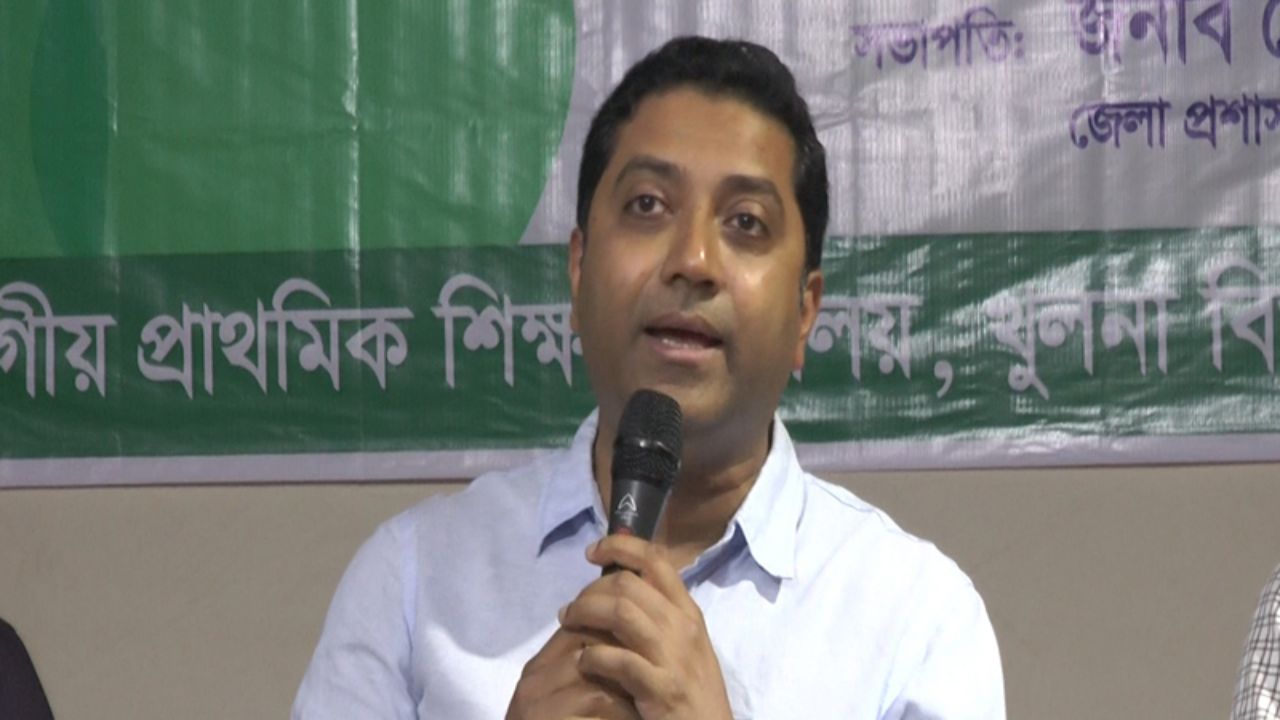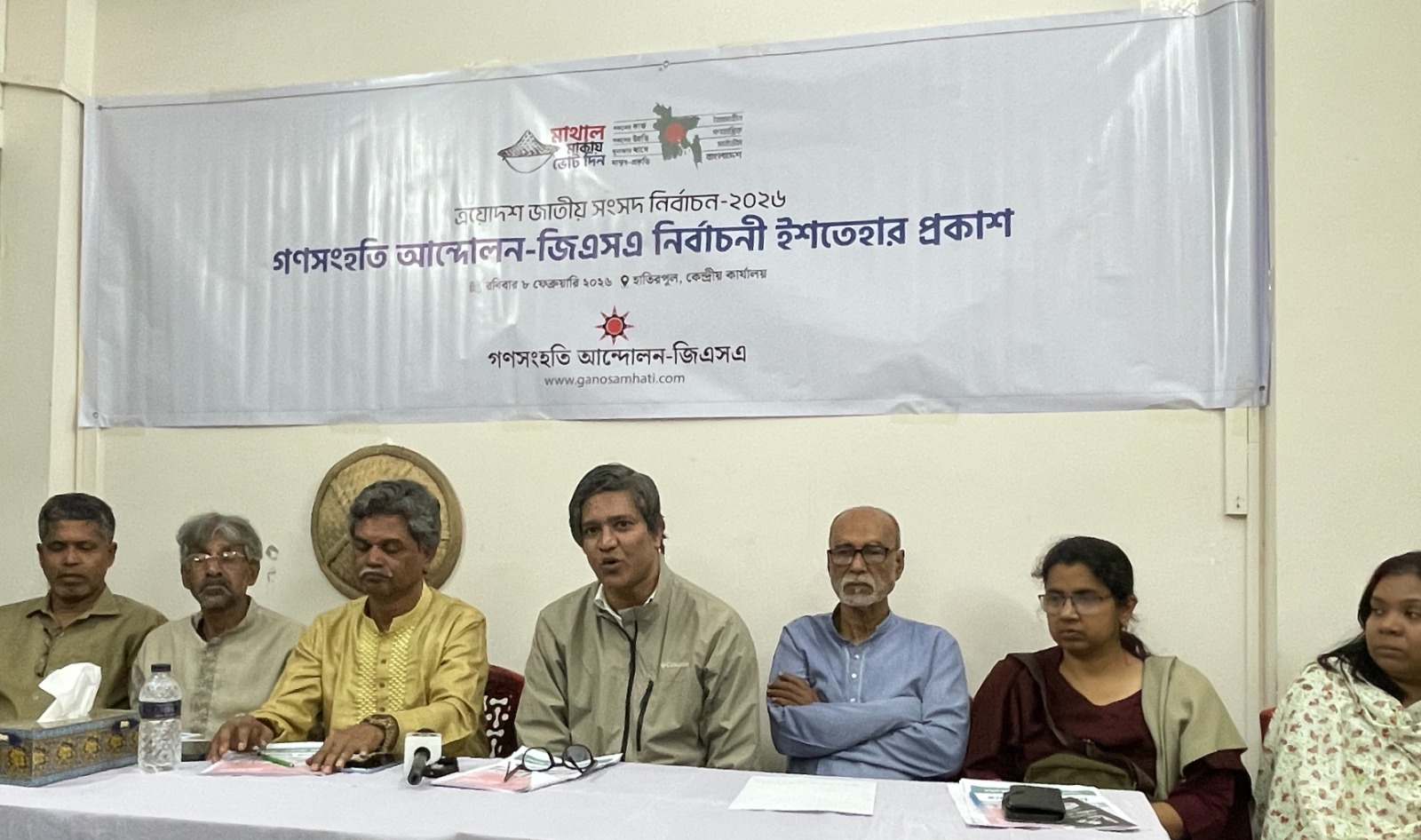



Ganosamhati Andolon Executive Coordinator Abul Hasan Rubel unveiled the party’s manifesto for the 13th national parliamentary election at their central office in Hatirpool on Sunday.
Abul Hasan Rubel said that the pledges of the Liberation War – equality, human dignity, and social justice – were manifested once more in the language of non-discrimination of the July Uprising.
He said, “Ganosamhati Andolon is presenting the framework for realising those pledges in the 2026 election manifesto. This manifesto, therefore, is not merely a collection of promises but a guide for our future politics – a blueprint for realising the potential that has emerged to rebuild Bangladesh anew.”
On the question of women’s empowerment, the party leader stated that certain parties are presenting manifestos aimed at pushing the country backward.

Taslima Akhter, central executive committee member and candidate for the Dhaka-12 constituency, also spoke at length regarding her plans to bring down “chadabaji” (political extortion).
In a subsequent press release, Ganosamhati Andolon provided details regarding the party’s manifesto:
Core principles and governance
The manifesto commits to establishing a genuine democratic system that ensures democratic distribution of resources alongside political rights.



It pledges to eradicate corruption and institute good governance through the consistent practice of democratic principles.
A core focus is on establishing the rights of workers, farmers, and all working people, and ending all forms of discrimination based on nation, religion, class, and gender.
The platform also includes recognition of the identity and cultural diversity of various ethnic groups, and the establishment of rights for persons with disabilities. It highlights the development of the youth population, the expansion of their opportunities, and the protection of the rights and dignity of expatriate Bangladeshis, encouraging their participation in the country’s productive transformation.
Economically, the party envisions a transformative shift to formalise the informal sector, aiming to build a trillion-dollar economy. This plan prioritises productive transformation, new job creation, and agricultural development that protects farmers’ interests.
Education, healthcare, and the environment
The party emphasises future-oriented planning to ensure safe and creative development for all children, including reforms to the education system.
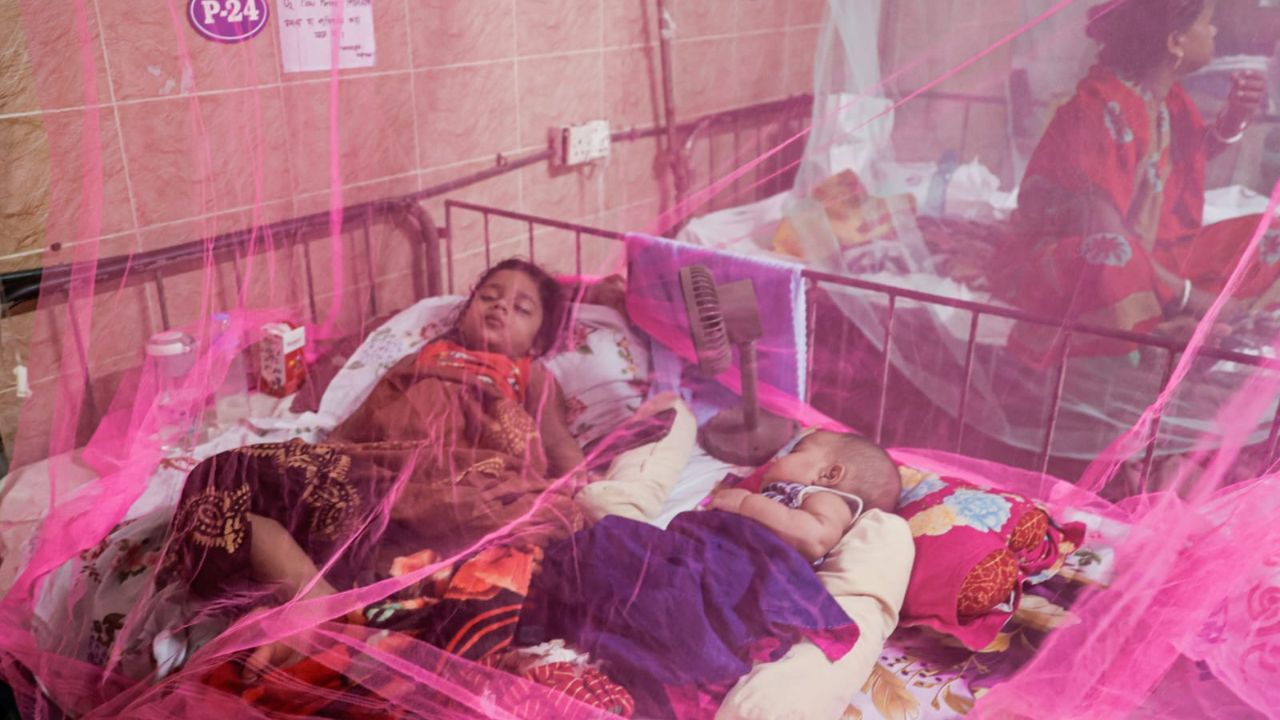
It commits to a state-led initiative for universal healthcare, guaranteeing that no one dies due to a lack of medical treatment. A further priority is to ensure equal dignity, rights, and security for all women, with specific attention to political empowerment.
The manifesto prioritises environmental protection in all economic activities. Key goals include freeing rivers, canals, and forests from encroachment and pollution, ensuring a fair share of natural resources for all, and promoting nature-friendly urbanisation.
It also underscores the protection of national sovereignty and the establishment of policy sovereignty to ensure national security and progress.
Also present at the time were party political council member Dewan Abdur Rashid Nilu, Taslima Akhter, central members Bachchu Bhuiya, Anjan Das, Amjad Hossain, and Sumona Lutfunnahar.