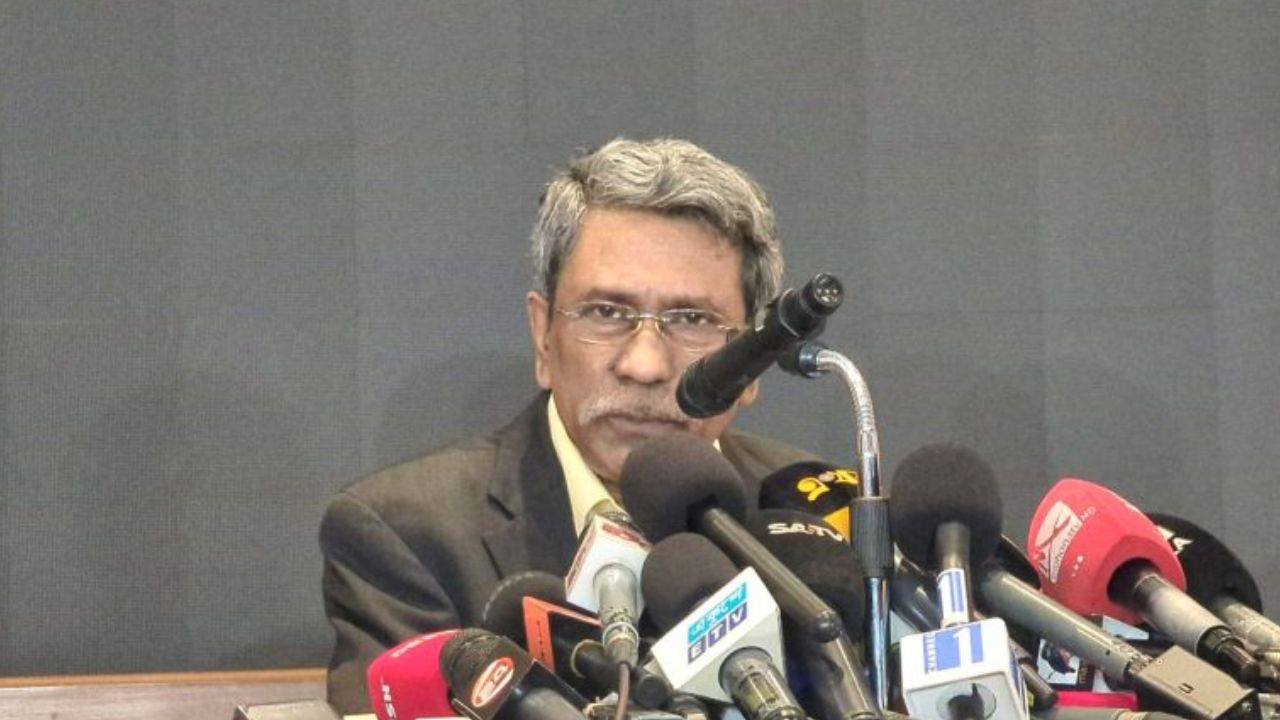

Chief Adviser’s Special Assistant Ali Riaz said that the July Charter will guarantee the religious rights of every citizen.
He emphasised that the charter aims to establish a society founded on equality, human dignity, and social justice, where the state does not discriminate between individuals based on their religious beliefs.
Speaking at a view exchange meeting held at the National Museum auditorium on Tuesday in Dhaka, Riaz remarked that the nation had to traverse a “bloody path” to achieve the dream of a democratic and humane homeland.
He urged the public not to squander this “golden opportunity”.

The meeting was organised by the Hindu Religious Welfare Trust to motivate voters and campaign for the upcoming referendum.
Addressing the members of Hindu community, Riaz said that a “Yes” vote in the referendum is a demand of the times to facilitate the comprehensive reforms needed to rescue the state from the oppression of fascism.
He pointed out that although Article 7(a) of the Constitution stipulates that the people are the owners of all power, they have historically been deprived.




“Participation in the referendum is an emergency call of conscience so that the future Bangladesh does not resemble the past,” he said, adding that a victory in the referendum would enable the formation of a desired state system.
He noted that under the existing framework, the president cannot make independent decisions except for the appointment of the prime minister and the chief justice.
While institutions like the Election Commission, the Public Service Commission, and the judiciary are nominally appointed by the president, Riaz observed that these appointments are actually made according to the will of the head of government.
Regarding Article 70 of the Constitution, which prevents MPs from voting against their party, Riaz described it as being akin to “applying scotch tape to the mouths of MPs,” calling it a major barrier to a developing democratic system.
The proposed reforms suggest that while MPs must remain loyal to their parties during money bills and no-confidence motions, they should be free to express independent opinions on all other matters.
Also speaking as a special guest, Monir Haider, special assistant to the chief adviser, stressed that the primary objective of the Proclamation of Independence was to implement social justice and human values with dignity. He shared a vision for a society where a child’s identity is determined by their merit, knowledge, and effort.
Haider also addressed “bogus” rumours circulating about the referendum. He clarified that claims asserting the removal of “Bismillah” or faith in Allah from the Constitution following a “Yes” vote are entirely false, and he urged citizens not to be misled by such propaganda.
The meeting was presided over by Tapan Chandra Majumder, president of the Hindu Religious Welfare Trust. Other speakers included Kamal Uddin, secretary of the Ministry of Religious Affairs, and Debendra Nath Orao, secretary of the Hindu Religious Welfare Trust.