
The United Kingdom has announced a comprehensive sanctions regime targeting illegal Israeli settlements in the occupied West Bank, triggering an immediate diplomatic rift with Israel.
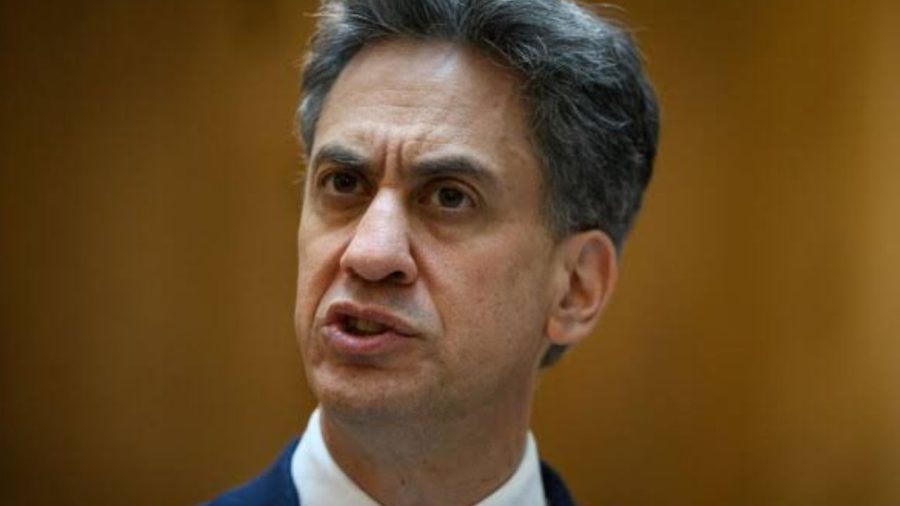
Foreign Secretary Ed Miliband said the move marked the “beginning of a new approach” to the Israeli-Palestinian conflict that “not only calls out injustice and suffering but acts”, reports BBC.
The UK government accused Israel of turning a blind eye to settler violence and the “ethnic cleansing” of Palestinians. Over the next six to nine months, Britain will introduce measures to ban settlement goods, restrict companies and individuals providing services for settlement expansion, and prohibit advertising illegal West Bank settlements in the UK.
Miliband stressed that “the sanctions regime will target illegal settlements and settlement expansion, not Israel”.
The measures were announced jointly with France and Canada, which described them as a “further turning point in our approach to protecting the two-state solution”. The UK also joined 11 other countries — France, Canada, Denmark, Spain, Finland, Ireland, Iceland, Norway, Poland, Portugal and Sweden — in reaffirming support for a two-state solution and pledging national measures or European restrictions on West Bank settlement trade.
The sanctions follow Israel’s opening of tenders for about 1,200 settlement homes in the strategic E1 area east of Jerusalem. The plan has faced widespread international condemnation and had previously been deferred for decades.
Miliband told the House of Commons that the E1 development would make a two-state solution “unviable” by “cutting through the heart of Palestine”.
Israel announces retaliation
Israeli Foreign Minister Gideon Saar called Miliband’s remarks an “outrageous lie” and accused the “hostile Labour government” of consistently acting against Israel.

Israel responded by announcing the closure of the British consulate in East Jerusalem, which represents the UK government in Jerusalem, the West Bank and Gaza.
Saar also announced entry bans on 11 British MPs, including Jeremy Corbyn, Diane Abbott and all five sitting Green Party MPs, accusing them of “antisemitic and anti-Israel activity”.
Israel said it would also remove British representatives from the International Gaza Support Center in Kiryat Gat and end UK activities training Palestinian Authority forces in Judea and Samaria, the Israeli government’s term for the West Bank.
Saar said he had spoken with Conservative shadow foreign secretary Tom Tugendhat and Tory leader Kemi Badenoch, thanking them for opposing the measures.
Israeli President Isaac Herzog said the British decision would “fall on the wrong side of history”, calling it a “gross interference in the democratic elections of a sovereign nation” that would directly harm Palestinians. He added that “sanctions are not a solution”.


International reaction
US Secretary of State Marco Rubio said the White House had no comment on the joint action, adding that “obviously we’re not going to do what the UK did”.
US Ambassador to Israel Mike Huckabee warned that the US would “without a doubt” respond to the sanctions and cautioned of a “huge economic impact on British businesses” through possible state or federal action.
The Palestinian presidency welcomed the UK decision as “an important step towards confronting Israel’s colonial system and its violations against the Palestinian people”.
The UK also announced sanctions targeting the financing wing of Lebanon’s Hezbollah and new restrictions on Iran aligned with the US and European Union. The measures come nearly a year after Sir Keir Starmer’s government officially recognised a state of Palestine.
Domestic response
Miliband cited the UN definition of ethnic cleansing as a “purposeful policy designed by one ethnic or religious group to remove by violent means another ethnic or religious group from certain areas”.
He said the government considers Israel’s occupation of the West Bank unlawful because of the “entrenchment of its control, its intention to extend permanent sovereignty, and its expansionist agenda via illegal settlements”, aligning with a 2024 advisory opinion from the International Court of Justice.
Prime Minister Andy Burnham said the measures were “aimed not at the Israeli people, but in support of the two-state solution”.
Miliband, describing himself as “a proud British Jew”, reaffirmed his support for Israel’s right to exist while condemning attempts to erase it. He recalled childhood visits to Israel and recent antisemitic incidents in Britain.
He said the 7 October 2023 Hamas-led attack carried “terrible echoes of the centuries of persecution of the Jewish people” and affirmed Israel’s right to defend its territory. However, he said “that cannot justify what has happened in Gaza”.
Miliband said findings from bodies including the UN Independent International Commission of Inquiry provide “increasing evidence that war crimes appear to have been committed”, while determinations of genocide remain a matter for international courts.
Israel’s leaders have consistently rejected allegations of genocide, crimes against humanity and war crimes, saying its forces act in accordance with international law.
UK Chief Rabbi Sir Ephraim Mirvis called the announcement “truly a dark day for British Jews” and described the sanctions as “little more than political flag bearing for mendacious anti-Israel rhetoric”.
The Board of Deputies of British Jews expressed “deep regret” and urged both governments to avoid prioritising party interests.
Miliband said targeting British Jews over Israeli government policy was antisemitic and described Israel’s diplomatic reaction as “deeply regrettable”.
Conservative shadow foreign secretary Tom Tugendhat accused ministers of “enacting policies that the Foreign Office knows won’t work”. While agreeing that illegal settlements are wrong and some Israeli ministers have engaged in incitement, he criticised the government for reducing regional complexities to a single sentence.
Israel has built about 160 settlements in the West Bank and East Jerusalem since occupying the territories during the 1967 Middle East war. They house around 700,000 Israeli Jews alongside an estimated 3.3 million Palestinians.
The settlements are illegal under international law, while violence by settlers against Palestinians and their property has increased in recent months following the outbreak of the Gaza war.
Israel rejects a two-state solution, saying any settlement must be negotiated directly and statehood cannot be a precondition. The Palestinian Authority supports a two-state solution.
Hamas does not recognise Israel but has said it could accept an interim Palestinian state based on the 1967 de facto borders without official recognition, provided refugees are granted the right to return.