
Education and Primary and Mass Education Minister ANM Ehsanul Hoque Milon has stressed the need to strengthen children’s foundational learning skills so they can safely and effectively benefit from artificial intelligence (AI).
“Bangladesh’s children have weaknesses in foundational learning. So, to make the best and safest use of AI, we need to help them improve their reading, reasoning and verification skills,” he said.
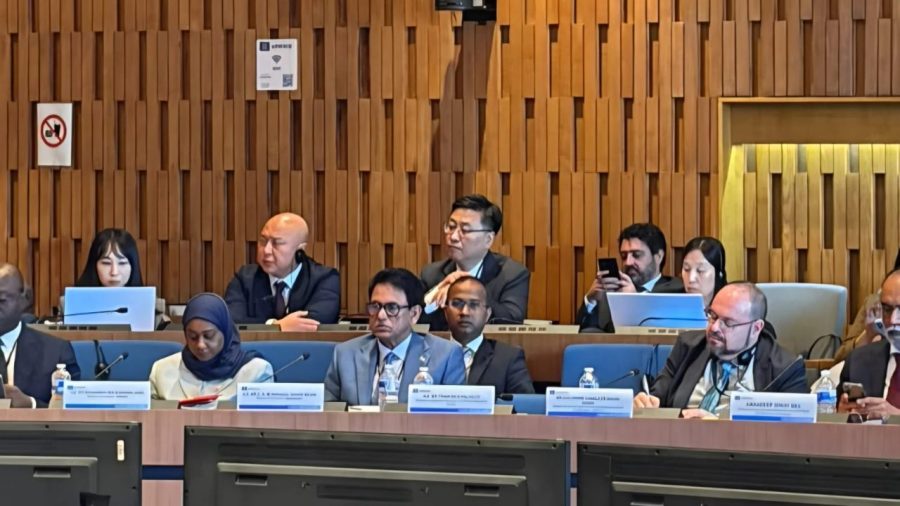
The minister was speaking at a session titled “Education in the Age of AI” at UNESCO’s Digital Learning Week 2026 in Paris on 8 September.
He also stressed the need to put teachers at the centre of decisions on introducing AI in educational institutions.

“Teachers need to be involved before an educational institution purchases or starts using AI,” he said, adding that they should be engaged in pilot projects, procurement, evaluation and subsequent adjustments before an AI system is introduced.
AI can save considerable time, but it should not be used indiscriminately, Milon said.




“There is no scope to use it in every field. But at the same time, we cannot afford to fall behind the demands of the time,” he said.
The minister cautioned against placing excessive reliance on automated systems for decisions involving teachers, particularly recruitment, promotion, evaluation and disciplinary measures.
“Relying solely on automated systems may not be possible” for such decisions, he said, underscoring the importance of human judgment.
AI is rapidly expanding worldwide, but its success in education should not be judged simply by the number of users, pilot projects or levels of engagement, the minister said.
“Bangladesh needs to evaluate AI based on learning outcomes, teachers’ workload, equity, safety and cost-effectiveness,” he said.
It is also important to assess how and to what extent teachers can meaningfully engage with AI, he added.
Ministers and representatives from 25 countries attended the session.
UNESCO’s Digital Learning Week 2026 is being held in Paris from 8 to 11 September under the theme “Education in the age of AI: Facts, Frictions, Frontiers.”
Milon is scheduled to take part in a plenary session titled “Teachers at the centre: Agency, competencies and the teacher-student relationship” on 9 September.