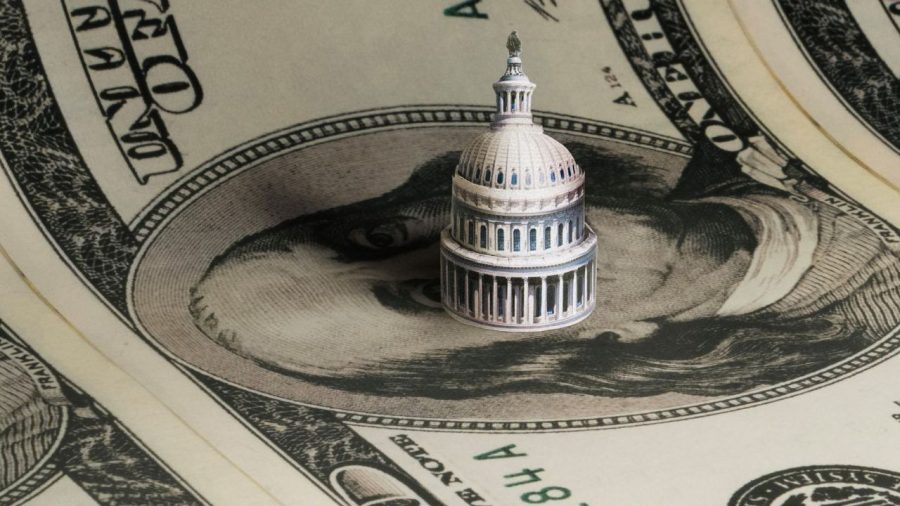



The United States midterm elections are set to become the most expensive in history, with spending reaching a record $12 billion, according to OpenSecrets – an American nonprofit organisation that tracks and publishes data on campaign finance and lobbying.
This surge in political advertising occurs alongside a severe cost-of-living crisis, with affordability ranking as a primary voter concern. Critics argue that vast expenditure grants wealthy donors, corporations and special interest groups outsized influence over elections.
Mechanism behind soaring election expenditure
US campaigns are funded through direct candidate fundraising and independent outside spending. In this cycle, Democratic candidates are expected to spend over $2.2 billion in direct contributions, compared with $1.4 billion raised by Republican candidates.
Beyond direct funds, corporations, trade unions and associations can spend independently.
This framework stems from a 2010 US Supreme Court ruling classifying election communications as protected political speech, followed by a lower court ruling removing contribution caps for independent groups.
Federal Election Commission (FEC) records show outside spending has nearly tripled over the past decade, rising from $4.12 billion in 2016 to an estimated $11.9 billion for the 2026 midterms.

Role of super PACs and dark money
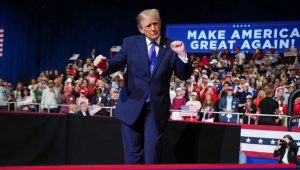
Much of this expenditure is channelled through super PACs, which operate without contribution limits. Among the largest Republican-aligned groups are the Senate Leadership Fund ($489m) and MAGA Inc ($353m).
On the Democratic side, the Senate Majority PAC has spent $248m, whilst the House Majority PAC has deployed $192m.
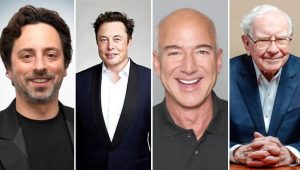
Mega-donors also exert substantial influence – Elon Musk, founder of America PAC, has contributed $445m to Republican efforts, while George Soros, founder and funder of Democracy PAC, provides backing to Democratic candidates.
Super PACs report financial activity monthly, but funds often pass through intermediate “shell PACs”, concealing original sources. This untraceable “dark money” is projected to reach $1.5 billion, up from $1.35 billion in 2024.
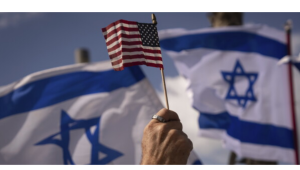
Transparency concerns have been raised by Zohran Mamdani, mayor of New York, who accused the American Israel Public Affairs Committee (AIPAC) of deploying dark money to support pro-Israel candidates.
Records reviewed by Al Jazeera confirm AIPAC channelled millions through shell PACs.
Targeted campaigns, progressive pushback
AIPAC, which ended direct contributions following criticism over Israel’s war on Gaza, was founded in the 1950s as the American Zionist Committee for Public Affairs by Isaiah Kenan, an American journalist and lawyer.
Renamed in 1959, it claims over six million members and supports pro-Israel candidates regardless of party.
However, much of its spending flows through its super PAC, the United Democracy Project (UDP). Critics note AIPAC uses Republican-raised funds to back moderate Democrats against progressives.
AIPAC spent nearly $15m supporting George Latimer, pro-Israel democrat, to defeat Jamaal Bowman, progressive candidate, in New York’s 16th congressional district primary in June 2024.
It also spent $5.24m supporting Wesley Bell against Cori Bush, progressive candidate, in St Louis, Missouri, leading to Bush’s defeat. UDP deployed $20.7m against Abdul El-Sayed, democratic candidate for the Michigan senate.
In response, progressive groups formed the Reject AIPAC coalition – including Justice Democrats, the Working Families Party, US Campaign for Palestinian Rights Action, Jewish Voice for Peace (JVP) Action, and the IfNotNow Movement – calling on candidates to refuse AIPAC funds.

Battleground states, public budget trade-offs
Midterm spending is concentrated in tight “toss-up” states like Georgia, Texas, and Michigan. In Michigan’s senate contest between Abdul El-Sayed, democratic candidate, and Mike Rogers, republican candidate, overall spending reached an estimated $333m.
El-Sayed raised $54m compared to $23m raised by Rogers, but outside groups favoured Rogers with $169m versus $94m for El-Sayed.
Inflation has been driven by fuel prices, which spiked following the Trump administration’s war on Iran and Strait of Hormuz disruptions, raising diesel prices by 65 per cent and fertiliser costs by 40 per cent.
In response, El-Sayed has made campaign finance reform central to his platform, echoing voters who question why billions are spent on ads whilst public services lack funding.
To contextualise the $12 billion price tag, Americans have spent an additional $150 billion on fuel since the US-Israel war on Iran began in February, meaning $12 billion could cover roughly 8 per cent of those increased fuel costs, or $92 per household.
Moreover, $12 billion matches proposed budget cuts for the Department of Education in the 2026 budget, representing 1 per cent of federal spending on public schools.
Alternatively, $12 billion could expand the $47 billion budget of the National Institutes of Health (NIH) by 25 per cent, illustrating the economic trade-offs of modern American campaigns.