
Foot overbridges are elevated pathways designed to protect pedestrians from the chaotic traffic below. Their fundamental purpose is to provide safe passage. Yet, across many urban landscapes, this purpose is being utterly defeated. These vital pieces of public infrastructure are being systematically encroached upon and neglected, transformed from safe passages into hazardous zones, while city corporations look the other way.
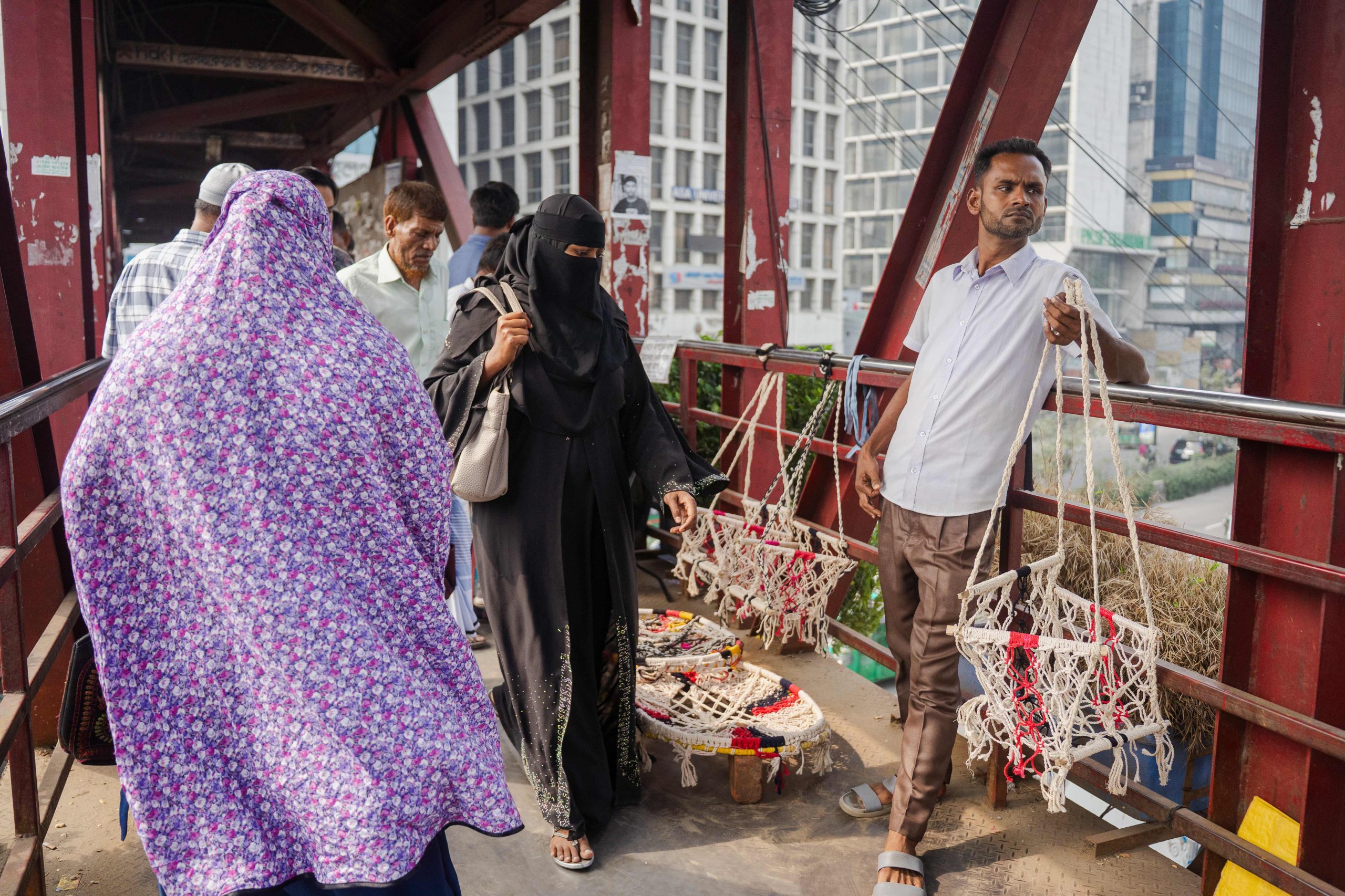
The encroachment takes many forms. While some are reported to be occupied by anti-social elements and plagued by broken railings and non-functional lighting some are littered with garbage and plastic waste, creating disgusting and unsafe conditions for commuters.
Then there is another sort of encroachment, that is not traditional “shops”. This occupation and degradation represent a functional encroachment that steals the bridge from the public. The principle is the same as a shop setup: public space is taken for unauthorized, private use, forcing pedestrians to either navigate an obstacle course or abandon the bridge entirely.

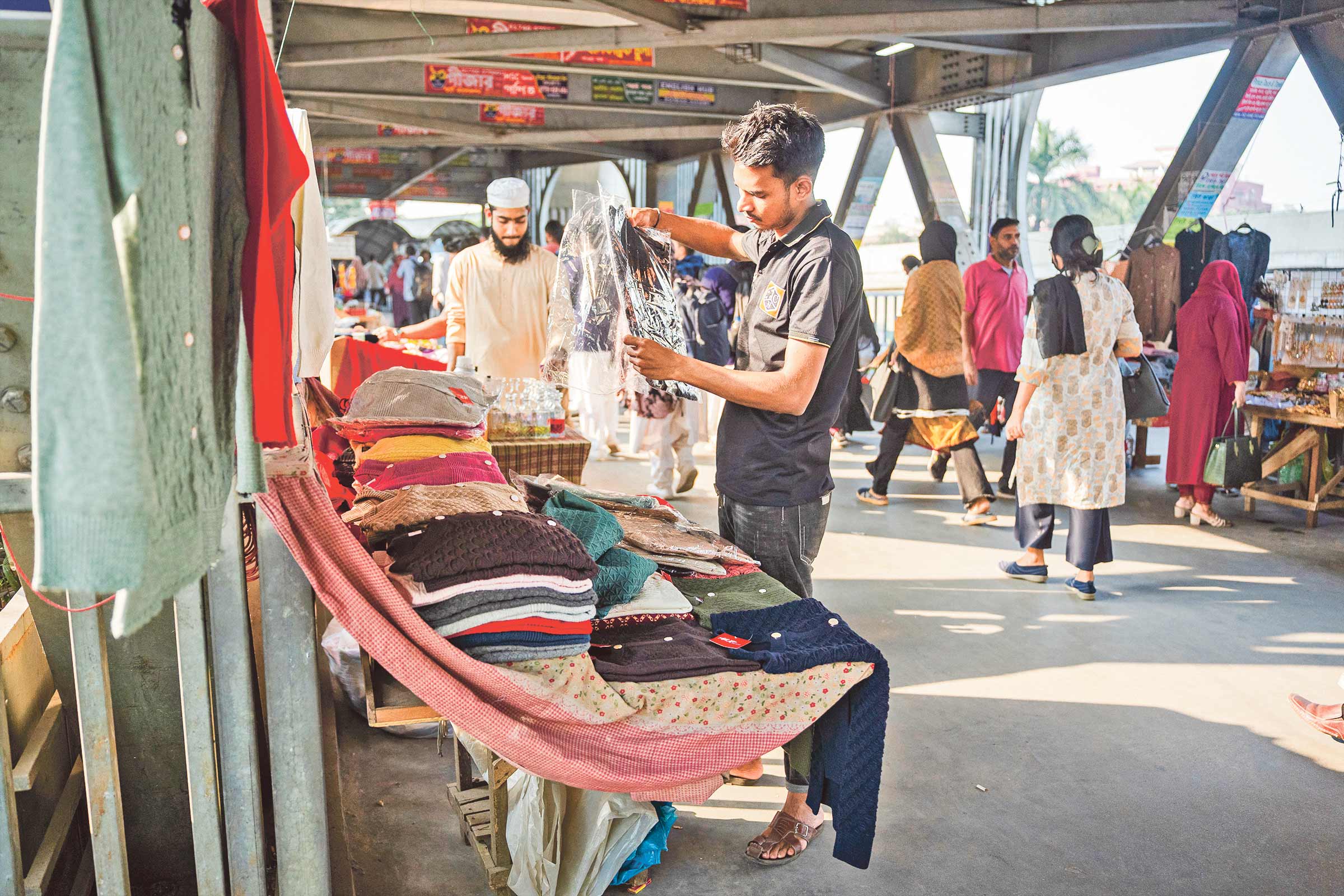
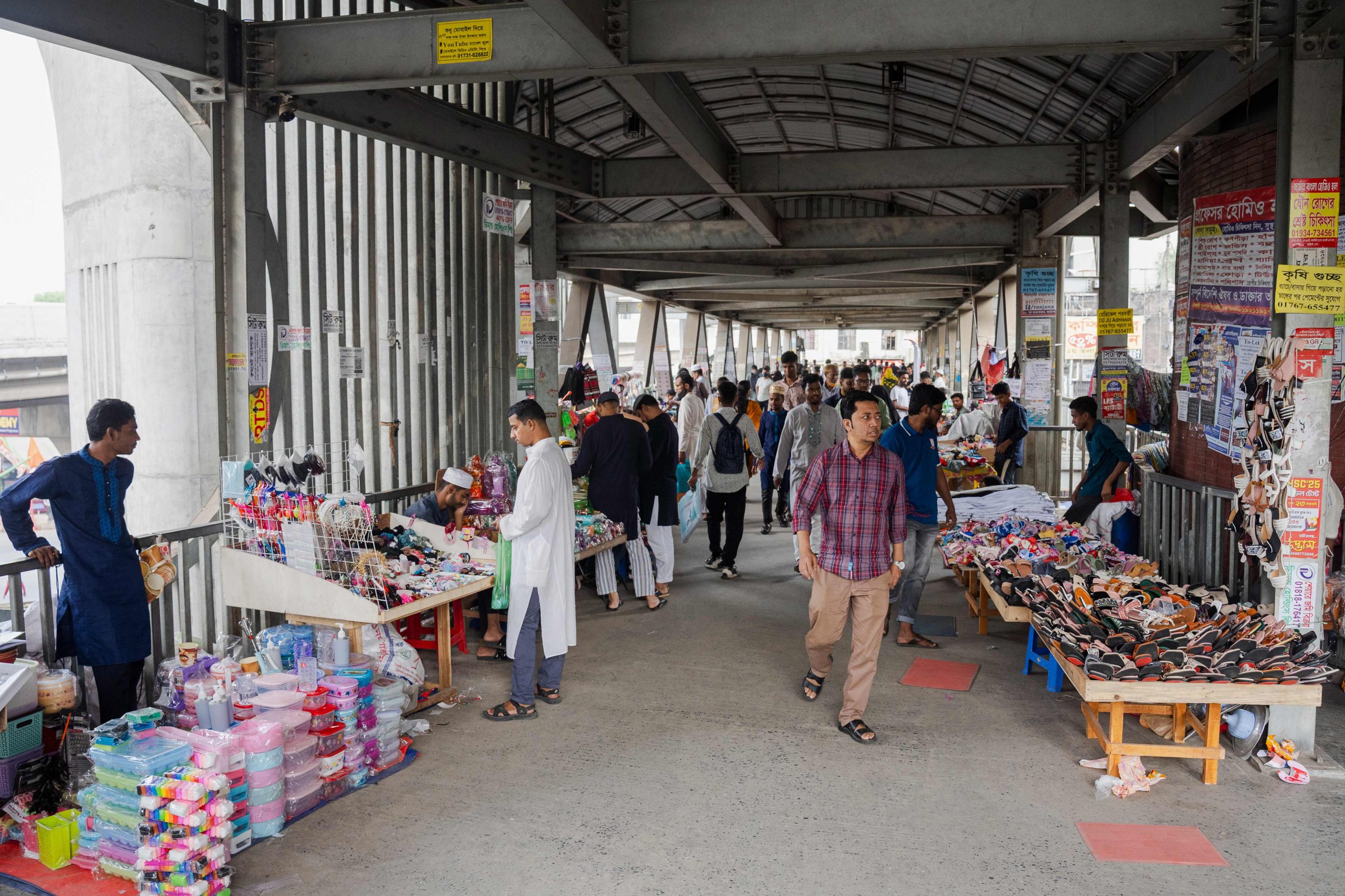
Farmgate hosts the city’s second largest foot over bridge in Dhaka, and this has been turned into a cramped market, defeating its very purpose. The bridge has been turned into a bustling market and is heavily occupied by vendors selling goods from makeshift stalls. Though it is equipped with CCTV this overwhelming occupation suggests limited enforcement against hawkers.




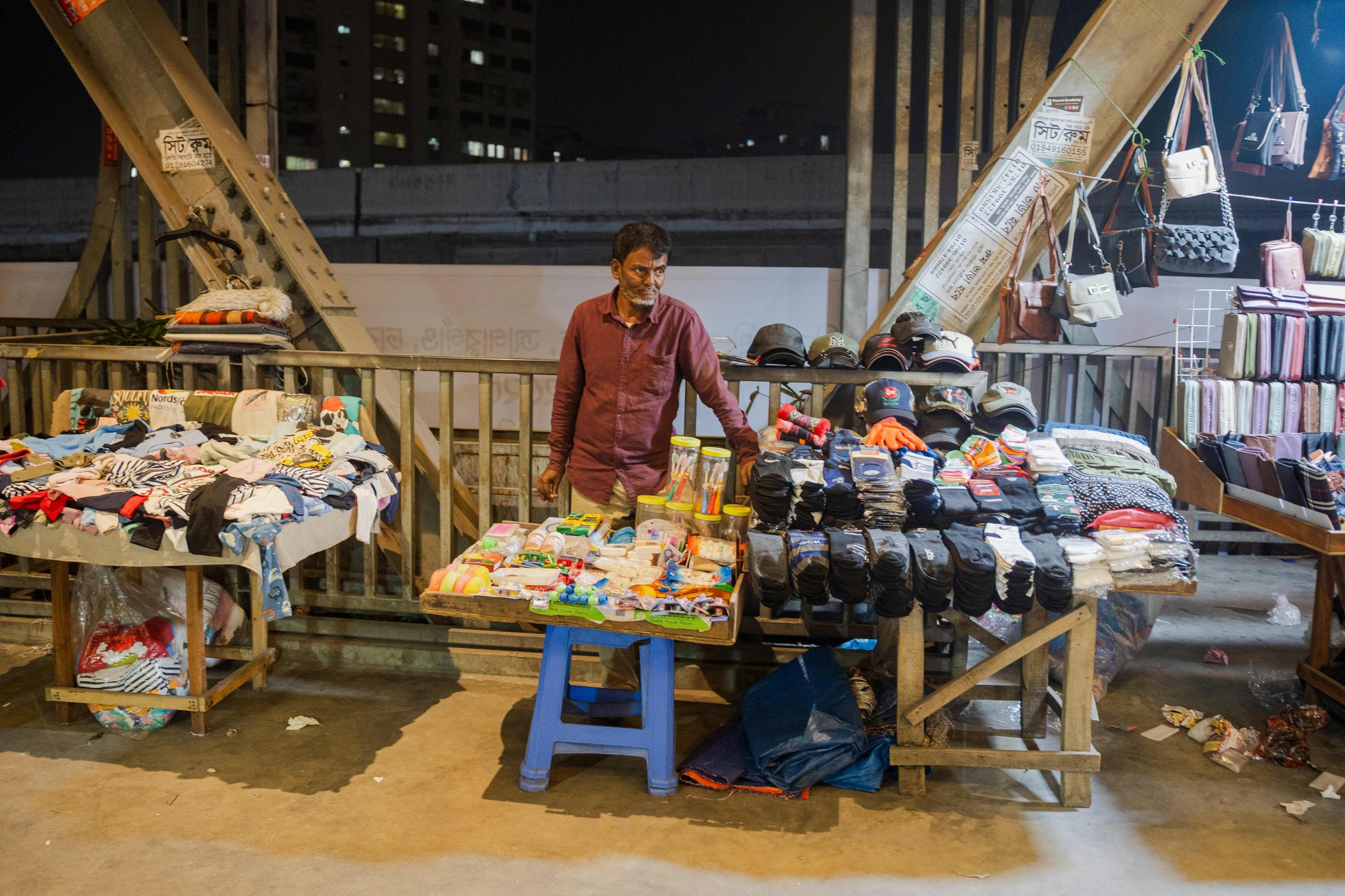
The Shaheed Suhrawardy Medical College Hospital area is part of a high-traffic zone. The main pedestrian overbridge serves the busy road directly in front of the Shaheed Suhrawardy Medical College and Hospital. The bridge is a critical access point for patients and visitors crossing between the hospital and the opposite side of the road (near the medical garden/residential area). However, this has also not been spared. Encroachment by putting up makeshift shops in this bridge is a common thing now.
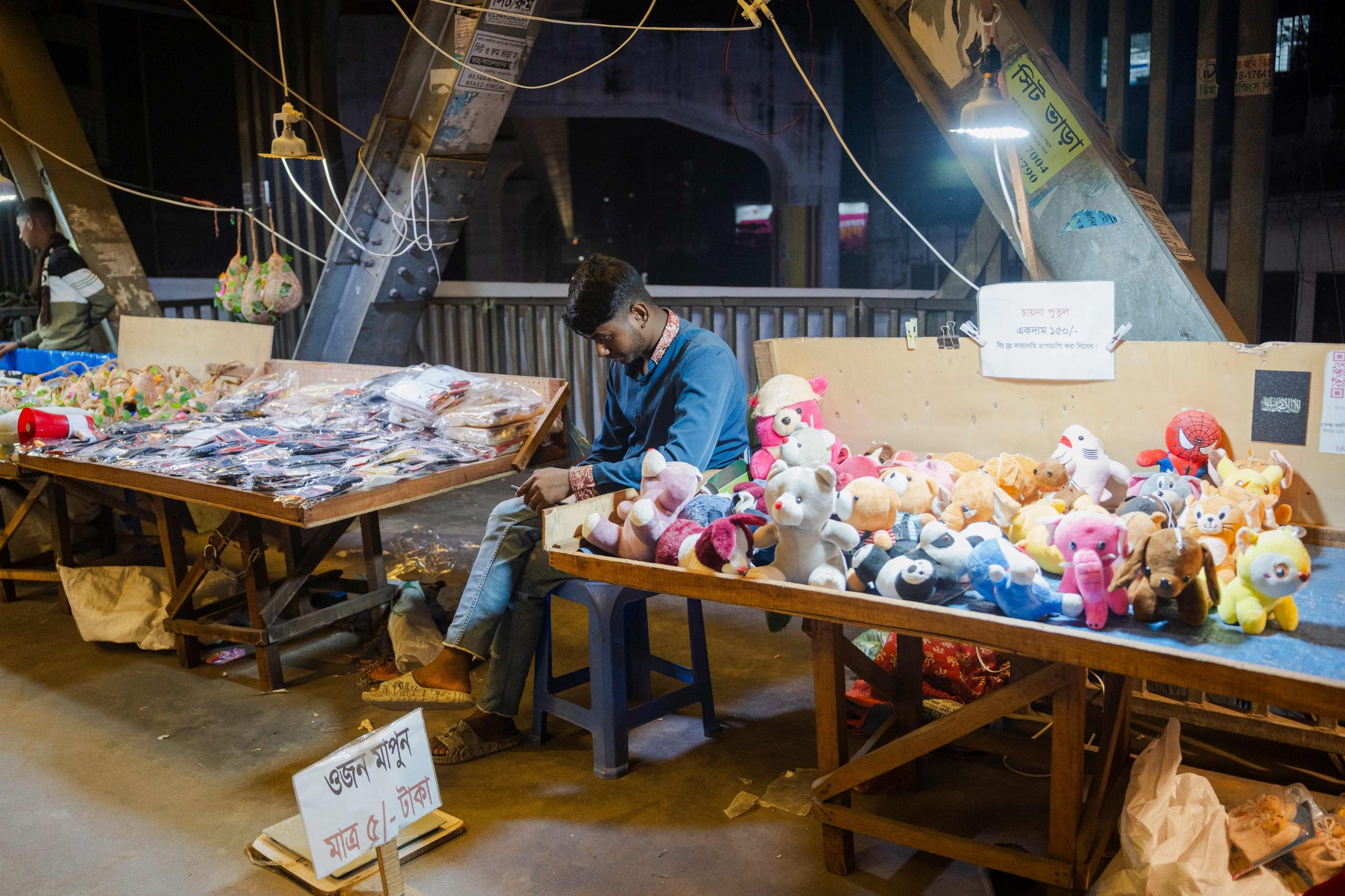
The consequence of this municipal indifference is a direct threat to public safety. DSCC removes hawkers and the homeless from public spaces (footpaths, streets), but without constant policing, they inevitably return, creating a recurring problem. The city corporation’s failure to maintain clear, secure overbridges actively funnels people into danger.
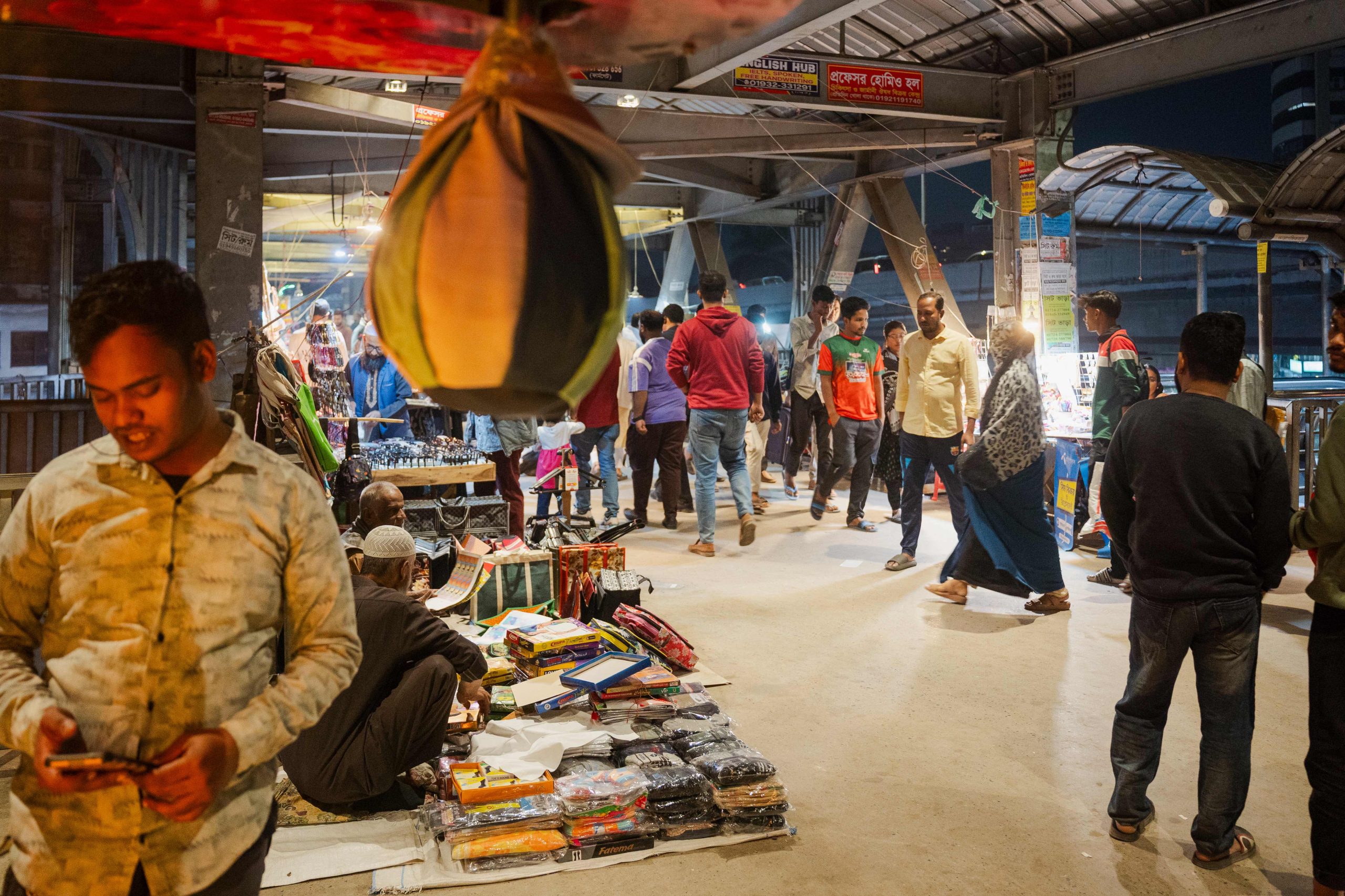
Beneath this inaction lies a deeper crisis of urban management. There is also a glaring lack of accountability and specialized expertise within civic bodies to manage this infrastructure effectively.
The encroachment of Dhaka’s foot overbridges is more than an infrastructural failure; it is a daily violation of the public’s right to safe passage, enabled by a cycle of official neglect and empty rhetoric.