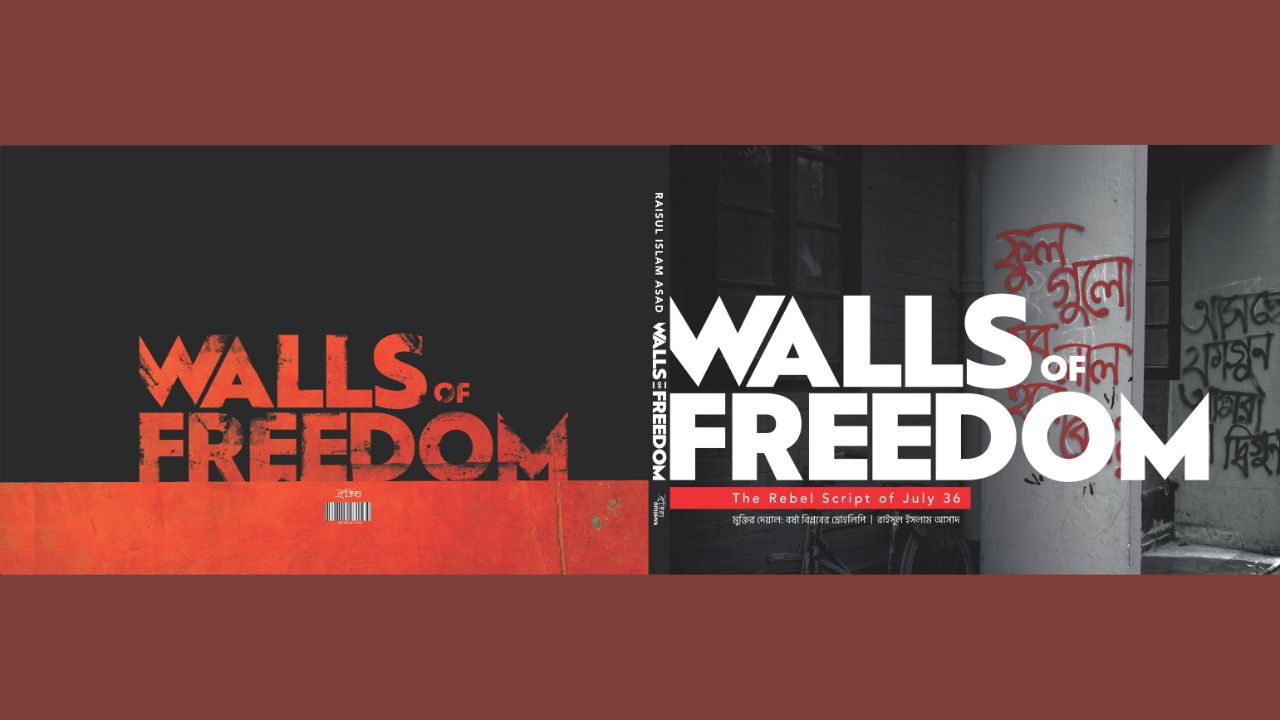

In an era where political expression is often restricted to institutions and digital platforms, Walls of Freedom: The Rebel Script of July 36 by Raisul Islam Asad foregrounds graffiti as a potent medium of resistance. This striking photobook documents a unique chapter of Bangladesh’s political history, the 2024 popular uprising that led to the fall of Sheikh Hasina’s autocratic regime. Through unfiltered images of Dhaka’s walls, the book captures a moment when urban spaces became collective voices of dissent.
The visual narrative unfolds across streets and university campuses, where youth-led anger, hope, and aspiration found expression through graffiti. Far from vandalism, these writings emerge as raw political statements against authoritarianism, corruption, and injustice. Each photograph preserves voices often erased from official histories, revealing how walls temporarily transformed into archives of resistance.
Globally, graffiti has long functioned as a language of protest, from Belfast to Cairo. Asad’s workplaces Bangladesh’s uprising within this global tradition, reminding us that while regimes may attempt to control narratives, street art remains immediate, democratic, and difficult to silence. Its impermanence reflects both the vulnerability and resilience of grassroots movements.
Historically marginal in Bangladesh’s political culture, graffiti gained unprecedented significance in 2024. The book carefully documents this shift, showing how slogans, satire, and sketches became a visual manifesto for a generation. These were not impulsive acts, but conscious interventions aimed at mobilising solidarity and challenging power.

A defining strength of Walls of Freedom is its authenticity. Many of the featured graffiti no longer exist, having been erased soon after the uprising. Asad’s photographs, taken immediately after the regime’s fall, thus serve as both artistic expression and historical archive, an act of resistance against erasure itself.
The photography balances aesthetic sensitivity with documentary clarity. Close-ups convey intensity, while wider frames situate graffiti within the living city. Even without linguistic comprehension, urgency and defiance are unmistakable.



Published by Oitijjhya in July 2025, on the first anniversary of the uprising, the book commemorates the struggle while warning against the fragility of political memory. Centring ordinary citizens, especially youth – it democratises history, showing that revolutions unfold not only in institutions but also on streets and walls.
Ultimately, Walls of Freedom: The Rebel Script of July 36 is more than a photobook. It is a visual manifesto of resistance and a testament to the enduring power of youth and political art. Asad’s work affirms that walls can speak truth to power, and once recorded, those voices cannot be fully silenced.
Title : Walls of Freedom: The Rebel Script of July 36


Author : Raisul Islam Asad
Publisher : Oitijjhya
Date of Publication : July, 2025
Cover : Shalim Hossain Saju
Price : BDT 3,000