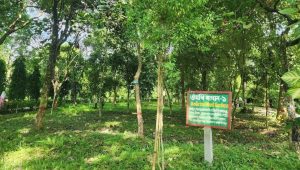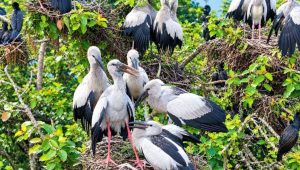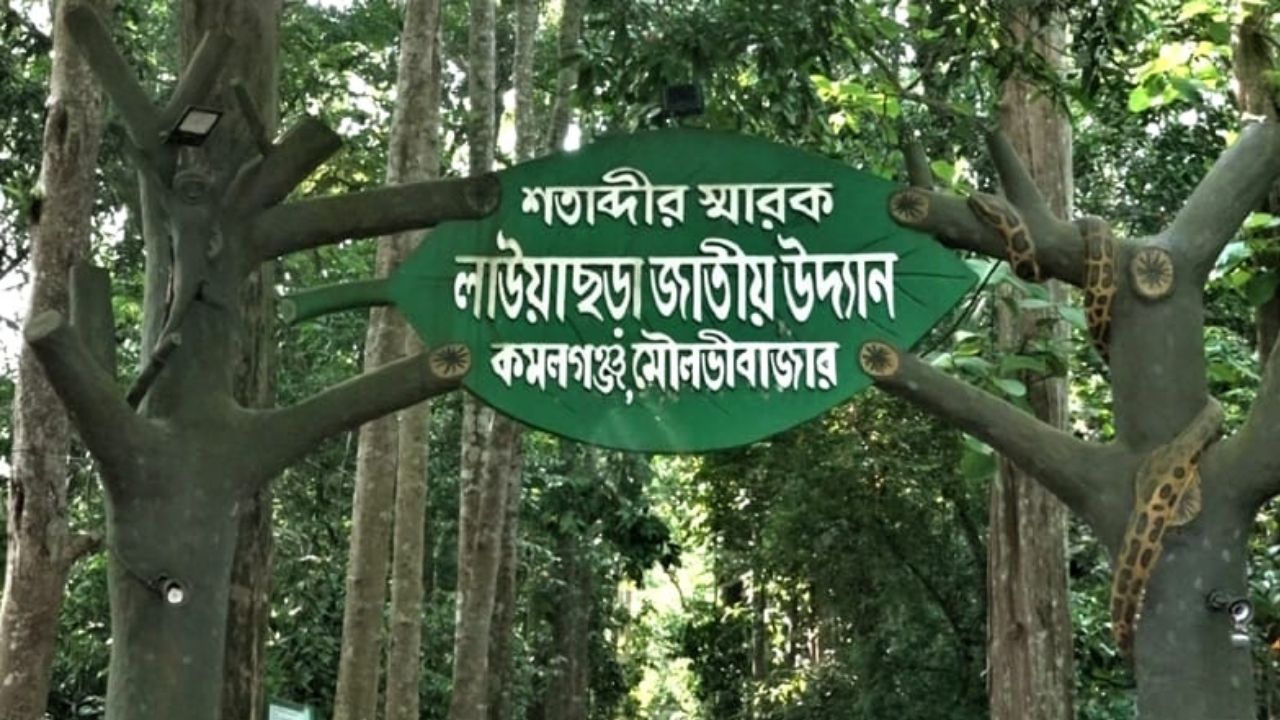



An increasing number of hungry animals from Lawachara National Park are venturing into neighboring villages in search of food.
The ecotourism park, home to primates like the Hoolock Gibbon, as well as numerous birds, reptiles, and amphibians, is witnessing a rising crisis. The inhabitants of Lawachara face severe food and water shortages, compounded by unrestricted human entry.
Village residents panic whenever wild animals wander into their settlements. Consequently, they often kill the animals out of fear. However, awareness campaigns have improved the situation in recent years. Now, when locals spot animals outside the forest, they inform the forest department and conservation organisations.
Swapan Deb Sajal, Director of the Bangladesh Wildlife Service Foundation in Sreemangal, said, “People no longer kill animals out of fear. Instead, they inform us, and we rescue and return them to the forests.”

Dr. Ariful Islam, associate professor at Shahjalal University of Science and Technology, explained, “Lawachara has become fragmented. Due to deforestation, herbivorous animals face food shortages, leading them to move into human settlements.”
Dr Nasreen Sultana, a researcher at the Bangladesh Forest Research Institute, added, “With streams and water bodies drying up, wildlife is losing access to safe water sources. The combined food and water crisis is pushing them towards human settlements.”




M Ziaul Haque, adviser at IUCN Bangladesh, noted, “When forests become fragmented, animal migration corridors are blocked. In their hunger and insecurity, animals enter neighboring village areas.”
According to forest department sources, from January to December 2025, a total of 138 wild animals and birds were rescued from various locations in Moulvibazar district.
These animals were released back into several forests, including Lawachara National Park and Hail Haor. Among the rescued were two woodpeckers, three small civets, two Bengal slow lorises, two pythons, three doves, three monkeys, eight common mynahs, 33 magpies, three parrots, one spotted deer, one eagle, one jungle crow, one brown owl, one king cobra, one mongoose, and one owl.
The Bangladesh Wildlife Service Foundation rescued 67 animals from various areas in Sreemangal.
Mohammad Kazi Nazmul Haque, Wildlife Range Officer in Sreemangal, said, “The Forest Department and volunteers collaborate on rescue and rehabilitation efforts. With combined efforts, rare and endangered species have been successfully returned to the forests.”
Swapan Deb Sajal added, “Rescued animals are safely returned to the forests.”
Wildlife experts warn that to prevent further escalation of human-wildlife conflicts, deforestation and encroachment must be halted immediately. Replanting indigenous fruit-bearing tree species is urgently needed, and internal migration corridors should be preserved.
Additionally, water bodies and streams must be restored. Experts also suggest the creation of two or three exclusive silent zones with zero visitor access to ensure that animals have sufficient food and water within the national park.