When Taliban Foreign Minister Amir Khan Muttaqi landed in New Delhi for a week-long official visit, it marked a moment that would have been inconceivable just a few years ago. India, the world’s largest democracy and a self-proclaimed champion of women’s rights, welcoming a delegation from one of the world’s most repressive regimes, signaled more than just diplomatic flexibility. It represented a decisive shift in India’s strategic calculus, where pragmatism has clearly triumphed over principle.
This was not a casual courtesy call. The Taliban’s highest-level visit to India since returning to power in 2021 carried heavy symbolism and deeper implications. The two sides discussed reopening India’s embassy in Kabul, reviving stalled development projects, expanding trade, and even launching direct flights between Amritsar and Afghan cities. In return, New Delhi was offered assurances, however unreliable, that Afghan soil would not be used for terrorism against India.
The optics, however, were awkward. The visit coincided with global outrage over the Taliban’s persecution of women, underlined by the International Criminal Court’s arrest warrants for two top Taliban leaders accused of gender-based crimes. Yet, India rolled out the diplomatic carpet, hosting closed-door talks and later facing embarrassment when the Taliban excluded female journalists from a press conference in the heart of New Delhi.
The Ministry of External Affairs quickly distanced itself, claiming the event took place “on Afghan soil,” a legal fiction designed to avoid responsibility. But such evasions do not erase the image of India tacitly enabling the very regime whose repression it once condemned.
For decades, Afghanistan has been the chessboard on which India and Pakistan have contested influence. During the 1990s, the Taliban’s rise, backed by Pakistan’s intelligence agencies, pushed India out of Kabul and deepened its strategic isolation in Central Asia. India retaliated by supporting the anti-Taliban Northern Alliance and maintained that stance through the early 2000s.

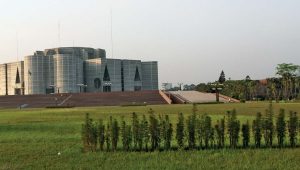
Two decades of Western intervention changed everything. India invested over $3 billion in Afghanistan’s reconstruction, building roads, schools, hospitals, and the Afghan parliament itself, cultivating immense goodwill among Afghans. When the United States withdrew and the Taliban stormed back to power in 2021, Delhi’s elaborate network of influence collapsed overnight.
At that moment, India faced an uncomfortable choice. It could remain ideologically consistent and lose strategic access, or it could swallow its pride and engage with the new rulers of Kabul. The Modi government chose the latter, quietly reopening its mission in Kabul and sending a “technical team” under the pretext of humanitarian aid.
Now, with Muttaqi’s visit, that tentative engagement has evolved into full-fledged diplomacy. For India, the calculation is simple: if it wants to protect its security and economic interests in the region, it cannot afford to ignore the Taliban.



India’s biggest fear is that militant groups such as Lashkar-e-Taiba or the Islamic State-Khorasan could use Afghan territory as a base to launch attacks on Indian interests. Engaging the Taliban is a way to extract counterterrorism assurances and monitor developments on the ground. Muttaqi, in his Delhi remarks, insisted that “Afghanistan is peaceful” and that no group would be allowed to target other countries. Whether India believes this or not, it sees dialogue as better than isolation.
Pakistan’s deteriorating relations with the Taliban have opened a rare window for India. Islamabad accuses Kabul of harbouring the Pakistani Taliban, while the Taliban accuse Pakistan of violating Afghan sovereignty through cross-border airstrikes. By stepping in now, India seeks to exploit the rift and present itself as an alternative partner. The Taliban, for their part, want to demonstrate autonomy from Pakistan’s grip and diversify their alliances. Delhi fits that narrative perfectly.
India envisions Afghanistan as a vital link in its outreach to Central Asia and Iran, bypassing Pakistan. Through the Chabahar port and proposed trade corridors, Afghanistan can serve as a bridge to energy-rich markets. The Taliban’s openness to trade discussions, including reopening border routes and welcoming Indian investment in mining, aligns with Delhi’s long-term strategic agenda.
Yet beneath these pragmatic layers lies a profound contradiction. India’s engagement with the Taliban exposes the tension between its global image as a democracy and its growing willingness to deal with regimes that fundamentally contradict its professed values.
Realpolitik has limits. While engagement may serve immediate security interests, it risks normalising a regime still under international sanctions, one that the International Criminal Court has accused of crimes against humanity. Russia formally recognises the Taliban government, but does so out of necessity rather than endorsement. India, by contrast, is attempting to project both moral authority and strategic pragmatism, a balancing act that is difficult to sustain.
Moreover, this diplomatic thaw may not yield the leverage India hopes for. The Taliban are transactional by nature and have proven adept at playing regional powers against each other. Today they welcome India’s overtures; tomorrow they could tilt back toward China or Iran if it serves their interests. Without formal recognition or a clear framework, India’s engagement risks being one-sided, a gesture of legitimacy that costs Delhi more than it gains.
There is also a symbolic cost. By reopening its embassy in Kabul and upgrading its technical mission, India may unwittingly inch toward de facto recognition of a regime that continues to suppress half its population. In the long run, this could weaken India’s moral standing in multilateral forums and alienate Western partners who remain reluctant to engage with the Taliban.
Yet India’s leaders appear confident that the dividends outweigh the risks. The bet is that by engaging early, India can shape Afghanistan’s trajectory rather than watch from the sidelines. It is a high-stakes gamble that acknowledges the messy realities of diplomacy in a fractured region.
Afghanistan has long been a mirror reflecting South Asia’s contradictions: religious ideology against political pragmatism, humanitarian concerns against strategic compulsions. India’s latest outreach to the Taliban captures this paradox perfectly. It is neither an embrace nor a rejection, but a cautious handshake extended across an uneasy history.
Diplomacy is not just about who you talk to; it is also about what you stand for. If India truly believes in a rules-based order grounded in human rights, it must find a way to engage the Taliban without endorsing their behavior. That will require consistency, courage, and moral clarity, qualities that cannot be replaced by strategic convenience.
In the end, Amir Khan Muttaqi’s visit to India was more than a diplomatic milestone; it was a test of India’s identity as a democratic power navigating an increasingly authoritarian world. Whether Delhi passes that test depends not on how deftly it manages its Afghan policy, but on whether it remembers that foreign policy, too, is a reflection of national conscience.
The writer is an Academic, Journalist, and Political Analyst