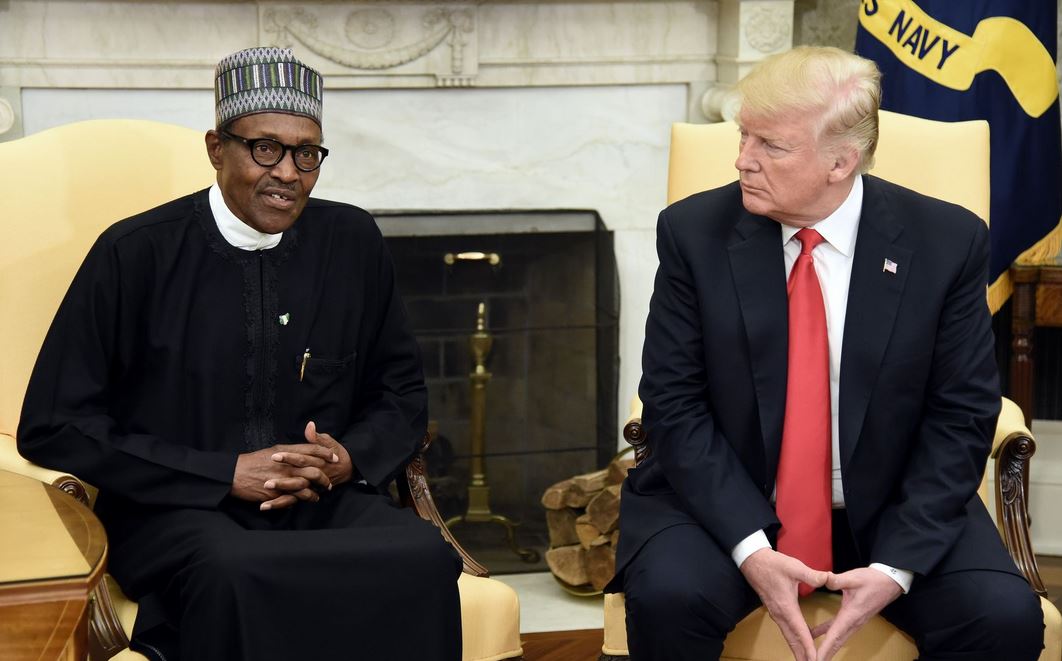



US President Donald Trump’s warning that the United States could “go in guns-a-blazing” against Nigeria if it fails to protect Christians is more than campaign bluster. It is a rupture in diplomatic restraint, a statement that redefines how a superpower may justify military action in the modern world.
No American president in recent memory has threatened to attack another country solely on religious grounds. The declaration signals a troubling fusion of faith and force, one that risks dismantling decades of norms built around sovereignty and secular diplomacy.
Faith as foreign policy
For Washington, religion has long been a moral reference point, not a military trigger. Human rights and democracy have been invoked to justify intervention, but rarely the defence of a specific faith. Trump’s words cross that line. He has effectively said that US military power could be mobilised depending on the religion of those being persecuted.
That sets a dangerous precedent. It elevates faith identity over universal human rights, replacing principle with partiality. Once religion becomes a filter for empathy, it fractures the very idea of equality among victims of persecution.
A form of coercive diplomacy
Trump’s warning to Nigeria is not just moral posturing. It is an act of coercion. When a global superpower threatens a developing country over internal issues, it undercuts the foundation of sovereignty.
Nigeria’s religious tensions are complex and home-grown. They require domestic reconciliation and political reform, not threats from thousands of miles away.

Such rhetoric mirrors the bullying instincts of empires past, the use of moral pretext to enforce dominance. For smaller nations, it signals that the age of great-power intimidation is far from over.
Smaller nations feel the chill
For weaker states, this new tone from Washington is deeply unsettling. Countries like Bangladesh, Nepal, Sri Lanka or those in sub-Saharan Africa have limited military capacity. If religion or selective morality becomes a legitimate cause for military threats, any of them could be targeted next. The result would be paralysis. Domestic priorities could be held hostage to external coercion. In an increasingly multipolar world, that is a recipe for instability.
Double standards and selective outrage
The selectivity of Trump’s concern exposes a deeper problem. Christians in parts of Africa do face persecution, but so do Muslims, Hindus, and other minorities elsewhere. US has never threatened air strikes on Myanmar for the Rohingya genocide, nor on China for the mass detention of Uyghur Muslims.



And in Palestine, generations of civilians have lived under occupation and blockade, enduring what many international observers describe as systematic oppression, yet Washington remains Israel’s staunchest defender.
This inconsistency strips the moral veneer from Trump’s rhetoric. It turns compassion into a weapon, empathy into politics. If the suffering of one group invites intervention while others’ pain draws silence, then the principle of universal human rights collapses into selective indignation.
Eroding the rules of restraint
The post-war international order was built on three pillars: non-intervention, dialogue, and respect for sovereignty. Trump’s declaration weakens all three.
Once the world’s most powerful nation begins issuing faith-based threats, it normalises the idea that religious solidarity can override diplomatic restraint.
Even if no missiles are ever fired, such language changes the discourse. It emboldens hawks, provokes nationalist backlash, and undermines global trust. It tells smaller states that their security no longer lies in law but in the whims of stronger powers.
A shift with global consequences
If the world accepts faith as a legitimate pretext for force, other powers could follow suit. A regional superpower might threaten neighbours to “protect” its co-religionists. Sectarian politics could spill across borders, giving extremists new fuel and legitimacy.
The notion of equal sovereignty that enshrined in the UN Charter, could erode. Diplomacy would give way to moral intimidation. For many developing nations, the message would be grim: loyalty, not law, determines safety.
The Palestine lesson
The suffering of Palestinians offers a stark reminder of how selective empathy shapes global politics. For decades, Palestinians have endured mass killings, occupation, displacement, and siege. Entire neighbourhoods in Gaza have been reduced to rubble; children grow up under drones.
Yet when Israel acts, Washington rarely threatens force. On the contrary, it shields Tel Aviv from international censure.
The contrast is striking. When the victims are Christian, the rhetoric turns militant; when they are Muslim, it turns diplomatic. This imbalance fuels resentment, not reconciliation. It widens the moral chasm between the West and much of the Global South.
Dangerous echoes of history
Trump’s words echo an era when empires cloaked conquest in faith, the so-called civilising missions of the 19th century. The language may have changed, but the instinct is the same: to wield morality as justification for domination.
Such rhetoric risks reviving a worldview in which global order is defined by who wields power, not by shared rules. In that world, smaller nations are spectators at best and pawns at worst.
Where the world stands now
If unchallenged, this trend could reshape global politics for decades. It could legitimise religiously tinted interventionism and erode multilateralism. It could also fracture fragile coalitions that depend on trust and neutrality.
The choice before the international community is clear. Either reaffirm the principle that no country has the right to threaten another on sectarian grounds or watch as the global order drifts toward faith-based coercion.
In an age already fractured by war, inequality, and extremism, the world can ill afford another reason to divide. Trump’s threat may play well to a section of the domestic audience, but to much of the world it sounds like the echo of a darker past, one where might, not morality, decided whose suffering mattered.
The writer is the City Editor at The Daily Times of Bangladesh