An overwhelming majority of voters in the country want to see national elections held by February next year, as announced by the interim government.
A nationwide survey conducted among more than 10,000 people shows that 86.5 per cent of the respondents voiced their opinion in favour of holding the 13th parliamentary elections within the announced timeframe.
The findings of the survey were presented at a roundtable titled “People’s Election Pulse Survey, Round 2: Report Launch” at The Daily Star Centre in Dhaka on Sunday.
Innovision, an international advisory and management consulting firm, conducted the survey in collaboration with Voice for Reform and the Bangladesh Research Analysis & Information Network (BRAIN). Md Rubaiyath Sarwar, the managing director of Innovision, presented the survey.

If elections are held within this timeframe, 94.2 per cent of respondents said they would go to the polling stations to cast their votes, 3.8 per cent said they would not vote, while 2 per cent chose not to respond, according to the survey.
respondents said the interim administration, led by Muhammad Yunus, is doing either well or moderately, according to the survey. However, 17.2 per cent, predominantly younger, more educated, and urban voters, viewed the government’s performance negatively.


A total of 10,413 eligible voters participated in the survey, which was conducted from 2 to 15 September. The survey was funded by Innovision, according to its Managing Director Rubaiyath Sarwar.
Regarding potential unrest during the polls, 38.4 per cent of respondents said there would be no clashes, and 21.3 per cent felt the chances were very low. However, 14.2 per cent thought the likelihood of violence was high, while 19.7 per cent maintained a moderate view.
The survey also shed light on public concerns about law and order. A notable 56.6 per cent of participants said extortion had increased over the past six months, while 11.5 per cent believed the situation remained unchanged. Ten per cent of respondents chose not to comment.
Social media platforms were cited as the primary source of information for those who perceived a worsening extortion situation.
On the topic of the proportional representation (PR) system, the survey found that only 21.8 per cent of respondents supported the introduction of PR for the upper house, which has yet to be established.
Some 22.2 per cent opposed it, and a majority — 56 per cent — said that they were not at all aware of the system. Respondents were not asked about introducing the PR system in the election to the lower house.
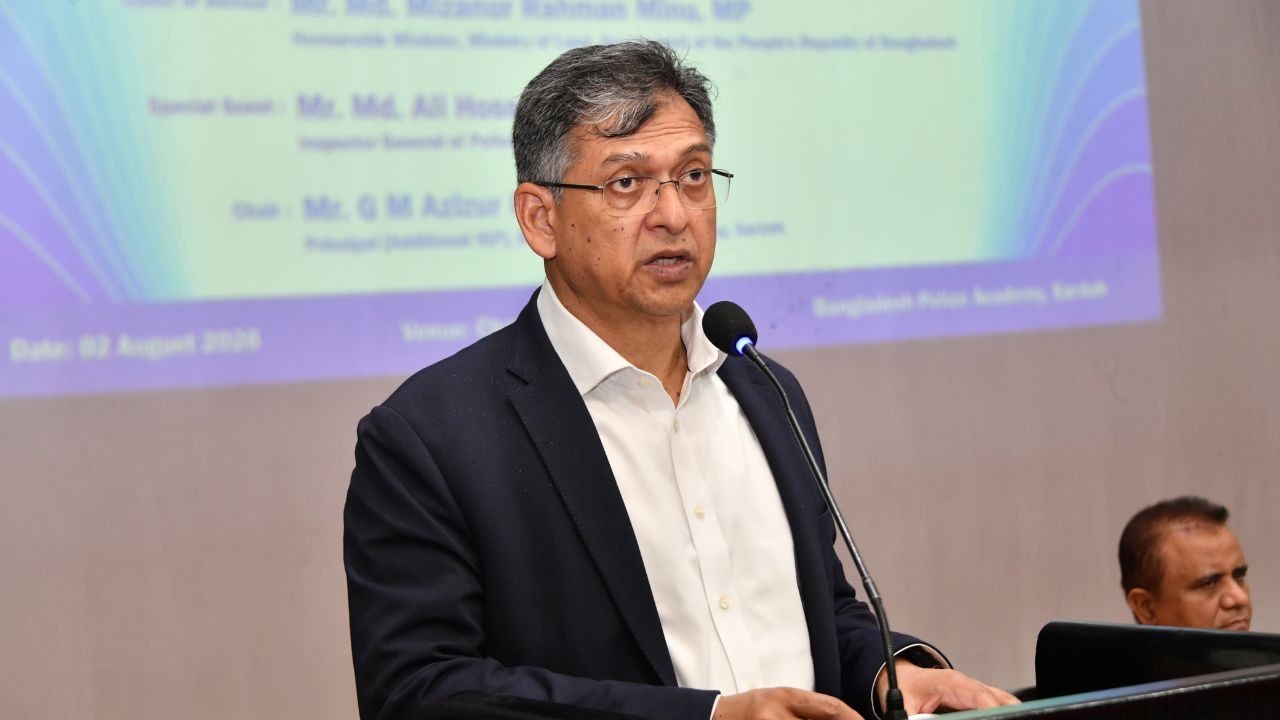
Speaking at the roundtable as the chief guest, Shafiqul Alam, press secretary to the chief adviser, claimed that the findings indicate broad public acceptance of the interim government.
“This is a victory for the government amid the misinformation spread over the past year,” he said.
On the PR system, Alam said that it is an issue for political parties to resolve.
“The government will neither interfere nor participate in introducing any new electoral systems. The political parties are already engaged in discussions on these matters,” he added.