Nearly 130 heads of state and government are gathering at the United Nations headquarters in New York as the annual high-level General Debate of the 81st UN General Assembly (UNGA) opens on Tuesday.
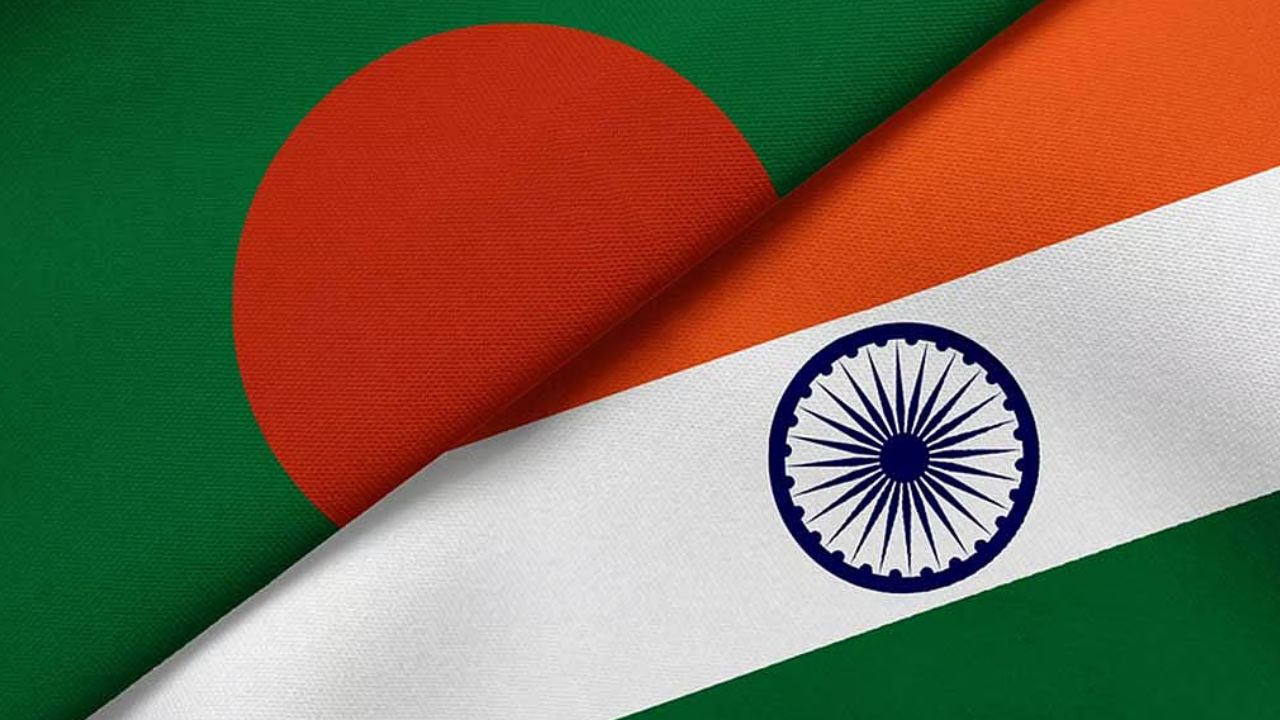
The annual session officially commenced on 8 September, when Bangladeshi Foreign Minister Khalilur Rahman took office as UNGA president, reports Al Jazeera.
Session schedule and debate format
The General Debate opens on Tuesday, running through 26 September, and resuming on 28 September, with no sessions scheduled for Sunday.
Daily proceedings are split into two sessions, running from 9am to 2:45pm local time (13:00 GMT to 18:45 GMT) and 3pm to 9pm (19:00 GMT to 01:00 GMT the next day).
While speakers are asked to observe a voluntary 15-minute limit, statements frequently run longer, and meetings continue until all scheduled speakers have taken the floor.
Opening addresses and speaking order
UN Secretary-General Antonio Guterres will open the morning session by presenting his annual report in what is expected to be his final address, followed by UNGA President Khalilur Rahman, who will formally open the debate.
By tradition established in 1955 when it volunteered to open the debate when no other nation would, Brazil will be the first member state to address the assembly.

As host country, the United States speaks second, with President Donald Trump scheduled to take the podium following Brazil on Tuesday morning around 9:45am local time (13:45 GMT).
All 193 UN member states, alongside invited non-member participants including the Holy See (Vatican City), the State of Palestine, and the European Union, have been invited to address the assembly.
Speaking slots for all remaining member states are determined by their level of representation (head of state, head of government, or minister), expressed preferences, and geographic balance.
US visa refusal and Palestinian participation
For the second consecutive year, the US administration has denied visas to Palestinian officials, drawing widespread criticism.


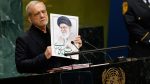
Consequently, Palestinian President Mahmoud Abbas will address the UNGA via a prerecorded video message following a procedural vote by member states permitting the format.
The United Nations asserted that the US decision violates the Host Country Agreement, which legally obligates the host nation to permit diplomatic travel and grant full diplomatic immunity to visiting heads of state and government.
Historic venue and diplomatic background
Located along Manhattan’s East River, the UN headquarters complex was constructed between 1949 and 1952 on international territory and serves as the primary hub for global diplomacy.
While nearly all sessions since 1952 have taken place in New York, the first six UNGA sessions convened in European cities, beginning in London and later Paris.
A notable exception occurred in 1988, when the General Assembly met in Geneva, Switzerland, after the US similarly refused a visa to Palestinian leader Yasser Arafat.
Key global issues and thematic sessions
Held under the overarching theme “Restoring trust, managing transformation: A United Nations that delivers for all”, the 81st UNGA session features a series of high-level thematic meetings alongside national addresses.
These include dedicated sessions on climate action and a just transition as well as the 40th anniversary of the Declaration on the Right to Development on 23 September, sea level rise on 24 September, pandemic preparedness on 25 September, the 25th anniversary of the Durban Declaration against racism on 28 September, and the elimination of nuclear weapons on 29 September.
Discussions are also expected to focus heavily on ongoing wars in the Middle East and Ukraine, artificial intelligence, and the UN’s funding squeeze.
Race for the next UN secretary-general
Simultaneously, diplomats are closely watching the race to select the next UN secretary-general to succeed Antonio Guterres, whose second and final term ends on 31 December.
Although the General Assembly formally appoints the secretary-general, a choice is not expected this week as the UN Security Council (UNSC) is conducting informal straw polls and must recommend a candidate first.
All nine previous secretaries-general since the UN was founded in 1945 have been men, and several UNSC members have expressed a preference for a woman to lead the organisation for the first time.
Contenders and Security Council straw polls
Seven candidates currently remain in the running, four women and three men, though additional candidates could still enter the race.
The female candidates are Rebeca Grynspan (Costa Rica), secretary-general of UNCTAD and former vice-president of Costa Rica; Carolyn Rodrigues-Birkett (Guyana), Guyana’s permanent representative to the UN and former foreign minister; Ivonne Baki (Ecuador), diplomat and former minister of foreign trade; and Maria Fernanda Espinosa (Ecuador), former president of the UNGA and former foreign minister.
The male candidates are Rafael Grossi (Argentina), director-general of the International Atomic Energy Agency; Macky Sall (Senegal), former president of Senegal; and Olara Otunnu (Uganda), former foreign minister and ex-UN undersecretary general.
Former Chilean president Michelle Bachelet withdrew from the contest on Saturday after winning support from only one of the 15 UNSC members in the latest informal vote.
In that same vote, Costa Rica’s Grynspan emerged narrowly ahead with nine members encouraging her candidacy, five discouraging, and one expressing no opinion, while Guyana’s Rodrigues-Birkett placed second with eight encouraging votes, six discouraging, and one with no opinion.