
Violence has erupted in Ladakh, a union territory of India, as protests demanding statehood and safeguards for land and jobs spiraled out of control, leaving at least four people dead and around 100 others injured.
The unrest is the latest flare-up in the Himalayan region, which has been witnessing waves of agitation since it was carved out from Jammu and Kashmir as a union territory by Modi government back in 2019, reports the Hindustan Times.
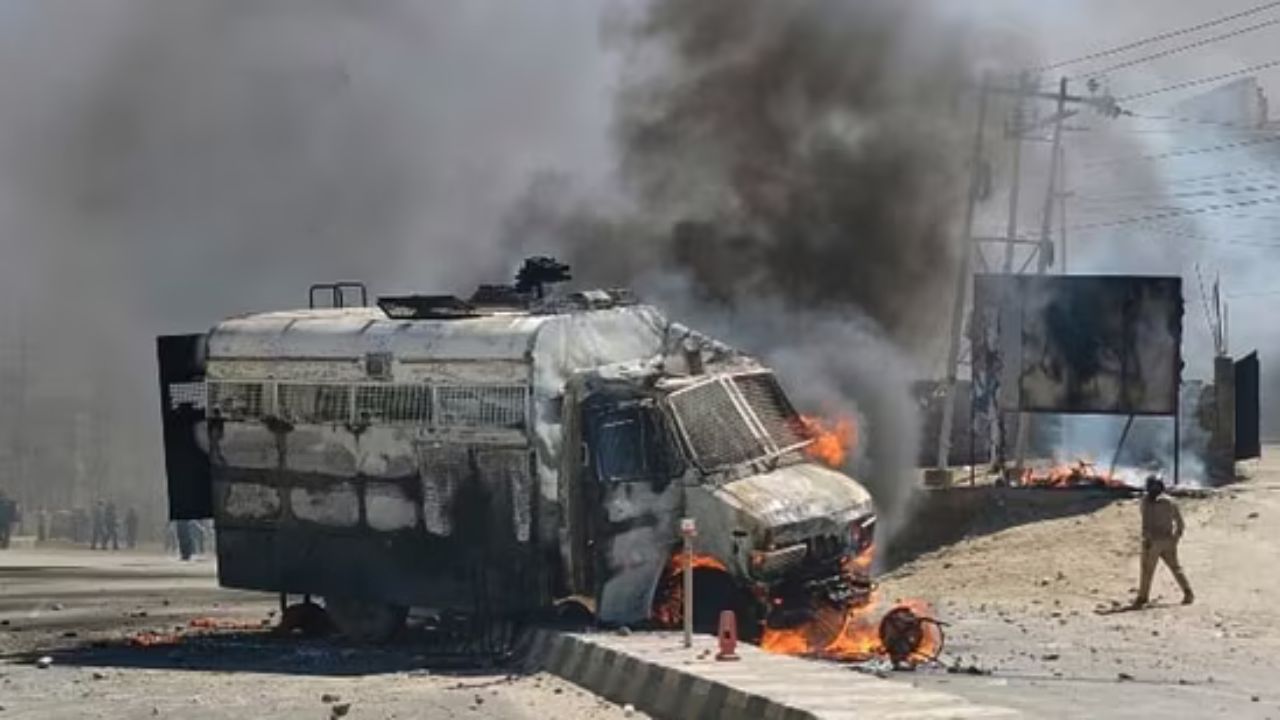
Local administration imposed a curfew across parts of Leh, the UT’s capital, after clashes turned deadly. A police vehicle and the local BJP office were set ablaze, while angry crowds and Gen-Z protesters hurled stones and vandalised government property.
Indian authorities said paramilitary forces were being rushed in, even as the Union home ministry blamed activist Sonam Wangchuk for “provoking” demonstrators. Local police admitted using force to disperse hundreds of young protesters.
Senior officer Rigzin Sangdup confirmed the Hindustan Times that four civilians had died, nearly 30 others were wounded, and up to 70 security personnel sustained injuries.

Witnesses alleged that police opened fire, while local activist Sonam Wangchuk accused them of using live rounds against unarmed crowds.
The Union Home Ministry said violence began around 11:30am on Wednesday and was contained by 4pm, adding that talks with Ladakh’s leadership had already secured benefits like enhanced reservations, language rights and a new recruitment drive.




The next round of negotiations was set for 6 October. “But politically motivated actors tried to derail the process,” the statement said.
Wangchuk, who ended a 15-day hunger strike on Tuesday, condemned the bloodshed but insisted that the Centre’s broken promises had fueled anger among Ladakhi youth.
“Thousands had gathered and now we are hearing reports of multiple deaths and many with serious injuries,” he said.
Since Ladakh’s separation from Jammu and Kashmir in August 2019, residents have repeatedly protested for full statehood and protections under the Sixth Schedule. Demonstrations have echoed as far as Delhi, with large rallies in 2024 and a 66-day hunger strike earlier this year.
Although the government recently introduced sweeping rules – including 85% job reservations, stricter residency norms, recognition of five official languages, and greater powers for hill councils – resentment over the absence of statehood has continued to mount.
Officials accused protesters of trying to torch paramilitary personnel inside vehicles and of targeting top police officers.
‘Conspiracy’ behind violence
Lieutenant Governor Kavinder Gupta suggested a “conspiracy” behind the violence, saying, “Talks had been fixed. Yet a group left the hunger strike venue, indulged in arson and stone-pelting. Those responsible will face action.”
Reinforcements from the Central Reserve Police Force (CRPF) and Indo-Tibetan Border Police have been mobilised to secure Leh. Each CRPF company consists of around 80–130 personnel, with additional forces on standby if tensions escalate.
Meanwhile, political blame games erupted in Delhi, with BJP leaders accusing Congress of orchestrating the unrest. Party spokesperson Sambit Patra alleged that a Congress councillor was spotted leading protesters toward the BJP office while armed with a weapon.