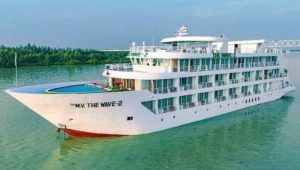
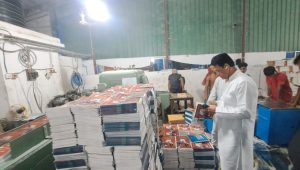
A fuel shortage, triggered by the Middle East war, has brought lighterage operations at Chattogram Port to a near standstill, delaying the unloading of imported goods across the country.
Industry insiders say more than 200 lighter vessels have already suspended operations due to an acute lack of fuel, creating a major bottleneck in the supply chain.
Lighter vessels play a crucial role in transporting goods from mother vessels anchored offshore to inland destinations via river routes.
Despite repeated appeals from the Bangladesh Cargo Vessel Owners Association and the Bangladesh Water Transport Coordination Cell, operators claim they are not receiving adequate fuel supplies.
Engineer Mehbub Kabir, secretary of Bangladesh Cargo Vessel Owners’ Association, said at least 200 vessels are currently idle. “Four of my own vessels are unable to transport goods due to fuel shortages. We informed the shipping ministry about the crisis ten days ago, but have yet to receive any response,” he said, adding that the situation is worsening by the day.

He warned that the inability of lighter vessels to offload cargo from mother vessel is causing significant delays at the port.
As a result, large vessels are being forced to




wait longer at anchorage, leading to additional costs ranging from $20,000 to $30,000 per day, depending on vessel size.
The Bangladesh Water Transport Coordination Cell, which is responsible for allocating lighter vessels, has also been forced to scale back its operations. While it previously held daily coordination meetings, these are now taking place less frequently due to the shortage of operational vessels.
Currently, around 2,000 registered lighter vessels operate from the port’s outer anchorage, including 1,022 under government management and 629 operated by private owners.
These vessels transport essential commodities such as food grains, fertiliser, coal, and consumer goods across 34 inland waterways.
Port data shows that as of 12 April, a total of 97 vessels were stationed at Chattogram Port, of which 79 were outer anchorage area. These included general cargo ships, food grain carriers, clinker vessels, and sugar shipments, most of which rely on lighter vessels for unloading.
In a letter sent on 30 March, the Bangladesh Water Transport Coordination Cell urged the Ministry of Power, Energy and Mineral Resources to ensure uninterrupted fuel supply. The organisation also sought intervention from the finance ministry to resolve the crisis.
According to the letter, fuel suppliers are unable to meet demand due to shortages at the marine dealer level, particularly affecting vessels operating along major river routes such as the Padma, Meghna, and Jamuna. As a result, many lighter vessels are unable to load cargo or depart for delivery, further worsening the shortage at the port.
“If this situation continues, unloading operations at Chattogram Port could come to a complete halt in a very short time,” the letter warned, calling for immediate action to ensure steady fuel distribution.
Parvez Ahmed, spokesperson for the coordination cell, said the crisis has significantly slowed turnaround times. “We are still allocating 70 to 80 vessels per meeting, but where deliveries used to take around 15 days, it now takes more than 20 days. Each vessel is delayed by five to six days,” he said.
Although authorities have suggested rationing fuel as a temporary solution, industry stakeholders argue that such measures are impractical for maritime transport.