






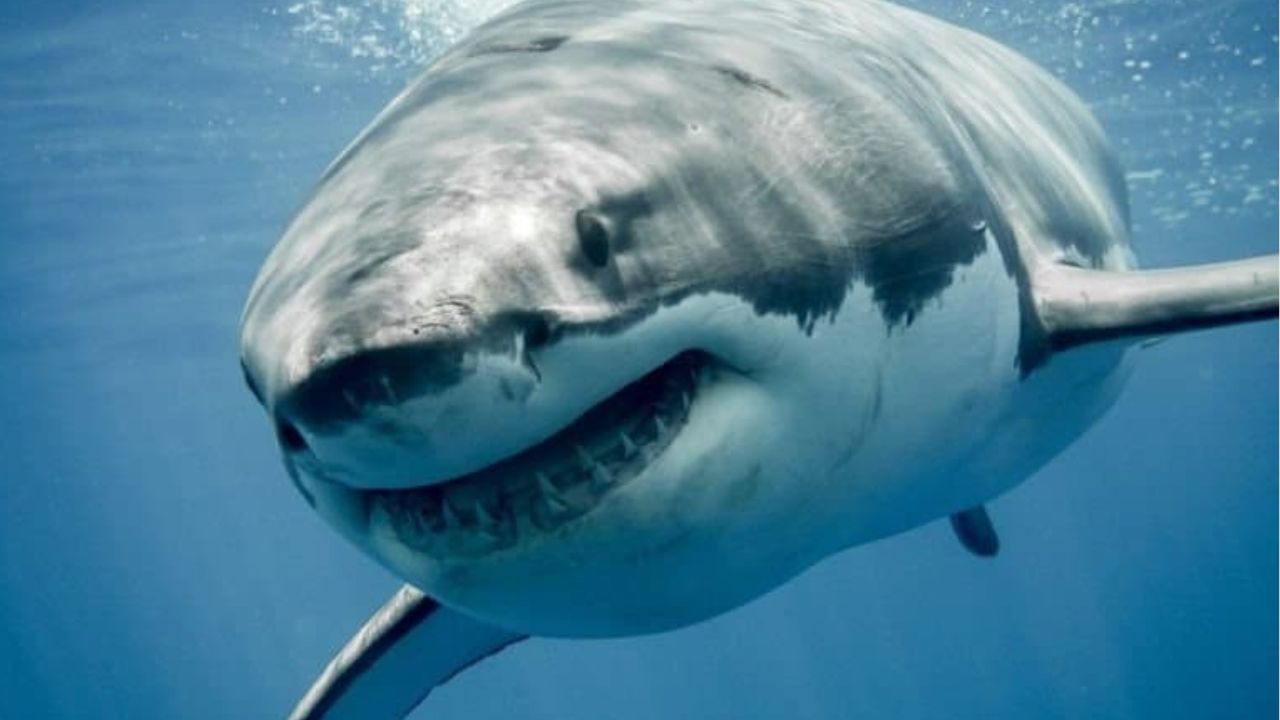
In an unprecedented event, a dead Greenland shark washed ashore on the storm-battered west coast of Ireland in April 2026, marking the first recorded stranding of the species in the country.
The discovery on the tidal flats of County Sligo has provided researchers with a rare opportunity to study the biology and longevity of the world’s longest-living vertebrate, reports BBC.

Measuring approximately three metres in length and weighing over 200 kilograms, the grey-beige specimen is estimated to be more than 150 years old. Born during the era of Queen Victoria and US President Abraham Lincoln, the shark had only recently reached reproductive maturity.

Emilie De Loose, a marine biologist at the Irish Whale and Dolphin Group, noted the significance of the loss, stating that it takes 150 years for such an animal to reach the stage where it can contribute to the population.
The recovery operation was overseen by the National Museum of Ireland, involving a crane to hoist the carcass onto a lorry for transport to a regional veterinary laboratory. To ensure health and safety, a multidisciplinary team of researchers conducted a necropsy in a well-ventilated space, wearing protective gear to guard against potential ancient bacteria or viruses.
Jasmine Stavenow Jerremalm, a PhD researcher in marine ecology at University College Cork, who participated in the examination, remarked that working with dead animals offers an intimate understanding of living species. The team examined the shark’s massive 50kg liver and its digestive tract; while the stomach was empty, the spiral valve appeared full, suggesting recent digestion.
The necropsy revealed extraordinary details regarding the shark’s internal organs. The heart, weighing a “gigantic” 34kg, showed signs of ageing such as scarring, yet remained well-functioning. Researchers suggest the species has evolved a unique resilience to age-related heart health markers that typically affect other animals, including humans.
The scientific analysis has challenged the myth that these sharks have poor vision. Lily Fogg, a postdoctoral researcher at the University of Basel, explained that the shark’s eyes are highly specialised “low-light cameras” built to last for centuries. This resilience may be linked to highly active DNA repair genes that resist age-related degeneration.
Greenland sharks are slow-swimming scavengers and opportunistic predators that inhabit the North Atlantic and Arctic waters. They are known to use powerful suction to swallow prey, such as seals, whole. However, basic aspects of their biology remain elusive. Brynn Devine, an Arctic Fisheries Scientist at Oceans North, highlighted that mating and pupping grounds remain unknown, making it difficult to assess population health or protect the species from threats like fishing bycatch.
The National Museum of Ireland hopes to eventually display the specimen. Amy Geraghty, curator of zoology at the National Museum of Ireland, Natural History, stated that the exhibition would allow visitors to learn about this mysterious species and the scientific work required to study such long-lived creatures.


