




State Minister for Primary and Mass Education Bobby Hajjaj on Thursday said the government is committed to preparing Bangladeshi youth to meet international labour market demands, including those of Japan, through language education, technical skills and technological knowledge.
He said the government’s objective is not only to send workers abroad but also to produce skilled, language-proficient and globally competitive human resources.
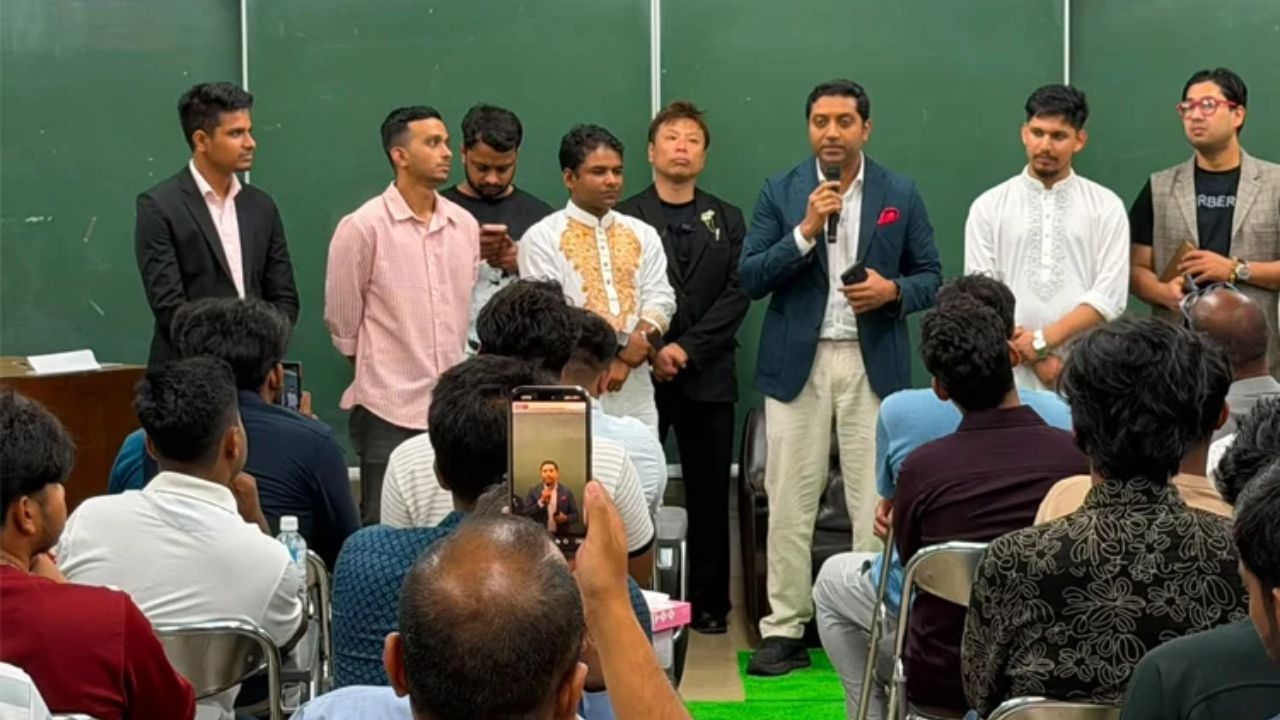
The state minister made the remarks while addressing an exchange meeting with Bangladeshi students, professionals and community representatives living in Osaka and Kobe at a local community centre in Osaka, Japan.
“Bangladesh’s youths are our greatest strength. The government is continuously working to develop them with international-standard language education, technical skills and technological capabilities,” he said.
“If skilled manpower can be created according to the demands of the labour market of developed countries like Japan, it will make an important contribution to the country’s economy, employment and foreign earnings,” Bobby Hajjaj added.
He said the government would take the necessary policy and institutional measures to further strengthen language education, skill development and quality technical education.
The state minister also said the experiences and recommendations of expatriate Bangladeshis would be given due importance through coordination with the relevant ministries and agencies.
Assuring that financially disadvantaged students would not be deprived of opportunities for higher education abroad, Bobby Hajjaj said the government would give the matter due importance. He described Bangladeshi students studying overseas as valuable national assets.
Their experiences and practical suggestions will play an important role in formulating future policies on education, skill development and human resource formation, he said.
During the meeting, participants stressed the need to improve the quality of Japanese language education in Bangladesh, introduce a national accreditation system for language education institutions and establish specialised training institutes for language teachers.
They also recommended integrating technical and vocational education and training (TVET) with information technology education.
In addition, they proposed policy support to make use of the skills acquired by young Bangladeshis returning from Japan after receiving training in the engineering, technology and automotive sectors.
Responding to the recommendations, Bobby Hajjaj said the government would prioritise improving the quality of Japanese language education, establishing a quality control system, enhancing teachers’ skills and expanding technical education aligned with the needs of the international labour market.
He also said policy support would be provided to utilise the knowledge and expertise of returning expatriates in Bangladesh’s industrial and production sectors.
Officials from the Bangladesh Embassy in Tokyo, Bangladeshi students enrolled at various universities in Japan, expatriate professionals, businesspeople and community leaders attended the exchange meeting.


