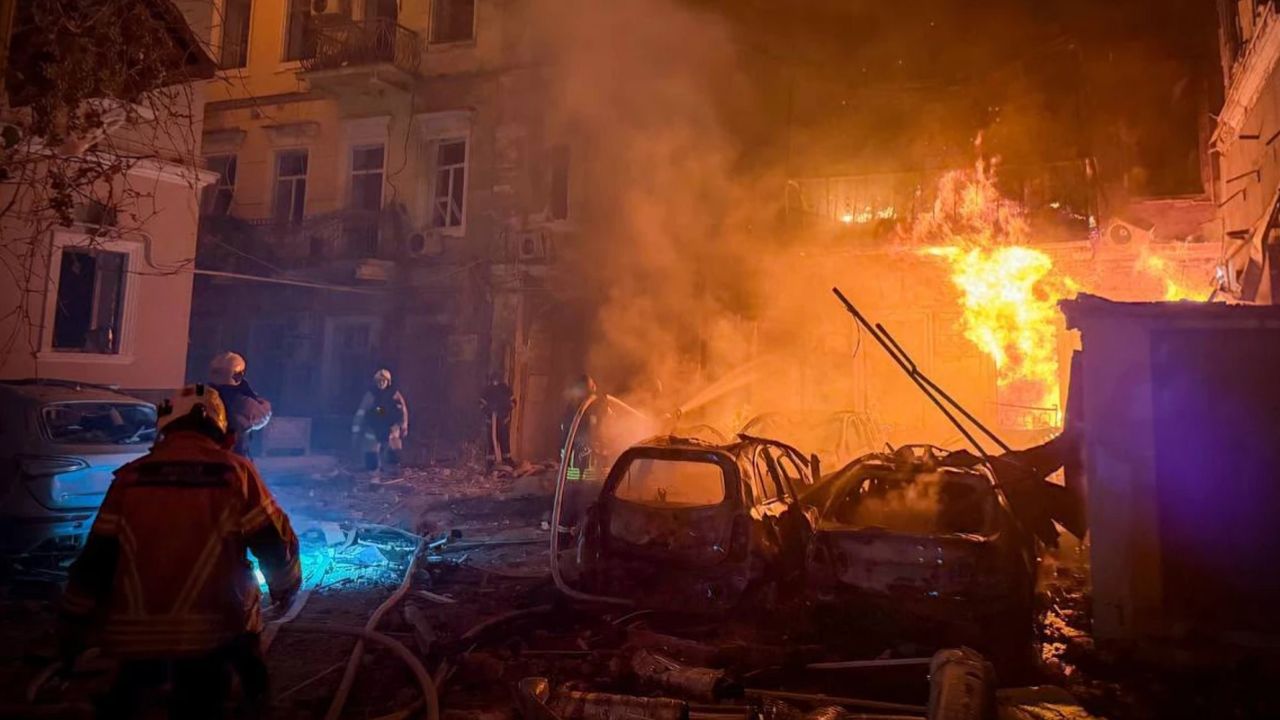



Russia and Ukraine traded strikes overnight into Sunday that left at least seven people dead in total and dozens more injured on both sides of the border, according to local officials.
In Russia’s Belgorod region, Ukrainian drone attacks killed five people and wounded roughly two dozen others, including a four-year-old boy, the regional administration said, while Russian missiles struck a high-rise residential block in Kharkiv’s Saltivskyi district, killing a further two people and injuring 13, according to regional governor Oleh Syniehubov, according to AP.
A further eight people were hurt in the Black Sea port city of Odesa, where local administration head Oleh Kiper said “dozens of missiles and drones” had struck the city and its surrounding region overnight, though no fatalities were reported there.
Russia’s defence ministry said separately that its forces had also targeted fuel storage facilities at the nearby port of Chornomorsk, part of a wider campaign against Ukrainian maritime and port infrastructure.

President Volodymyr Zelenskyy accused Moscow of endangering global food security through its repeated strikes on Odesa’s port facilities, which handle much of Ukraine’s grain exports.
Moscow’s defence ministry said the overnight barrage had also hit drone storage warehouses in the Kharkiv region and depots holding fuel and other military material at Odesa and claimed its air defences had intercepted 153 Ukrainian drones overnight, including over annexed Crimea and above the Black and Azov seas.




Officials in Belgorod said Ukrainian drone strikes had damaged 29 apartment blocks, five private homes, several administrative buildings and unspecified commercial premises.
Large-scale Russian missile bombardments of Ukrainian cities have become almost routine in recent weeks, with Moscow capitalising on Kyiv’s dwindling stock of interceptors for its American-supplied Patriot air defence batteries — the only system in Ukraine’s arsenal capable of shooting down ballistic missiles.
That shortage has left Ukrainian cities increasingly exposed even as Russian strikes intensify.
Zelenskyy has spent months pressing allies, above all Washington, to supply additional Patriot systems, arguing they are indispensable to protecting Ukrainian civilians, and the shortfall has been worsened by competing demand linked to the war involving Iran.
Short of securing more systems from abroad, Kyiv is exploring the possibility of manufacturing Patriot interceptor missiles domestically, and has also sought permission from Elon Musk to use his Starlink satellite network to help guide strikes against missile launch sites inside Russian territory.
For its part, Ukraine has continued its own long-range drone campaign against targets deep inside Russia, striking energy infrastructure, the country’s largest online retailer Wildberries, and other sites, contributing to a fuel crisis that has rippled across Russian regions.
Separate reports from recent days indicate Russian strikes have also disrupted Ukrainian logistics hubs, including major warehouses operated by retailers such as Rozetka, Epicenter and Nova Poshta, compounding pressure on domestic supply chains already strained by the war.
The exchange of strikes comes as both militaries continue to report contrasting battlefield claims, with independent verification of many individual incidents remaining difficult given restricted access to front-line areas on both sides.