
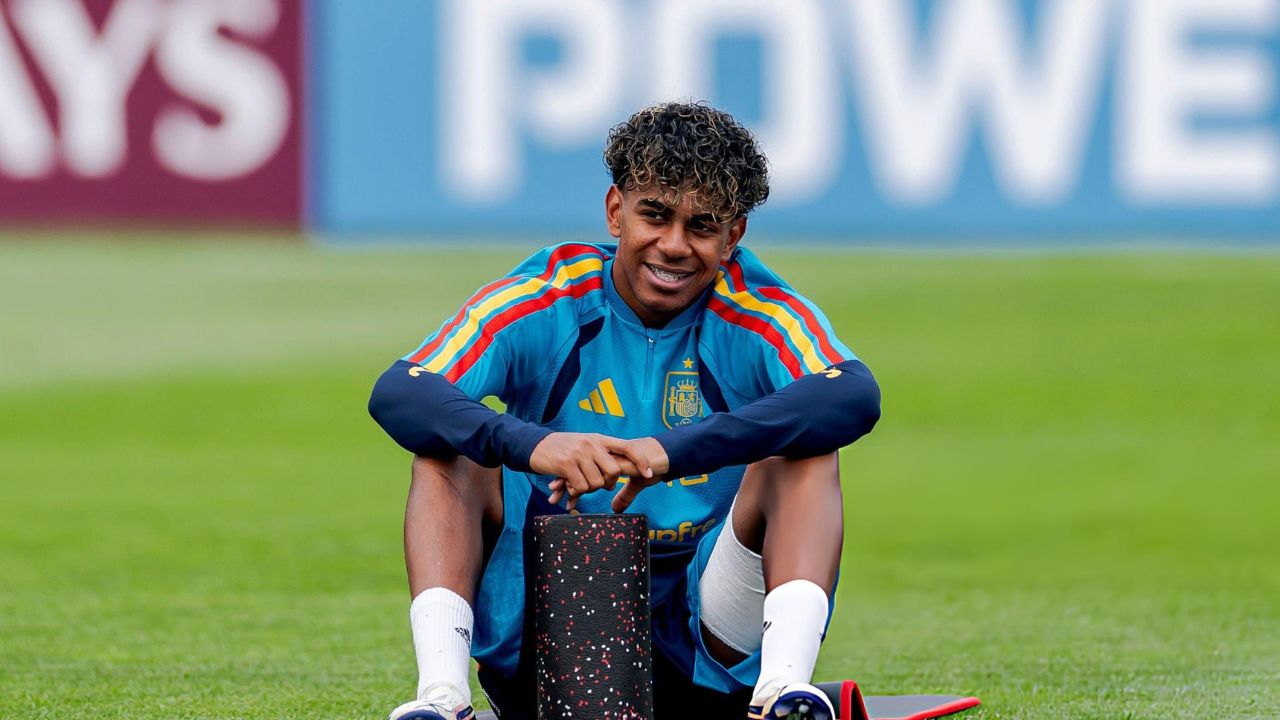



Some stories are too perfect to be fiction. In the autumn of 2007, a 20-year-old Lionel Messi, already Barcelona’s brightest hope, sat in a locker room at Camp Nou for a UNICEF charity photoshoot. Beside him, propped in a plastic bathtub, was an infant from a working-class neighborhood in Mataró, barely old enough to focus his eyes. That baby was Lamine Yamal. Nobody in that room could have imagined that nineteen years later, the two would meet again — not for a photograph, but across the width of a football pitch, in the final of the FIFA World Cup.
That meeting arrives Sunday, July 19, at MetLife Stadium in New jersey, and it is impossible to overstate how improbable this collision of eras truly is. Messi, 39 years old and playing what may be his final act on the international stage, has spent two decades rewriting the record books. Yamal, just 19, has spent his first World Cup rewriting the future.
A teenager terrorizing the world’s best
Yamal did not arrive in this World Cup as a finished product coasting on reputation. He arrived carrying doubts — an injury that limited his early minutes, whispers about fitness, a nation nervously watching its brightest star warm up on the sidelines. And then he simply began destroying full-backs.

Uruguay. Portugal. Belgium. France. One by one, defenders built to stop wingers half his experience found themselves turned inside out by a teenager who plays like he has already seen the entire pitch before the ball even arrives at his feet. It was Yamal who won the decisive penalty that dragged Spain past France and into the final — a moment of composure that belied his age, delivered with the ice-cold nerve of a player who has somehow already been doing this at the elite level for years.
The numbers don’t yet match Messi’s — one goal to the Argentine’s eight, no assists to Messi’s four — but numbers rarely capture what Yamal represents. He is not just performing at this World Cup. He is auditioning for the throne.




The weight of the stage
There is a cruelty and a beauty in what the final demands of him. Spain’s teenage prodigy, the youngest player ever nominated for a Ballon d’Or, will walk out to face the very man who once cradled him as an infant — a man Yamal has called his idol, whose posters likely hung in a bedroom in Mataró before Yamal ever kicked a ball in anger. Messi, for his part, has already anointed his successor. “If I have to choose one,” he said recently of the coming generation, “it’s Lamine.”
That endorsement means everything and nothing. On Sunday, sentiment disappears. Messi will be trying to become the first player since Brazil’s golden generation of 1962 to lift back-to-back World Cups. Yamal will be trying to become the player who ended that dream — the kid in the bathtub photo now standing directly in the way of his hero’s storybook ending.
Improbable, yet written all along
Football rarely offers symmetry this exact. A teenager who has spent a World Cup dismantling seasoned defenders, walking into the sport’s grandest match against the very man whose calendar photoshoot captured him before he could speak. It is the kind of collision that mythology is built from — not manufactured narrative, but coincidence so precise it feels engineered by fate itself.
Whatever happens at MetLife Stadium, the image will already be complete before kickoff: the King, in what may be his final World Cup appearance, staring across the pitch at the Prince he once bathed as a baby. One era straining to hold on. Another straining to arrive. Somewhere in the noise of 80,000 fans, that plastic bathtub in a Camp Nou locker room will feel like the opening scene of a story that was always going to end here.