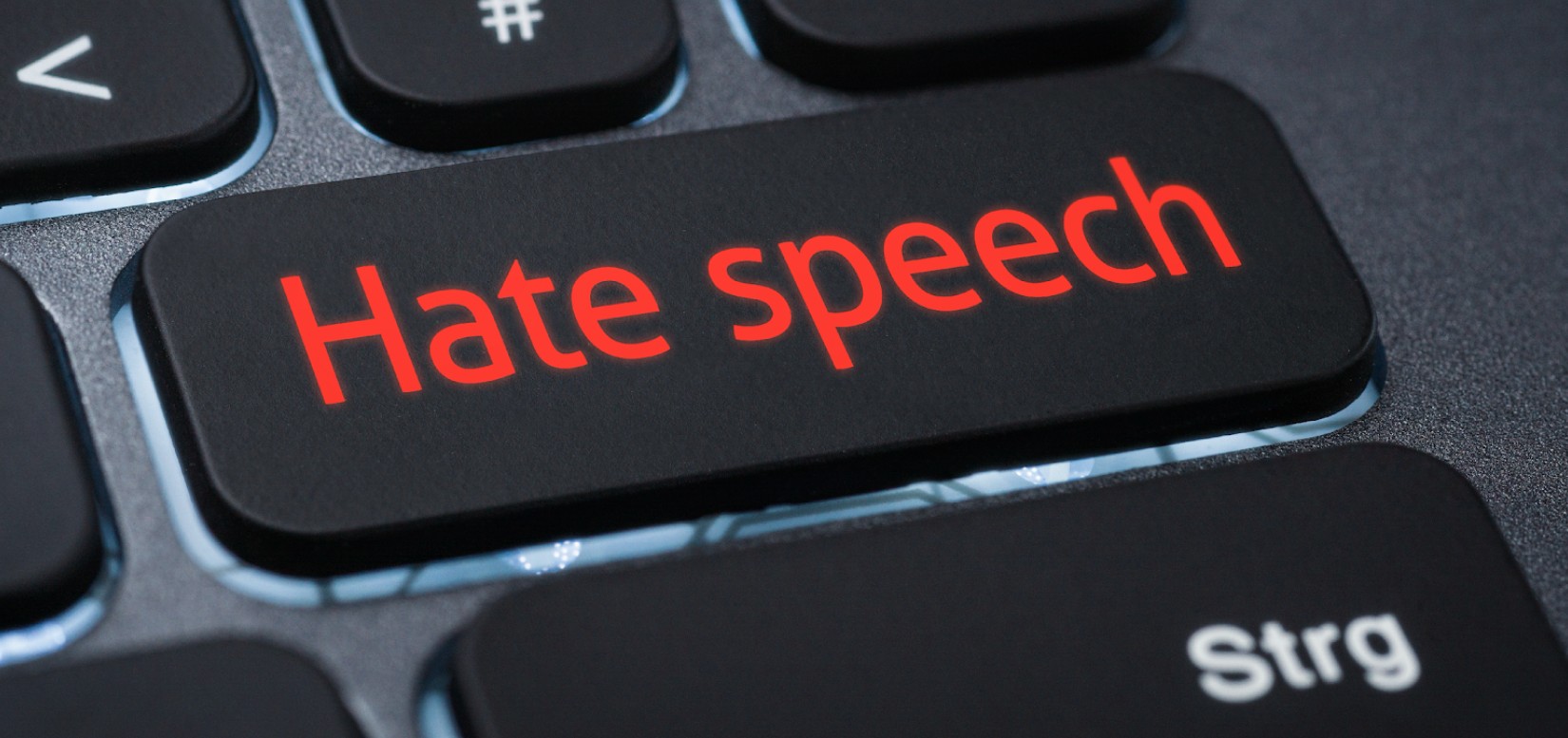

Freedom of expression offers everyone the opportunity to live together as equals and is, as a corollary of democracy, a fundamental pillar of sharing ideas. In recent years, an intense and often confused debate has emerged, highlighting hate speech as a constituent of freedom. It is imperative to distinguish between the peaceful exercises of freedom of expression and hate speech, which is intolerable.
There is no single, universally accepted definition of hate speech. Hate denotes a powerful, antisocial, and destructively aggressive emotion directed at an individual or a group. Hate speech consists of expressions that attack a person or group based on protected characteristics such as race, religion, ethnicity, sex, disability, sexual orientation, gender identity, or political affiliation. Alarmingly, incidents of hate speech are rising in Bangladesh, not only between different races, religions, and nations but also within them, driven by divergent ideologies, beliefs, and ways of thinking.
Religious hostility, including Islamophobia, is increasing in Bangladesh. This troubling trend is driven by anti-Muslim rhetoric and outright hatred. Muslims are often portrayed as if every one of them were a ‘terrorist,’ while Hindus are frequently labelled ‘malaun.’ Such hostile statements are intentionally targeted. A recent incident at a school in Bangladesh illustrates this atmosphere. I learned about it from a friend who is a journalist. He belongs to the Hindu community. One day during the tiffin break, a classmate insulted and rebuked his son, saying, “Hindus are bad; they pray to sculptures… be Muslim, Muslims are good.” The Muslim child’s taunting frightened my friend’s son, who came home visibly upset. Similar or worse incidents targeting religious minorities occur elsewhere in the region, including India.
Hate speech has long been used as a weapon to continue the oppression and subordination of groups who have been discriminated against politically, socially and economically. It not only targets a group or individual’s psychological and emotional state, but also their personal freedom, dignity, and personhood. Since, by definition, minorities are easy targets of hate speech, both online and offline, the spreading of misinformation against them and inciting violence against them have become even more commonplace, simpler and anonymous with the advent of social media. Hate speech is increasingly used by majority groups against minorities based on religion, ethnicity or linguistic difference. The common denominator driving hate speeches in the region currently is the ubiquitous online platforms, primarily social media. Another common factor is the introduction of laws framed to restrict freedom of speech in the guise of protecting citizens against hate speech and violence.

Today’s hate speech is fundamentally different from isolated incidents of the past. It spreads through Facebook, YouTube, and messaging apps, reaching millions within hours and sometimes sparking mob violence, communal riots, or targeted harassment campaigns. The 2012 Ramu violence, in which a doctored Facebook photo triggered attacks on Buddhist temples and homes, stands as a stark example of how digital falsehoods can ignite real-world destruction. Similar patterns have since recurred in Nasirnagar, Bhola, and other districts, showing that this threat is neither hypothetical nor fading.
Hate speech is common within Bangladeshi politics. Parties on all sides use extreme and sometimes anti-Semitic language against rivals. Those in power often speak as if they hold absolute authority and target opponents with hateful rhetoric, while opposition parties respond in kind against the government and other stakeholders. In 2013, Maulana Shafi described women as ‘tempting fruit like tamarind’. He also faced public outrage and media criticism when he called on the guardians of madrasa students not to send their daughters to school after the fourth or fifth grade, saying that this could make girls disobedient and lead them to elope with men.




Bangladesh’s response to hate speech is fragmented and ineffective. The Cyber Security Act is seen as vaguely worded – risking punishment of legitimate dissent while failing to curb real incitement – eroding public trust. Social platforms lack local accountability, and Bangla moderation lags behind English, letting local-language hate slip past both automated and human review. Reporting and takedown processes are slow – often taking days while misinformation spreads in hours. Authorities often blur hate-speech enforcement with political censorship, using broad laws to silence critics rather than genuine perpetrators, which deters civil-society support for stronger regulation.
Because religious minorities are few, hate speech poses outsized risks; single inflammatory posts have been used to justify land grabs, property destruction, and displacement, as minority-rights reports document. Low digital literacy, especially in rural areas, worsens the situation. Fabricated images, out-of-context videos, and rumours spread through social media and word-of-mouth, creating a vicious cycle of misinformation and hate.
Addressing this crisis requires coordinated action by multiple actors. The State should enact clear, narrowly tailored laws that distinguish protected speech from incitement to violence, with judicial safeguards to prevent misuse. Law enforcement needs specialist training to identify and respond to hate speech quickly and impartially. Technology platforms must invest in Bangla-language moderation, hire local context experts, and create faster escalation channels for content that risks sparking violence. Bangladesh-specific transparency reports would increase accountability. Civil society and media should act as watchdogs. Independent fact-checkers, journalist networks, and human-rights groups can rapidly debunk viral falsehoods, while responsible reporting must avoid sensationalising communal incidents. Educational institutions should teach media literacy and digital citizenship so young people – highly active on social media and vulnerable to manipulation – develop critical skills to resist hateful narratives.
Religious and community leaders can use their moral authority to de-escalate tensions and promote interfaith harmony during crises. Individual citizens have a role too: verify before sharing, report hateful content, and counter hate with reasoned dialogue rather than silence or retaliation.
Confronting hate speech in Bangladesh is not simply a legal or technological problem. It is a societal one, demanding vigilance, empathy, and collective responsibility. This world is a global village where we, every religion, every cast, every nation, will have to be even more to learn to establish a peaceful society. The main characteristics of a democratic society are that it accommodates different ideologies peacefully.
The views expressed in this article are solely those of the author
The writer is an Editor, GOLPOKAR, and Board Member, PEN Bangladesh