The financial value of invisible labour and services performed in households across Bangladesh reached Tk 6.7 trillion (6,70,000 crore) in 2021, accounting for approximately 18.9 percent of the country’s Gross Domestic Product (GDP). This contribution, however, is not reflected in the national income statistics.
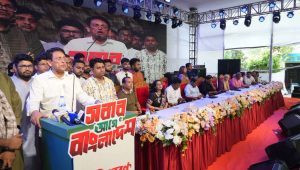
According to the report, 85 percent of this economic contribution came from women. The data was presented on Tuesday at the Bangladesh Bureau of Statistics (BBS) auditorium in Agargaon, Dhaka, during the launch of the Household Production Satellite Account (HPSA) report.
Daily tasks such as cooking, washing clothes, cleaning the house, caring for children and the elderly, and nursing the sick have been the foundation of family and societal life. Yet, until now, these essential activities have not been accounted for in the country’s economic calculations. This new report marks the first time the economic significance of this labour has been recognised in national statistics.

Chief guest Sharmeen S. Murshid, Adviser to the Ministry of Women and Children Affairs, highlighted that women’s labour has long been in the shadows of the economy. “Today’s report has made this invaluable contribution visible,” she said. Special guests included Mamtaz Ahmed, Senior Secretary of the Ministry of Women and Children Affairs, and Aleya Akhter, Secretary of the Statistics and Informatics Division. Gitanjali Singh, UN Women Representative in Bangladesh, also attended the event. The session was chaired by Mohammad Mizanur Rahman, Director General of BBS.




The report was presented by Asma Akhter, Deputy Director of BBS, who explained that the calculation was based on data from the 2021 Time Use Survey and the 2022 labour Force Survey. During the event, Nubayra Jaheen from UN Women demonstrated the “Care Calculator” tool to show how much time an individual spends daily on unpaid work.
The report includes several recommendations to bring care work into the mainstream economy. These include prioritizing the care sector in national budgets and development strategies, fostering inter-ministerial coordination for policy formulation, adopting family-friendly policies in the private sector, and increasing job opportunities in care-related fields. The report also calls for encouraging men and boys to share care responsibilities and ensuring regular data collection.
Mahinthan Joseph Mariasingham, Principal Statistician and Project officer at Asian Development Bank (ADB) described the initiative as a “pioneering step” for Bangladesh in a video message.
Experts believe that this statistic on women’s invisible labour is not just a numerical assessment but a crucial foundation for increasing gender sensitivity in policy and budgeting. By making the invaluable contributions of women visible in the country’s economic and development plans, Bangladesh has entered a new era.