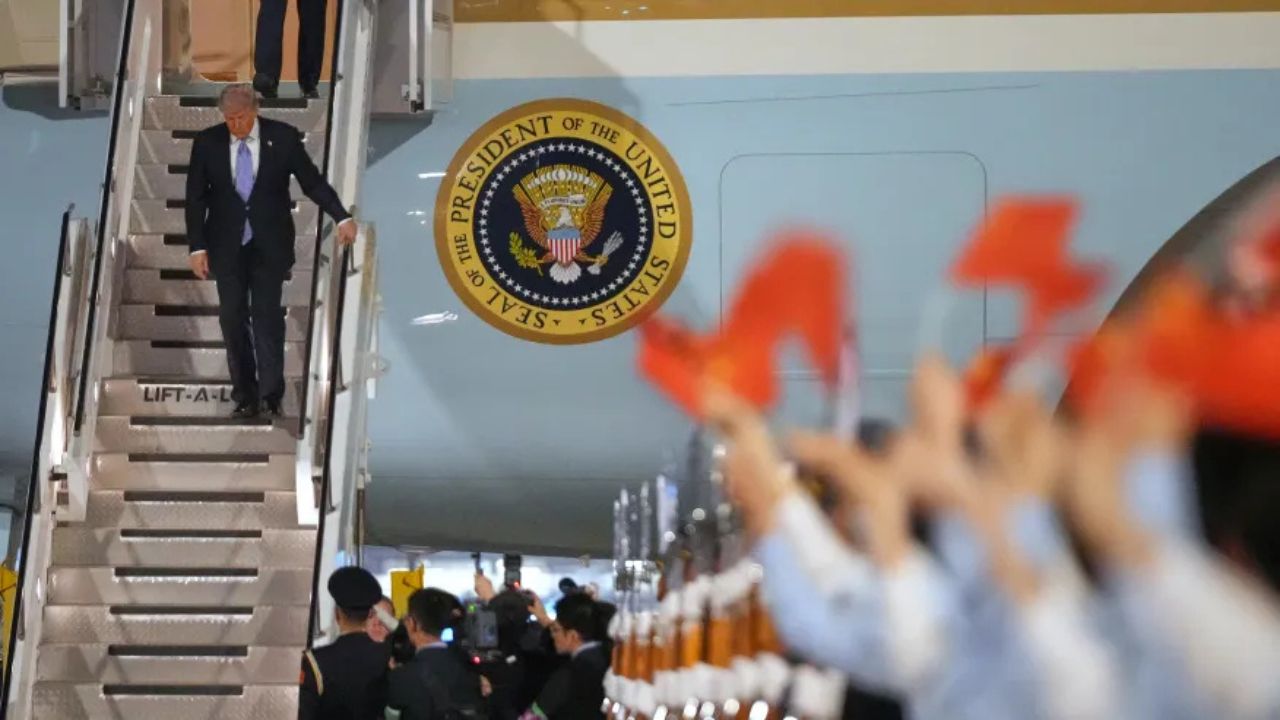
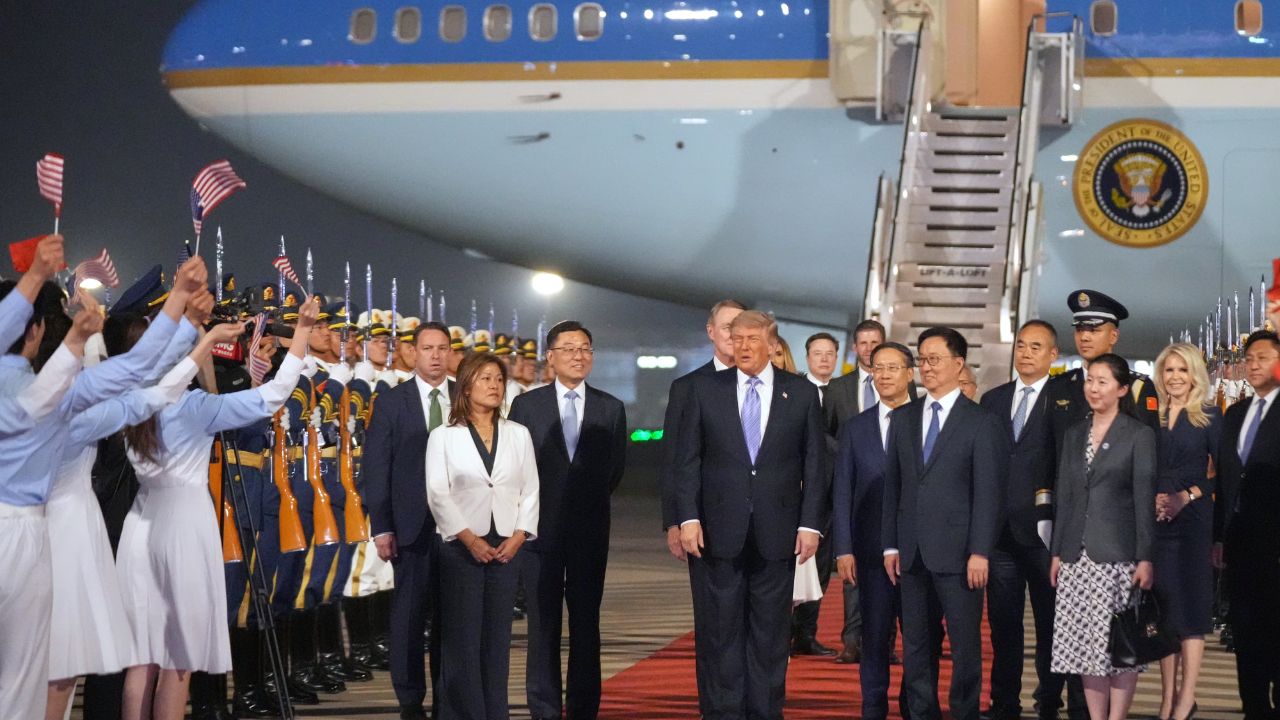
When US President Donald Trump stepped off Air Force One in Beijing on 13 May, he arrived with far more than diplomats and security officials. Walking beside him were some of the most influential figures in global technology and finance, including Elon Musk, Tim Cook and Jensen Huang.
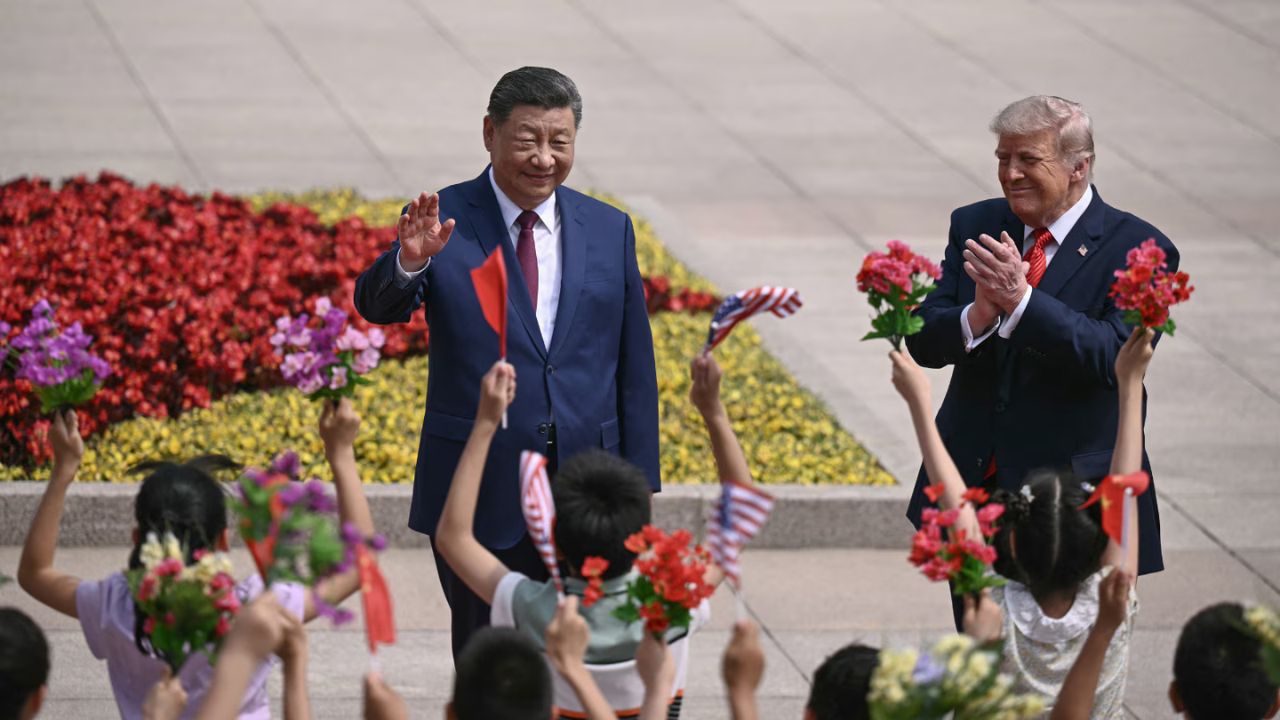
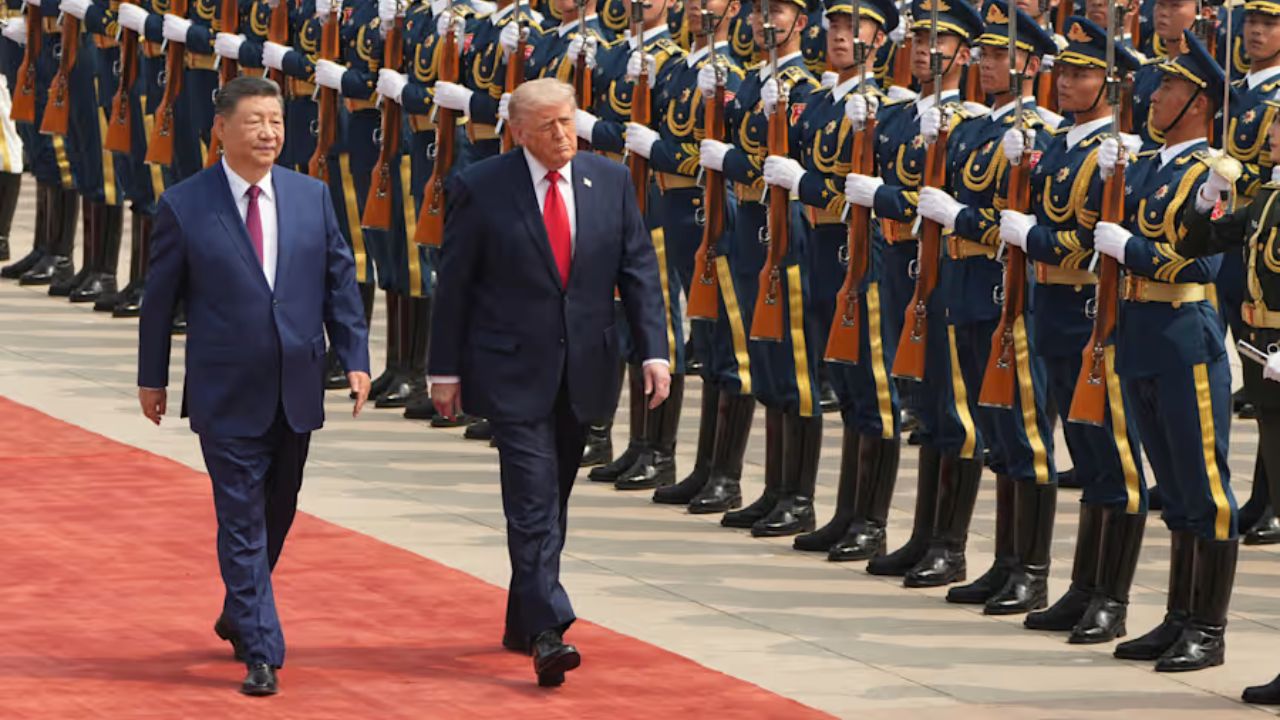
Chinese students waving American and Chinese flags lined the red carpet as Trump paused midway, punched the air and smiled before entering his limousine. The carefully choreographed welcome reflected the importance Beijing attached to the visit.
But beyond the ceremony, the image carried a deeper message. The future of US-China relations is no longer shaped only by politicians and diplomats. Increasingly, it is being negotiated by the people who build chips, run digital platforms and control global supply chains.
Trump’s visit, his first to China in nearly a decade, comes at a fragile moment. Trade tensions remain unstable, restrictions on advanced semiconductor exports continue to expand and both countries are locked in an increasingly aggressive race for dominance in artificial intelligence and advanced computing.
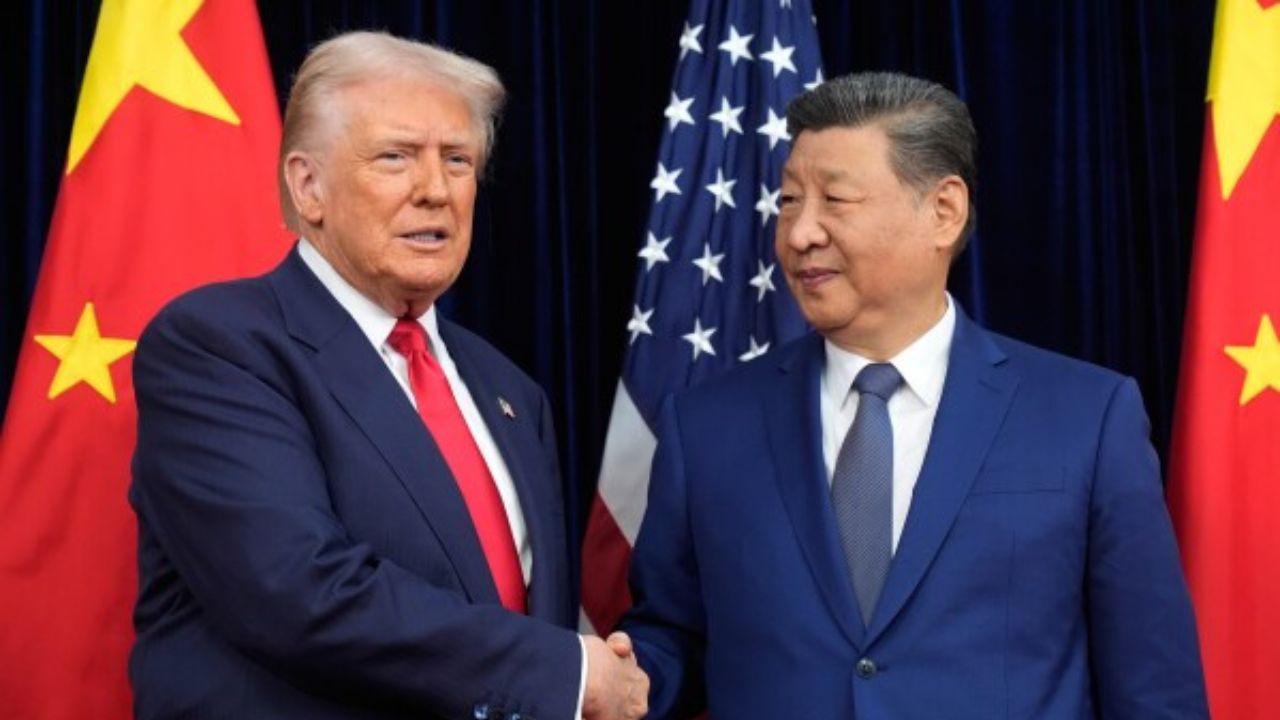
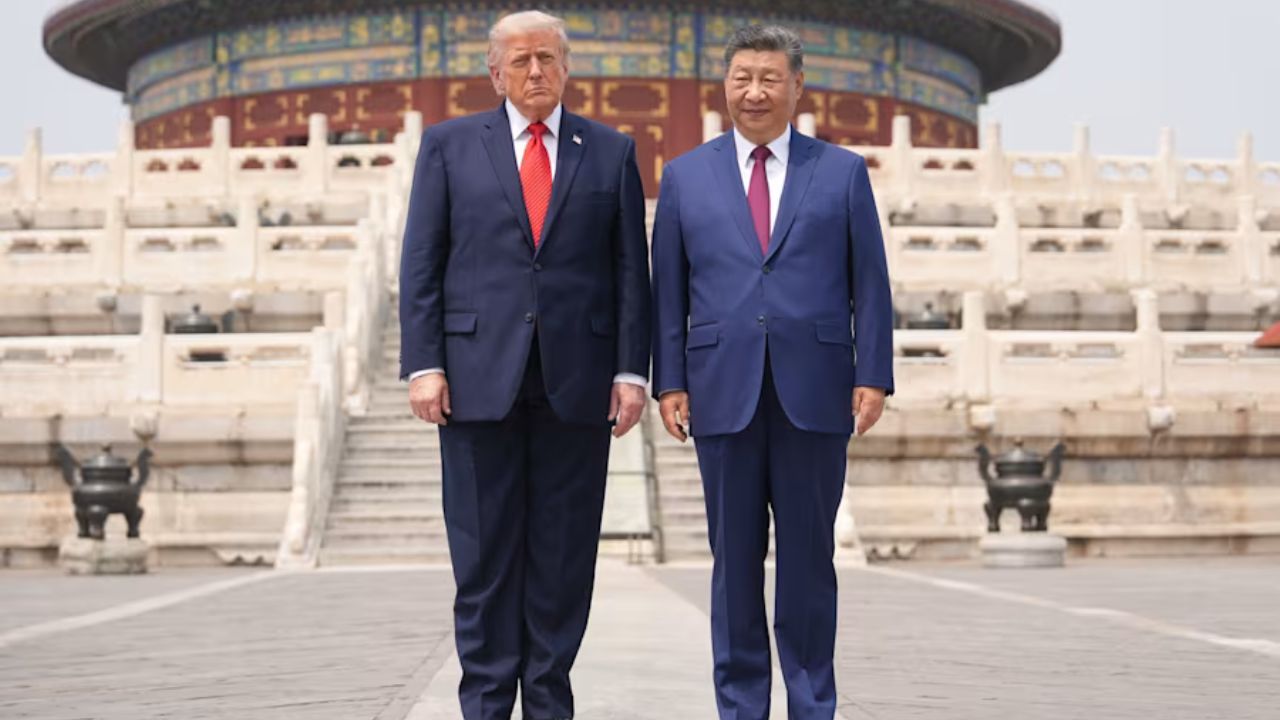
The two-day summit with Chinese President Xi Jinping officially focuses on trade stabilisation, artificial intelligence governance, semiconductor exports, Taiwan, cybersecurity and regional security. Yet the presence of Silicon Valley and Wall Street executives suggests the real negotiations extend far beyond traditional diplomacy.

Unlocking China’s tech market
Despite years of tariffs, sanctions and political tensions, China remains too important for American technology firms to ignore.
Companies such as Apple and Nvidia remain deeply tied to China’s manufacturing ecosystem, consumer market and regulatory structure. China continues to be one of the world’s largest demand centres for smartphones, AI infrastructure and semiconductor hardware.
Before the visit, Trump openly said one of his key goals was to persuade Beijing to “open up” further to American firms. US officials said Washington hopes to secure broader market access, reduce trade barriers and expand commercial opportunities for American companies operating in China.
Many executives travelling with Trump therefore represent firms whose future growth remains closely tied to Chinese market conditions. Their presence highlights how economic interdependence still defines much of the US-China technology relationship despite rising geopolitical rivalry.
AI dominance is now a geopolitical issue
Artificial intelligence is no longer viewed simply as a commercial technology race. It has become a strategic geopolitical contest tied directly to national power.
Washington wants to preserve American leadership in advanced AI chips and computing systems through firms such as Nvidia, Qualcomm and the wider US semiconductor industry.
China, meanwhile, is accelerating efforts to develop domestic alternatives and reduce dependence on American technology.

Restrictions on advanced chip exports have become one of the most sensitive disputes between the two countries. The Trump administration has maintained strict controls on the export of Nvidia’s H200 AI chips to China over concerns about potential military use. Shipments require third-party verification and face multiple regulatory conditions.
At the same time, Nvidia and other American chipmakers continue lobbying Washington to ease some restrictions. They argue prolonged export barriers could eventually strengthen Chinese competitors while cutting American firms off from one of the world’s largest technology markets.
That explains why Jensen Huang’s inclusion drew so much attention. Huang reportedly joined the delegation at the last minute after Trump personally invited him aboard Air Force One. His presence signalled that semiconductor exports, AI infrastructure and future technology partnerships would likely sit at the centre of discussions in Beijing.
‘Deal-makers’ are now CEOs
The summit also reflects a major transformation in modern diplomacy.
In earlier decades, governments negotiated trade deals while corporate leaders waited outside meeting rooms for the outcome. Today, multinational companies operate as direct geopolitical stakeholders because their technologies, investments and supply chains shape national economic strategy.
Trump’s approach appears designed around that reality.
By bringing corporate leaders directly into the diplomatic environment, the White House increases pressure for practical business outcomes rather than symbolic political statements. The Beijing meetings therefore combine state negotiations, corporate deal-making and supply chain diplomacy into a single process.
The administration also enters the summit under growing domestic pressure. Trump faces criticism at home over inflation linked partly to the Iran conflict and uncertainty surrounding global trade. Analysts believe Washington needs visible economic results from Beijing to reassure investors and American voters ahead of the US midterm elections.
Xi, by contrast, enters the talks from a comparatively stronger political position despite China’s slowing economic growth.



Chips, semiconductors, and export control leverage
Semiconductors remain one of the most sensitive battlegrounds in the US-China relationship.
The United States still controls access to many advanced AI chips and critical chipmaking technologies, while China continues to rely heavily on American semiconductor expertise to expand its AI ambitions.
That dependence creates leverage for Washington but also risks for American firms that rely heavily on Chinese demand.
Nvidia, Qualcomm and Micron all view China as a critical market. Semiconductor firms have struggled with export restrictions and wider trade tensions even as global demand for AI hardware continues to surge. Investors appeared optimistic ahead of the summit, with several semiconductor stocks rising in anticipation of possible trade progress.
Talks in Beijing are expected to include discussions on export controls, controlled semiconductor sales, AI regulation and access to advanced chipmaking equipment. In many ways, industrial policy is now being negotiated at presidential level.
Supply chain and manufacturing reality check
Beyond geopolitics lies a simpler economic reality: many major American firms still depend heavily on China’s industrial ecosystem.
Apple continues to rely on Chinese manufacturing and assembly networks despite gradually shifting part of its production to India and Vietnam. Tesla operates one of its largest factories in Shanghai. Boeing hopes to revive aircraft sales in China after trade disputes sharply increased tariffs on American goods.
For many executives travelling with Trump, the summit is therefore not only about diplomacy. It is also about protecting operational continuity, avoiding supply chain disruption and maintaining long-term production stability.
The pandemic, trade wars and geopolitical tensions exposed the vulnerability of global supply systems in recent years. Yet no country has fully replaced China’s manufacturing scale, supplier networks or industrial efficiency.
That reality explains why, even amid strategic rivalry, American corporations continue seeking stable ties with Beijing.
Who came with Trump?
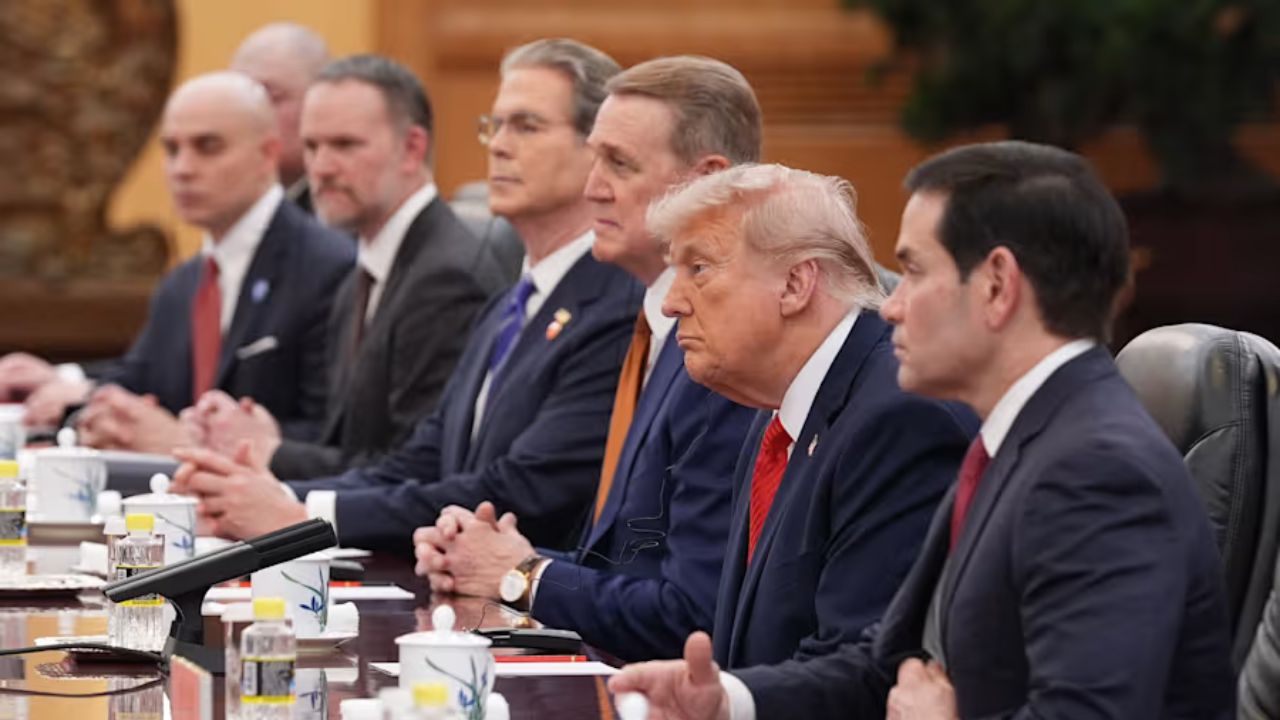
The delegation accompanying Trump included an unusually powerful mix of technology, finance, aerospace and industrial leaders.
Among the most prominent figures were Elon Musk of Tesla and SpaceX, Apple chief Tim Cook and Nvidia CEO Jensen Huang.
Other executives reportedly included Larry Fink of BlackRock, Stephen Schwarzman of Blackstone, David Solomon, Jane Fraser, Kelly Ortberg, Cristiano Amon and Sanjay Mehrotra, alongside executives from Visa, Mastercard, Meta, GE Aerospace, Cargill and Illumina.
Together, they represented sectors most exposed to the growing technological and economic rivalry between the world’s two largest economies.
What each side wants
Washington hopes to secure broader market access for American firms, reduce trade friction and preserve US leadership in advanced AI hardware and semiconductor technology.
Trump also wants Beijing to purchase more American goods, including aircraft, energy and agricultural products, while maintaining a fragile trade truce reached last year after both countries imposed tariffs exceeding 100% on each other’s products.
China, meanwhile, wants relief from technology export restrictions, improved access to advanced semiconductor equipment and greater foreign investment as economic pressures continue to affect growth.
Both sides also appear eager to avoid a complete technological decoupling that could further damage global manufacturing systems and trade networks.
Alongside trade and technology, discussions are also expected to cover the Iran conflict, Taiwan, cybersecurity and military influence across the Pacific.
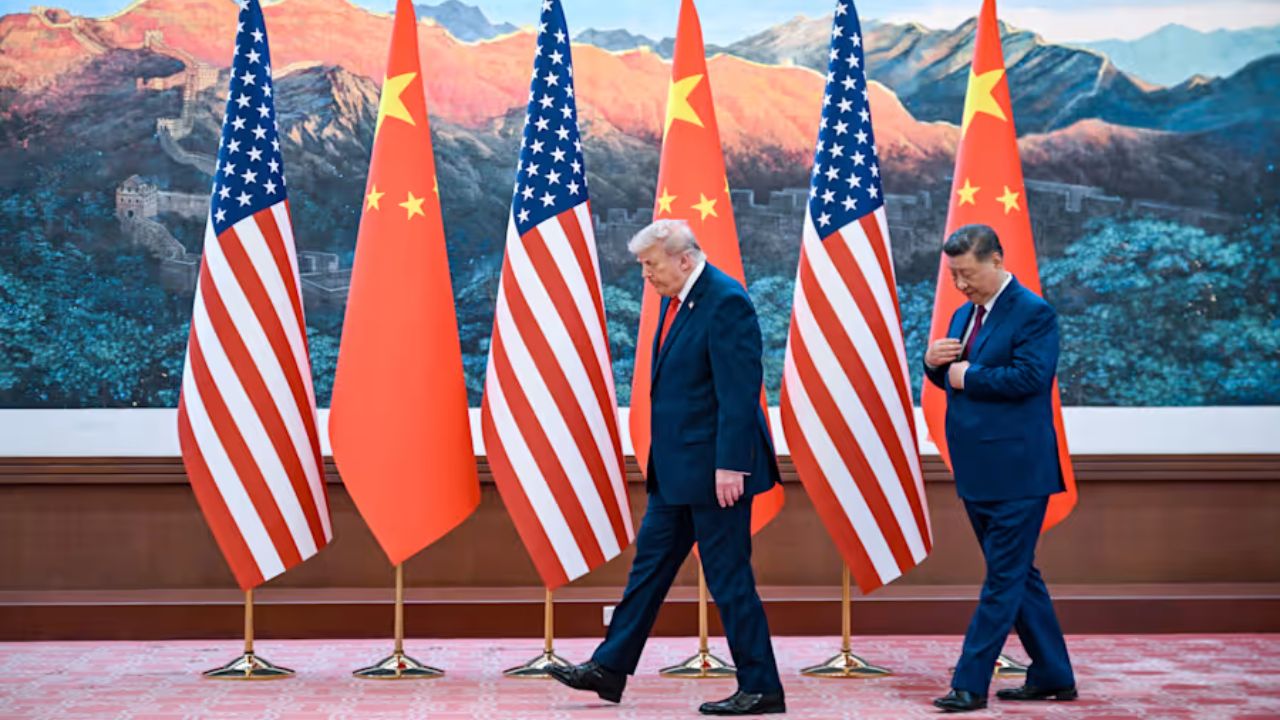
The deeper strategic shift
Analysts increasingly describe the current moment as the rise of “tech diplomacy”.
The US-China relationship is no longer defined only by military rivalry or traditional trade disputes. Artificial intelligence, semiconductor supply chains and digital infrastructure now function as strategic assets tied directly to geopolitical influence.
In this emerging model, chief executives operate almost like economic envoys. Chips have become bargaining tools, while computing power increasingly shapes national strength.
That shift explains why technology executives now travel beside presidents during high-level diplomatic missions.
The summit in Beijing reflects a world where influence is measured not only through military capability or economic size, but through control over data, semiconductors, AI systems and industrial supply chains.
Why it matters for Bangladesh
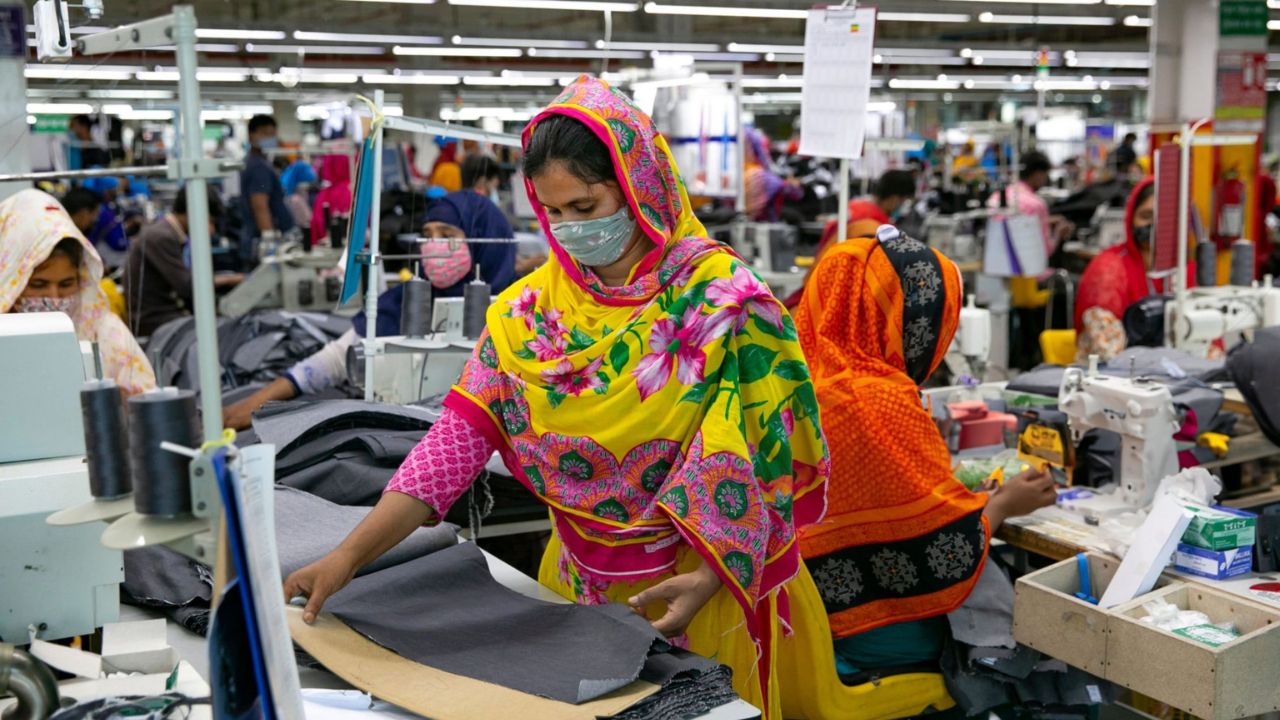
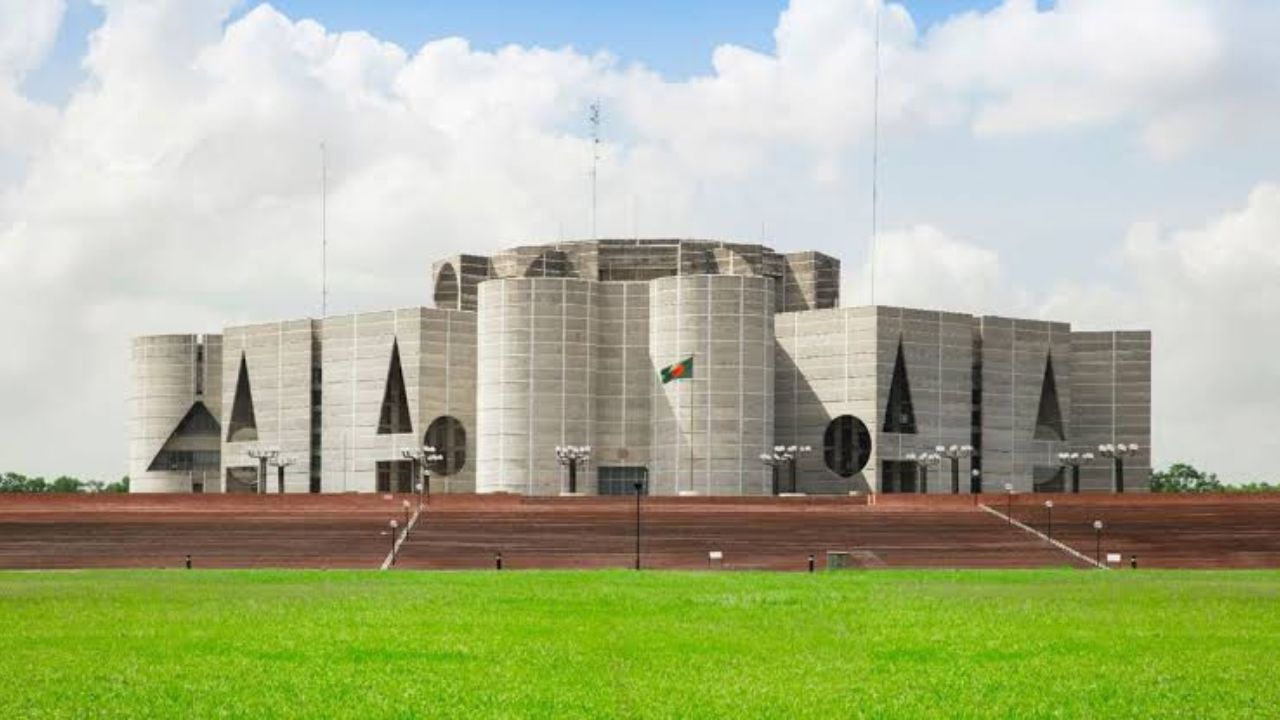
The outcome of the summit could also affect countries such as Bangladesh, whose economy remains closely tied to global supply chains shaped by both China and the United States.
Bangladesh’s export industries, industrial imports and growing technology sector depend heavily on stable shipping routes, affordable manufacturing inputs and predictable trade conditions.
Any escalation in tariffs, semiconductor restrictions or geopolitical tensions could increase production costs across global supply chains and place additional pressure on export-driven economies.
At the same time, efforts by multinational companies to diversify manufacturing beyond China may create opportunities for Bangladesh to attract investment in production, assembly and technology-linked industries.
As global firms rethink supply chains, countries offering competitive labour costs and manufacturing capacity could gain strategic importance.
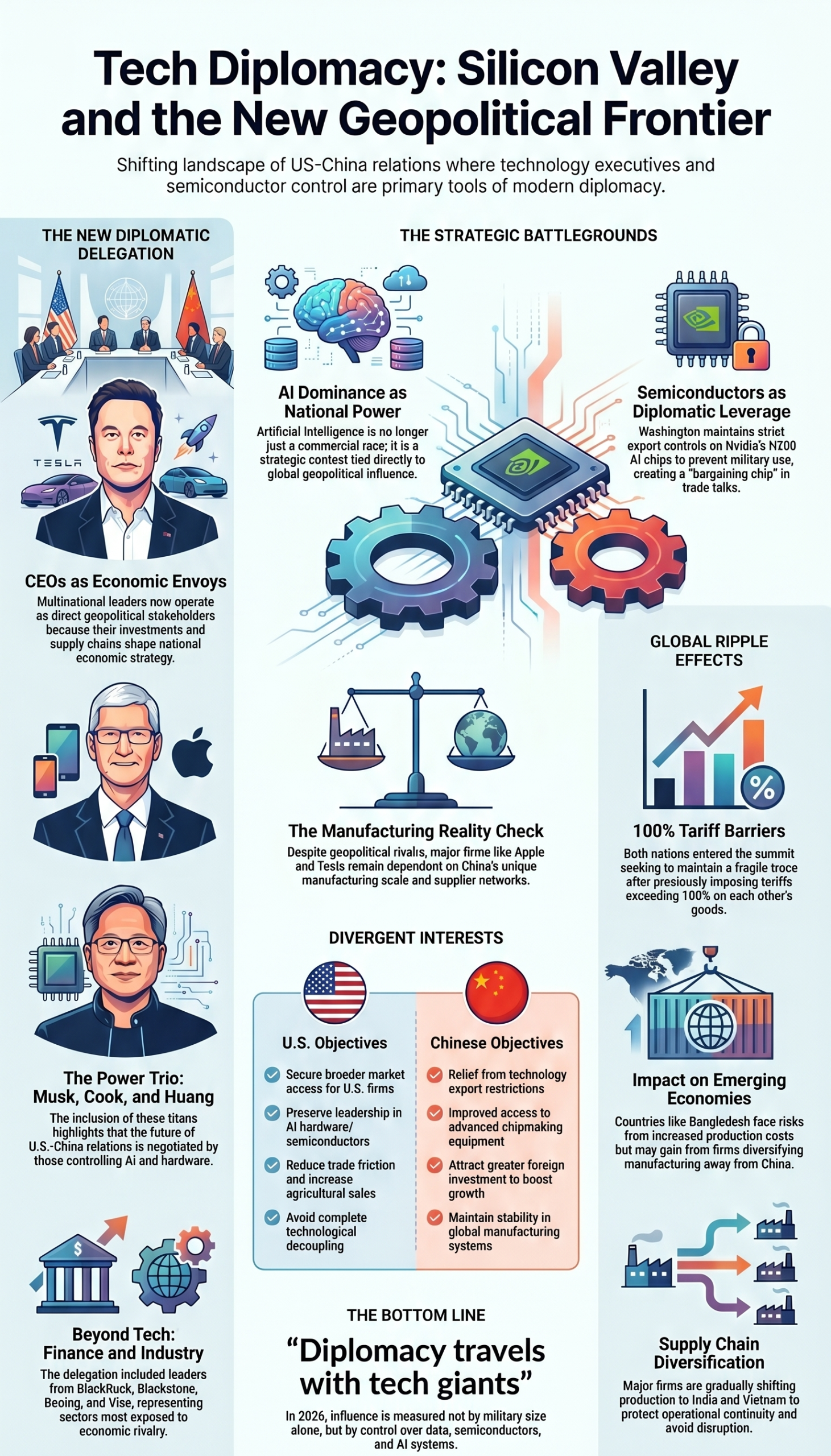
Bottom line
Trump’s arrival in Beijing alongside Silicon Valley executives was not simply political theatre.
It reflected a structural transformation in global diplomacy.
A decade ago, trade disputes largely revolved around tariffs and factory output. Today, the central battleground is artificial intelligence, semiconductor access and control over the technologies expected to define future economic power.
That is why Trump did not arrive in China alone.
He arrived with the executives who design the chips, operate the factories, manage the platforms and shape the future of artificial intelligence.
In 2026, diplomacy no longer travels only with politicians.
It travels with tech giants too.