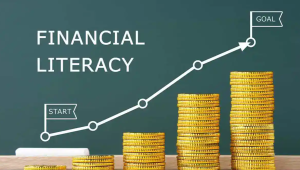
From 16 March to 22 March, Bangladesh will observe Financial Literacy Week 2026 under the theme “Smart Money Talks”. At a time when financial services are rapidly expanding and digital transactions are becoming part of everyday life, the theme is both timely and significant. It reminds us that financial well-being depends not only on income but on how wisely individuals manage, save, invest, and plan their money.
Financial literacy refers to the knowledge, skills, and confidence required to make informed financial decisions. In today’s economy, this includes understanding savings, budgeting, loans, interest rates, insurance, digital payments, and investments. For individuals, financial literacy strengthens control over personal financial behaviour. For the nation, it supports financial stability, responsible borrowing, and inclusive economic growth.
The theme “Smart Money Talks” captures an important reality: money management is not merely about numbers — it is about awareness and informed decision-making. Smart money “talks” when individuals ask questions before taking loans, compare financial products, understand risks, and plan for future needs such as education, healthcare, and retirement. It also speaks when families discuss budgeting, entrepreneurs carefully evaluate investments, and citizens make thoughtful financial choices instead of impulsive ones.
In Bangladesh, the importance of financial literacy has grown alongside the expansion of the financial sector. Over the past decade, the country has made notable progress in financial inclusion. Mobile financial services, agent banking, and digital payment platforms have brought millions of previously unbanked citizens into the formal financial system. While access to financial services is a significant achievement, access alone is not enough. Without proper knowledge, individuals may misuse financial products, fall into debt traps, or become vulnerable to fraud.

Financial Literacy Week therefore plays an important role in bridging the gap between access and understanding. Through awareness campaigns, educational initiatives, and community outreach, it encourages citizens to develop sound financial habits such as budgeting, regular savings, responsible borrowing, and informed investment.
One practical framework for individual financial management is the 50:30:20 model, a simple guideline that promotes balanced and disciplined money management. According to this model, 50 per cent of monthly income should be allocated to essentials and basic needs — such as housing, food, transportation, healthcare, and education. Thirty per cent can be used for personal desires and lifestyle choices, including recreation, travel, or other non-essential expenditures that improve quality of life.



The remaining 20 per cent should be directed towards savings, security, sustainability, and investment. This portion is particularly important for long-term financial stability and can be further structured into a 10:5:5 approach. Around 10 per cent can go towards regular savings, preferably through formal banking channels, to build an emergency fund and ensure liquidity during unforeseen situations. Five per cent may be allocated for financial security and sustainability, such as life or health insurance, which protects households against unexpected risks. The remaining five per cent can be invested for growth in avenues such as mutual funds, equities, real estate, gold, or other assets, with the objective of capital appreciation and long-term prosperity.
While the 50:30:20 framework provides a useful benchmark, its application may vary across different stages of life. At a younger age, essential expenses are usually lower, allowing greater capacity for savings and investment. This stage offers an important advantage — time — which enables individuals to benefit from the power of compounding. As people grow older, responsibilities and basic needs typically increase, which may reduce the capacity for savings and investment.
This is why financial education should begin early. Integrating basic financial management concepts into school and university curricula can help build a financially aware generation capable of making responsible economic decisions.
Financial literacy is equally important for small entrepreneurs and rural communities. Many micro and small enterprises struggle not because of lack of opportunity, but due to weak financial planning. Knowledge of budgeting, record-keeping, and credit management can significantly improve business sustainability.
The message of “Smart Money Talks” is also highly relevant in the era of digital finance. As digital banking, mobile wallets, and online financial services continue to grow, citizens must understand both the opportunities and the risks. Protecting personal financial information, recognising fraudulent schemes, and using secure platforms are now essential components of financial literacy.
Ultimately, financial literacy contributes to economic resilience. Households that save regularly and manage their finances wisely are better prepared to withstand unexpected shocks such as medical emergencies, natural disasters, or economic downturns. On a broader scale, financially informed citizens help build a stronger and more stable financial system.
As Bangladesh observes Financial Literacy Week 2026, the theme “Smart Money Talks” reminds us that responsible financial behaviour begins at the individual level. By strengthening financial awareness and encouraging disciplined money management, the country can move closer to a future of inclusive and sustainable economic growth.
The author is the Chief Bancassurance Officer and Head of Retail Distribution Division, Financial Literacy Wing at Midland Bank PLC