
The US-led war against Iran, conducted alongside Israel, has entered its second week with mounting missile strikes and shifting objectives articulated by US President Donald Trump.
Trump has stated that the war against Iran will end “very soon,” although he clarified that the conflict would not conclude within the current week.
While Washington has targetted nearly 2,000 sites across Iran, including nuclear facilities, oil refineries, and a desalination plant, the ultimate “endgame” for the United States remains a subject of intense debate among global analysts, report CNBC and Al Jazeera.
Trump claimed that military objectives are being achieved with “major strides” and asserted that US forces have “wiped every single force in Iran out”.
He detailed the destruction of more than 50 Iranian naval ships and the decimation of the country’s air force and anti-aircraft defences, stating that the Iranian leadership has been “blown up”.
Speaking at a press conference at his Trump National Doral club near Miami on Monday, Trump predicted a drop in oil prices, which have surged above $100 per barrel following the effective closure of the Strait of Hormuz.

While Iranian officials have warned that any tanker transiting the Strait of Hormuz risks attack, Trump threatened to hit Iran “twenty times harder” if it withholds crude from global markets.
The conflict, dubbed “Operation Epic Fury,” was initiated on 28 February with the killing of Iran’s Supreme Leader Ali Khamenei in Tehran. Since then, the death toll has risen sharply; Iranian officials report that 1,255 people have been killed, the majority of whom are civilians.
Amongst the casualties are more than 160 children killed during the bombing of the Shajareh Tayyebeh girls’ elementary school in Minab. Seven American soldiers have also been confirmed dead.




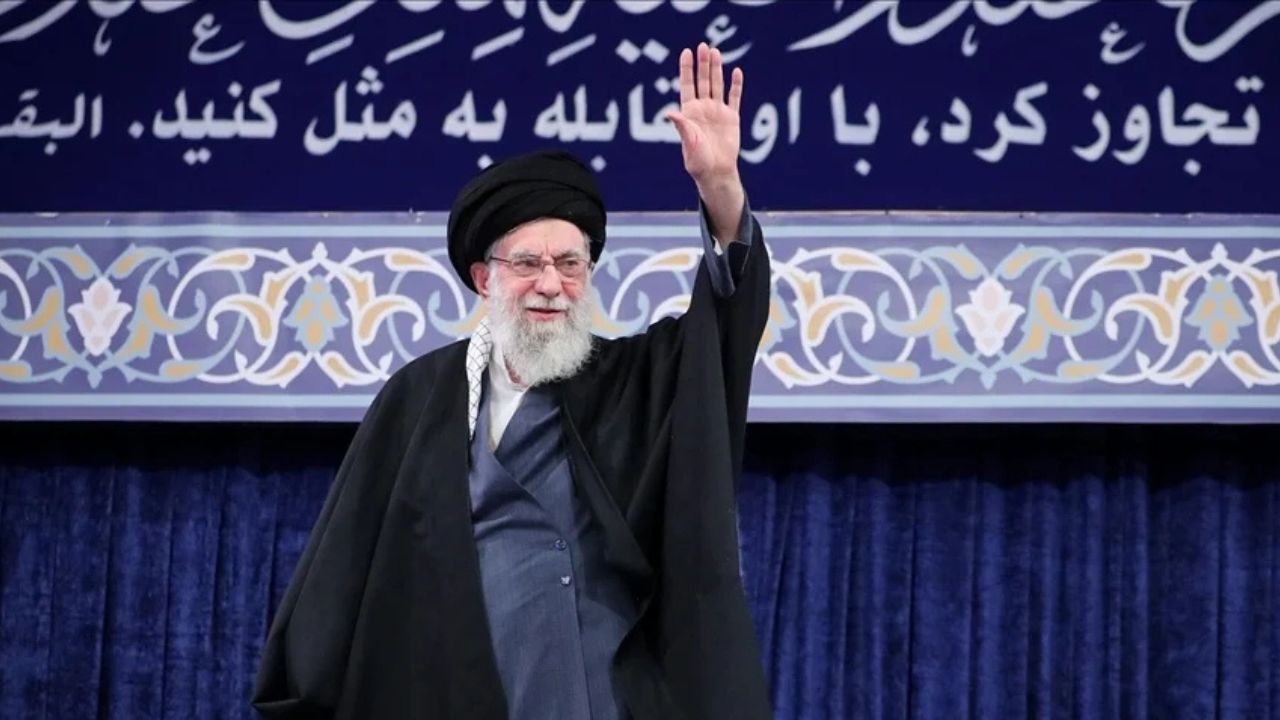
In a direct rebuke to Washington’s perceived goal of regime collapse, Tehran announced on Sunday that Ayatollah Ali Khamenei’s 56-year-old son, Mojtaba Khamenei, has been named the new Supreme Leader.
Despite the elimination of senior military commanders, experts suggest there is little evidence of institutional fractures within the Islamic Republic.
Muhanad Seloom, an assistant professor at the Doha Institute for Graduate Studies, noted that the appointment of Mojtaba Khamenei, whom Trump has explicitly labelled “unacceptable”, signals a “rallying effect” and a consolidation of power by the Islamic Revolutionary Guard Corps (IRGC). However, IRGC has pledged obedience to the new Supreme Leader and continues to lead counterattacks.
President Trump’s messaging has oscillated between calls for diplomacy and demands for total destruction. On 6 March, the US President posted on Truth Social, stating, “There will be no deal with Iran except UNCONDITIONAL SURRENDER!”.
He has previously called for IRGC members to lay down their arms and for diplomats to switch sides, though both groups have publicly reaffirmed their commitment to the Islamic Republic.
The military campaign has seen US and Israeli forces targetting Iranian naval assets, including a warship off the coast of Sri Lanka, as well as missile manufacturing facilities.
While both nations claim control of Iranian airspace, Tehran has retaliated with hundreds of missiles and thousands of drones targetting Israel and Gulf neighbours, including Saudi Arabia, which has intercepted several incoming projectiles.
Israeli Prime Minister Benjamin Netanyahu has reportedly viewed the conflict as an opportunity to “reshape the Middle East,” using the 7 October 2023 attacks as a pretext to defeat regional challengers.
Earlier on Monday, Trump held a telephone conversation with Russian leader Vladimir Putin, who reportedly shared proposals for a swift end to the war. Trump noted that Putin was “very impressed” by the US military performance, describing the operation as a “military success, the likes of which people haven’t seen”.
Meanwhile, the Trump administration has considered alternative strategies, such as a potential Kurdish-led invasion from Erbil, though analysts warn this could trigger a secondary crisis with Turkiye.
Despite the escalation, a ground invasion is viewed as the most unlikely option due to President Trump’s domestic anti-war platform and the lingering legacy of US interventions in Iraq and Afghanistan.
Experts like Andreas Krieg of King’s College London suggest that the most realistic outcome may be a “coercive settlement” where the US claims victory based on the destruction of military hardware and the death of Ali Khamenei, without committing to a protracted ground war.
For now, Tehran maintains its stance: no surrender and no negotiations while under bombardment.