At a recent talk with media persons at the Krishibid Institution Bangladesh, Prime Minister Tarique Rahman touched on a theme that strongly strikes the collective consciousness of the nation. He frankly bemoaned a hard fact to which we are all exposed every day: a marked decay in our social, religious, and family values. From the mere continuing of honouring elders and being humble in speech to the willingness to help the needy, it is as if these basic community cornerstones are gradually disappearing.
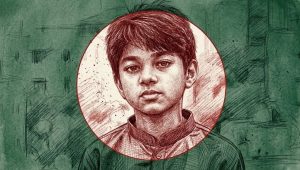
Reflecting on this, the Prime Minister informed that one of his instructions to the Ministry of Information and the Ministry of Education was to come up with plans for the revival and lasting impression of these good habits among our children. The Prime Minister, to support his argument, narrated a touching story from his childhood. One day, after he had spoken rudely to a domestic help, his father, the late President Ziaur Rahman, made him hold his ears and apologise to that worker. It is a powerful testament to how family education shapes character.
But as well-intentioned as these government directives are, a crucial question begs to be asked: Are the efforts of the Ministries of Information and Education truly enough to resurrect a society’s moral fabric?
Can we honestly expect to cultivate deep-rooted values in the next generation while our political landscape remains largely devoid of them? Education doesn’t happen in a vacuum. If politicians fail to value the ordinary citizen, if they do not display mutual respect across the aisle, and if systemic corruption thrives, the lessons printed in school textbooks are instantly neutralised.
When the youth observe a socio-political arena where power triumphs over principles, the words of their teachers begin to taste like empty rhetoric. To change behavioural patterns among children, we must first change the behaviour modelled at the top.

Furthermore, economic stability is an important factor that cannot be disregarded in this matter. Financial insecurity can cause a family’s resources to be so tight that their priority may shift from social niceties to survival. The government’s campaign of moral policing will not only give you food but also keep you from starving, and will not be able to mend a broken family. Also, one cannot develop real values simply by reading a book when the situation outside is totally different and one is faced with totally different circumstances.
Children are astute observers; they rarely do what we tell them to do, but they almost always do what they see us doing. Behavioural transformation must happen organically within our social structure.
I think that if elders in a community do not treat the younger generation with genuine love, understanding, and fairness, the young people will not have the instinct to love and respect the elders. It’s a two-sided thing. So, just putting moral science lessons in the curriculum or running media campaigns is almost the same as doing nothing. What we really need is the implementation of these values at the personal, family, and social levels.




The nation’s leader clearly alerted the people about the hard days that are coming. He said that if we waste our time living a life of luxury without doing anything, the country and the future generation will suffer a great loss. He used the legacy of the late Ziaur Rahman, who was known for his great hard work and honesty, as an example to show how we can get through the present difficulties.
The Prime Minister has rightly realised that failing to emphasise core values now could jeopardise the future of our next generation, and ultimately, the nation. So, changing or amending the educational syllabi to include moral instruction is one of the required moves.
However, practicing these taught values is even more critical than merely studying them. Such a development should be first done in the family, then through the community, school system, and even political behaviour. To set a value-oriented path for society, leaders at the highest levels must also be value-oriented in their practice. Crucially, we must stop exploiting the youth for personal, partisan, or petty agendas, but should be developed to be the ethical pillars that the country seriously lacks.
The government’s work on the manifesto and structural reform is only half the story. The nationwide mental and moral reform will need a handshake from all of us. The 214 MPs or 50 cabinet ministers cannot bear the nation’s entire moral burden, just as two ministries cannot be the only guardians of our conscience.
If we truly want to build a future generation rich in empathy, integrity, and humility, the responsibility falls squarely on all of us.
In the Home: We must practice the basic courtesy and humility that the Prime Minister’s childhood anecdote highlighted.
In Public Life: We must replace aggression with civility and look out for the vulnerable.
In Leadership: Our leaders (social, political, and all others in the spheres of life) must embody the accountability and respect they wish to see in the youth.
Let us stop waiting for a syllabus change to fix our souls. No matter where we stand in life – whether in high office, a school classroom, or within our own living rooms – let us actively practice these values. The younger ones are watching, and they will copy us. That, and only that, is how a truly enlightened future generation will be born.
The writer is the Senior Assistant Editor, TIMES of Bangladesh