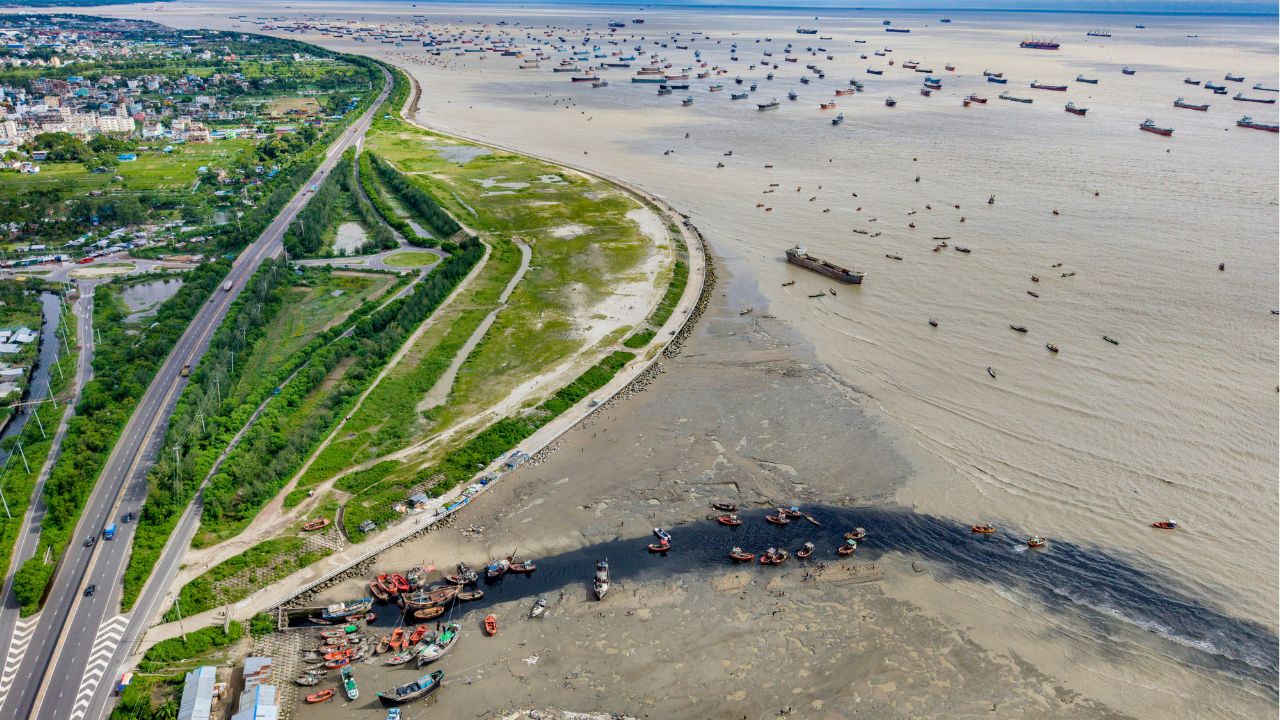



Chattogram’s coastal environment and marine biodiversity are facing a severe crisis as untreated industrial and household waste continues to pour into the Bay of Bengal.
Effluents from the Chattogram Export Processing Zone (CEPZ) and surrounding industrial areas flow directly into the sea through drains and canals. Drone images captured along the Outer Ring Road and South Halishahar coast reveal dark, toxic plumes spreading into the sea near fishing boats, visibly contaminating the coastal waters.
The pollution, laden with chemicals and heavy metals, is inflicting lasting damage on marine ecosystems. Dissolved oxygen levels are declining, giving rise to “dead zones” where aquatic life struggles to survive.

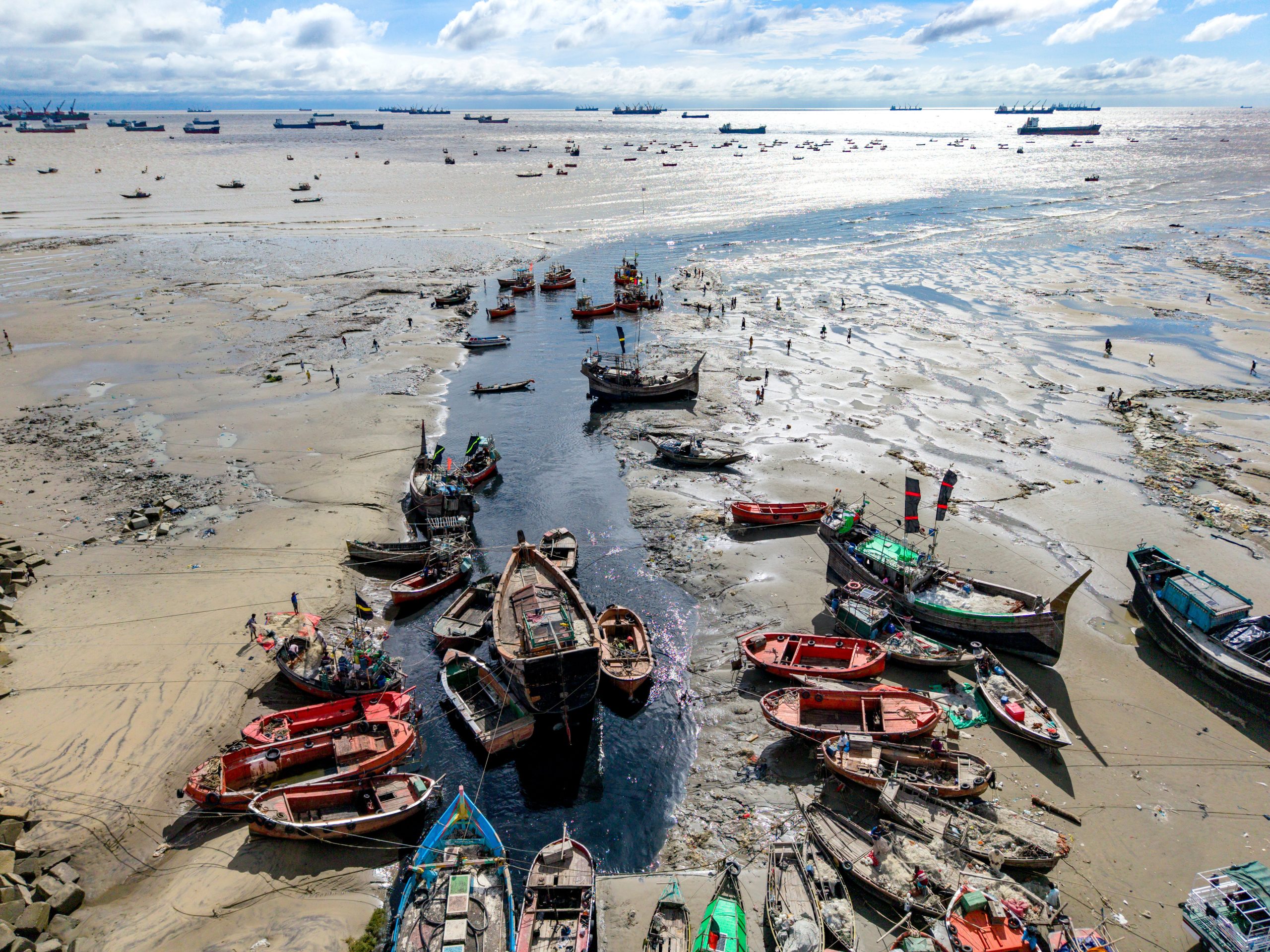
These shallow coastal waters serve as vital spawning and nursery grounds for fish, and experts warn that continued contamination could severely deplete fish stocks in the long run.




The impact extends beyond the environment. Thousands of fishing families are already feeling the effects, with many forced to venture farther into the sea at greater risk and higher fuel costs as fish grow scarce closer to shore.

There is also growing anxiety over the safety of seafood, as harmful substances accumulating in fish caught from polluted waters may pose serious health risks to consumers.
As the Bay of Bengal continues to absorb the burden of unchecked waste, the livelihoods of coastal communities and the health of the marine ecosystem hang in the balance.